The croissant question nobody asks
Freshness Is Not a Place. It Is a Clock.
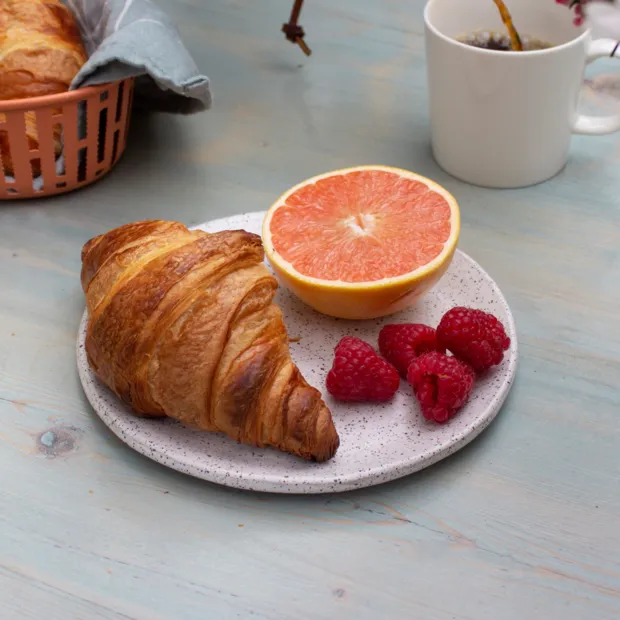
The best croissant you ever ate was not better because of where it was baked. It was better because of when.
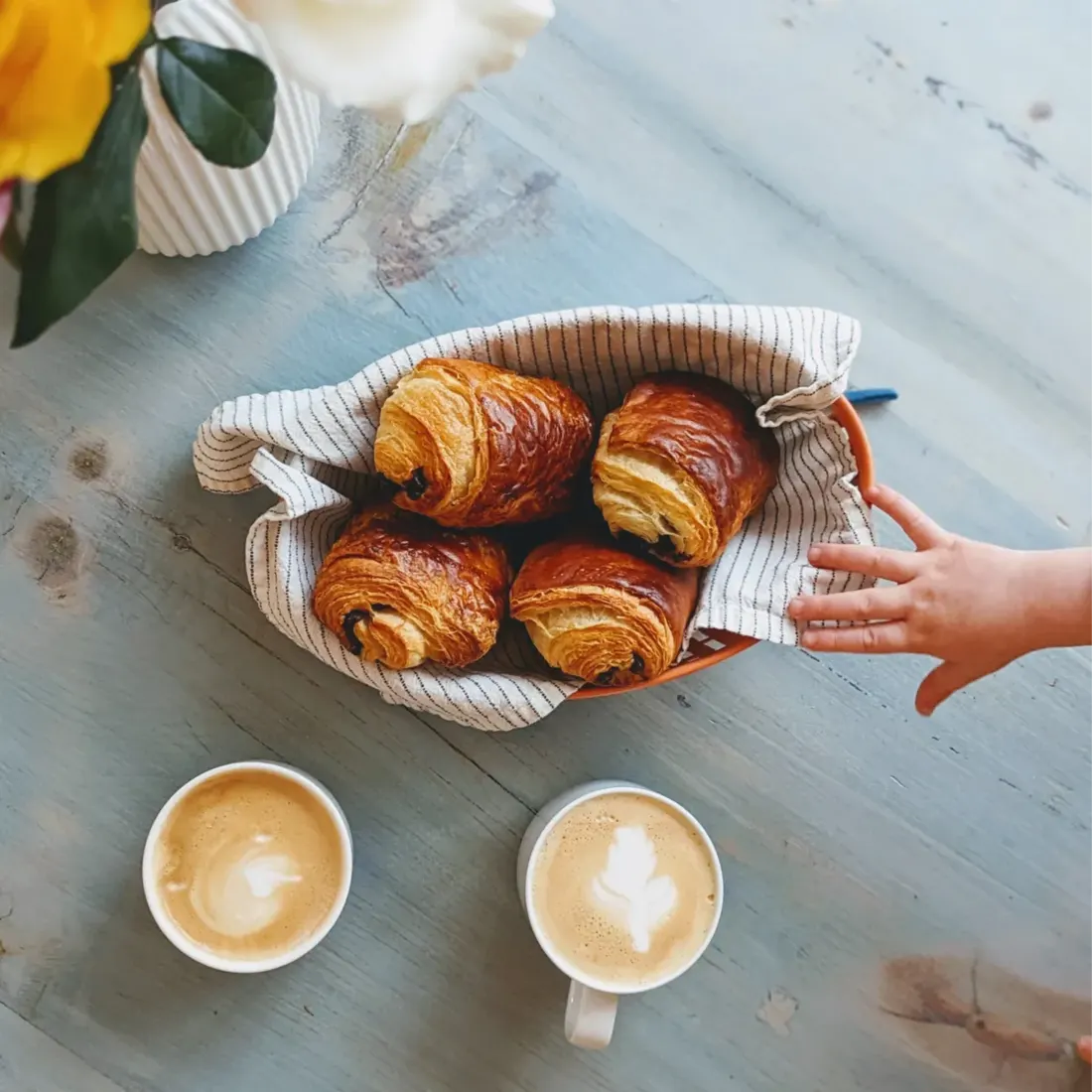
Everyone who comes back from Paris says a version of the same sentence, and they say it apologetically, because it sounds like a brag. The croissants over there ruined them. They are not exaggerating and they are not being pretentious. Something really was different, and the difference is measurable.
What almost nobody gets right is what the difference was.
The usual explanations are the flour, the butter, the water, some unrepeatable European magic in the air. Those explanations are comfortable because they are unactionable. If the secret is French wheat, then nothing can be done and the memory stays safely filed under vacation.
What gets blamed
- French flour
- French butter
- The water
- Something unrepeatable in the air
What actually changed
The number of minutes between the oven and the first bite.
The first list cannot be acted on, which is part of why it is popular. The second one can.The real variable is duller and much more useful. It is the number of minutes that passed between the oven and your mouth. In Paris you probably ate a croissant that was under an hour old, standing up, from a paper sleeve, because that is how the city is organized. At home you almost certainly have not eaten a croissant that young in years.
The evidenceThree witnesses, one sentence, three different rooms
The reason to trust this framing is not that it sounds clever. It is that people who have no connection to each other keep arriving at it independently, using nearly identical words, whenever they are surprised by a pastry.
A member of a bake-at-home subscription service wrote in to say this, unprompted, and the company has been publishing it ever since:
“I just came back from Paris. Your croissants are every bit as good as the ones fresh from the bakeries there!! Love my Wildgrain!”
Jodi C., member testimonial published by WildgrainA food editor at PureWow, writing up what was new in the grocery aisle, reached for the same comparison in a headline:
“Wildgrain’s Bake-from-Frozen Subscription Box Is *Almost* as Good as a Trip to Paris!”
PureWow, What’s New in Food This August?And a reviewer at Esquire, who had no reason to mention Paris at all, described the sensation from the inside instead:
“When you pop your Wildgrain croissants in the oven to warm them up for breakfast, they come out tasting as if you had just rolled the dough and made them yourself.”
Esquire, Wildgrain’s Bread-Delivery Service Is the Gift That Keeps on GivingRead those three together and notice what none of them says. Nobody claims a better recipe. Nobody claims better butter, although the butter is real and we will come back to it. Every one of them is describing a moment in time: fresh from the bakery, a trip to Paris, as if you had just made it yourself. They are all reporting the same reading off the same instrument, and the instrument is a clock.
A croissant is not a thing. It is an event, and the event has a short half-life.
The mechanismWhat actually happens in the hours after the oven
Everything that makes a great croissant great is temporary by construction.
The shatter, the noise it makes, the flakes on your shirt: that is dozens of separate sheets of dough, each one dried and stiffened and held apart from its neighbors by the steam that blew them apart in the oven. It is a structure made of gaps. Gaps are not stable. Moisture inside the pastry does not stay where the oven left it. It migrates outward into those dried layers, one at a time, and each layer it reaches stops shattering and starts bending.
Nothing has gone wrong. No ingredient was cheap. The pastry is simply doing what a hot, dry, layered structure does in a room full of humidity, and it starts doing it immediately.
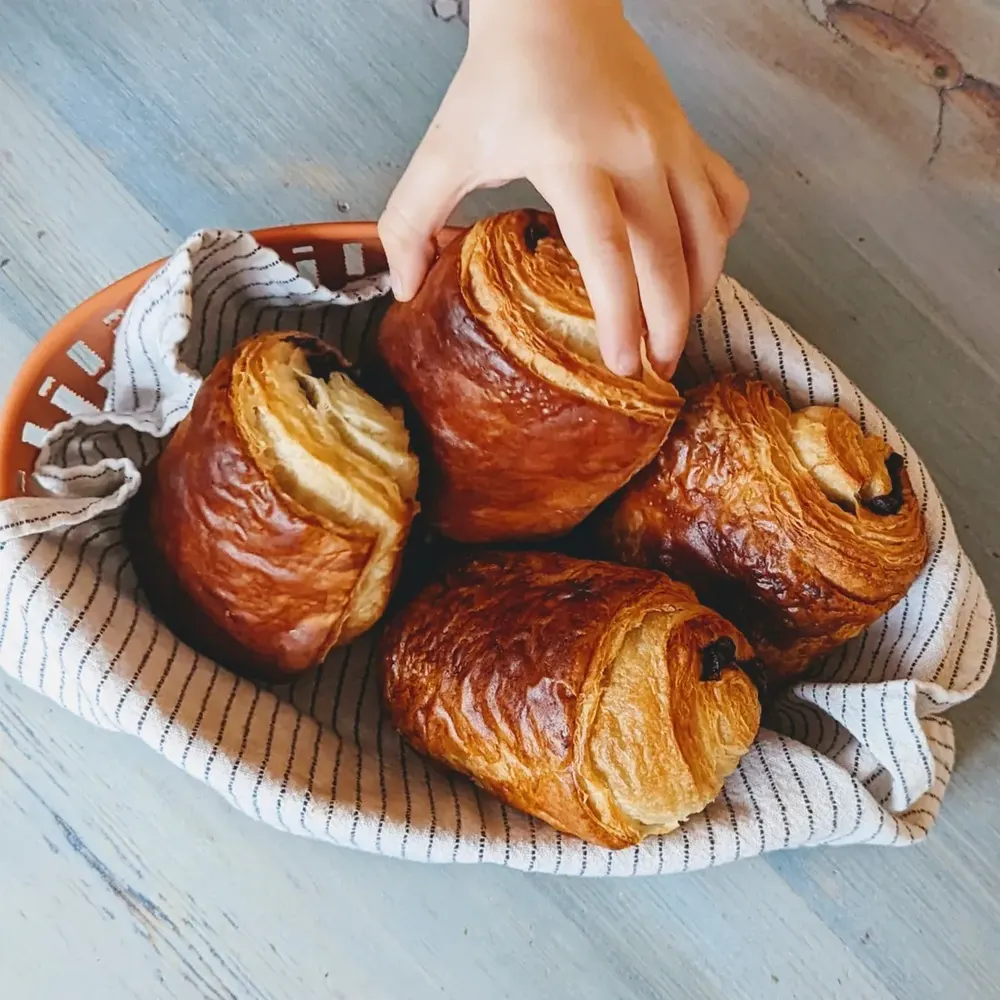
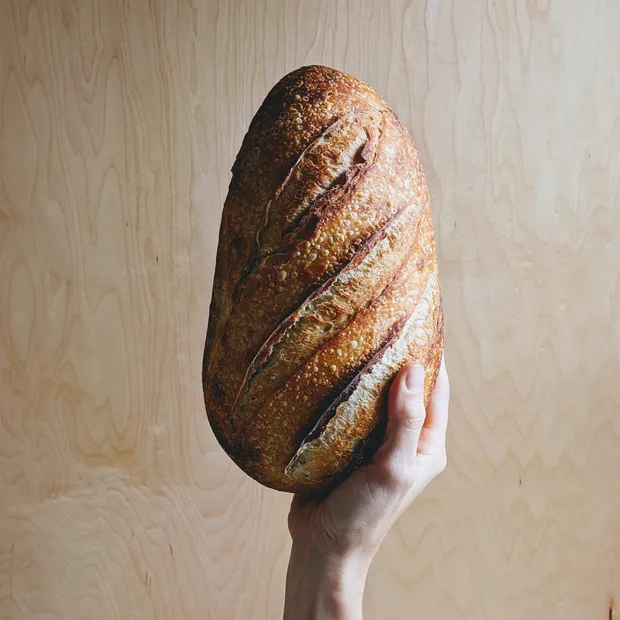
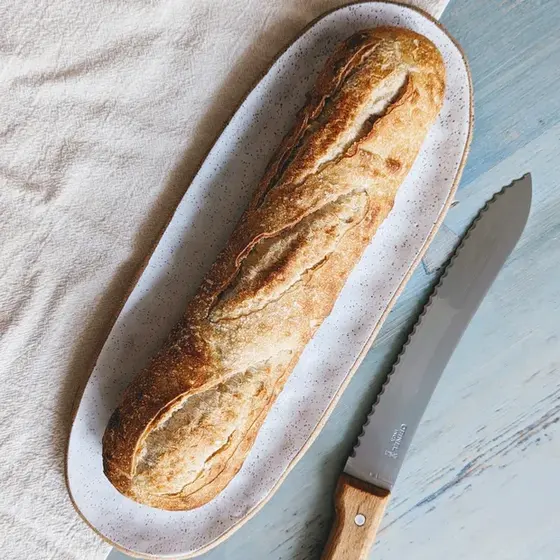
The same clock runs on bread, more slowly and by a different route. A loaf out of the oven has a crust under tension and a crumb full of hot moisture. Over hours and days the two equalize. The crust goes soft, the crumb goes dry and crumbly, and the loaf that was electric on Saturday morning is a serviceable sandwich by Monday.
The company at the center of those three quotes states the same principle in its own words, on its own Our Story page, which is unusual because it is an argument against most of the ways food is sold:
“There’s nothing quite like bread or croissants baked fresh and enjoyed within the hour. At Wildgrain, we believe flavor peaks when it’s warm from the oven: rich, aromatic, and full of life.”
Wildgrain, Our Story, wildgrain.comWithin the hour. That is a brutal specification, and it is the whole problem in one phrase.
The real problemThis is a logistics problem wearing a baking costume
Here is the part that reframes the whole category. Nobody has a monopoly on making a good croissant. There are skilled laminators in Ohio and Oregon and outside Boston. The craft is not scarce.
What is scarce is the last hour.
A bakery solves the last hour by refusing to solve it: you come to the bakery, at bakery hours, and you eat the thing near the oven that made it. Everything else is a workaround, and every workaround has to answer the same question, which is where in the chain the baking happens.
Because once something is baked, the clock is running, and no amount of packaging stops it. Shipping a finished croissant means shipping a croissant that is already on its way down. It will still be a nice croissant. It will not be the Paris croissant, and no recipe change can make it one.
Look at the fourth row for a moment, because it is the only one that is not obvious. If you cannot move the eater to the oven, and you cannot beat the clock by shipping faster, there is exactly one move left. Move the oven.
The moveThe freezer is not a compromise, it is the pause button
Freezing has an image problem, and the image is a supermarket bag of something gray and rubbery from 1985. That reputation was earned by frozen finished food, which is a completely different proposition from frozen unfinished food.
Freeze a baked croissant and you have preserved a croissant that was already declining. Freeze the dough after it has been fermented, laminated and proofed, at the exact moment before it enters an oven, and you have not preserved a product at all. You have preserved a state. The clock has not started, because the event that starts it has not happened yet.
Wildgrain, the company behind the three quotes above, describes its own version this way:
“Freezing keeps the good stuff where it belongs: inside your food. It locks in the flavor, nutrients & texture without using preservatives.”
Wildgrain, How It Works, wildgrain.comThe division of labor that follows is the actually interesting part. The bakery does the twenty hours of skilled, slow, unglamorous work that nobody wants to do at home. Your oven does the twenty five minutes at the end that nobody else can do for you, because that step has to happen in the same building as your mouth.
Which means, for the first time, the two people who need to be near the croissant at different moments do not have to be in the same city.
All four figures are Wildgrain’s own published specifications, from wildgrain.com, read August 27, 2026.
See how the bake-at-home box works Wildgrain · breads, pastries and fresh pasta from independent bakeries · free shipping, skip or cancel any time The second clockTwenty hours against twenty minutes
There is a second clock in this story, and it runs in the opposite direction. The first clock, the one after the oven, you want to be short. This one you want to be long.
Fermentation is the slow part of bread, and it is the part that industrial baking compressed almost out of existence, because time is the single most expensive ingredient in a bakery. Wildgrain publishes the comparison directly:
Fermentation time before baking, drawn to scale
Figures published by Wildgrain on wildgrain.com. The bars are drawn on a single linear scale, which is why the second one is nearly invisible: it is one sixtieth of the first.
That ratio is not a marketing flourish, it is a manufacturing decision. Twenty minutes of rise is enough to make dough get bigger. It is not enough for anything else to happen.
What happens in the other nineteen hours and forty minutes is, in the company’s own description of its process:
“A sourdough bread starter is a fermented mixture of flour and water that naturally contains colonies of bacteria and yeast. The yeast in sourdough starters are the wild relatives of those used in commercial bread baking, hence the name Wildgrain! This slow fermentation process can pre-digest the majority of the gluten for easier digestion, can produce lactic acid to increase nutrient absorbability, and can break down carbohydrates to help lower blood sugar spikes.”
Wildgrain, Our Story, wildgrain.com. Note the hedging: the company writes can, not will.Take that at exactly the weight the company gives it, which is careful and conditional. What is not conditional is that slow fermentation is where sour bread gets its sourness, its keeping quality and its crumb structure, and that twenty minutes cannot produce any of them. Whatever you believe about the digestion argument, the flavor argument is not in dispute.
There is a scheduling consequence too, and it is the reason this is a subscription and not a shelf product. A twenty hour ferment cannot be started when you get hungry. Somebody has to have started it yesterday. The freezer is what lets that somebody be a professional in another state rather than you, at midnight, feeding a jar.
Fifty five layers, and why the number matters
Bread forgives. A croissant does not, and the reason is arithmetic.
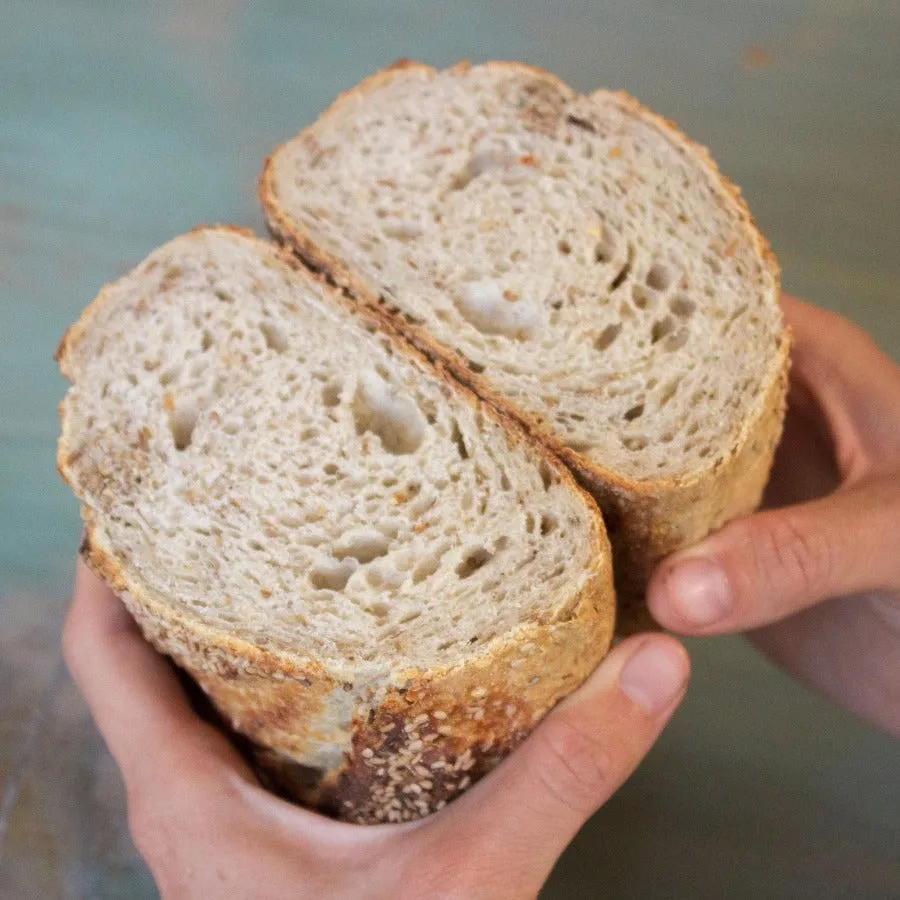
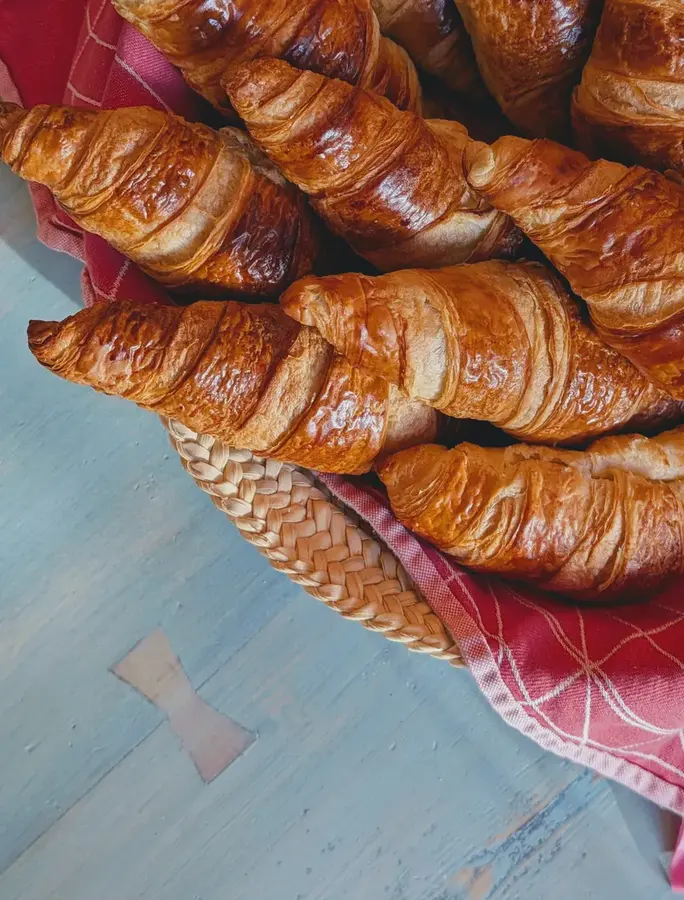
A croissant starts as a sheet of dough wrapped around a slab of butter. Fold it, roll it, fold it again, and each fold multiplies the count. By the end there are dozens of alternating layers of dough and butter, each one thinner than a sheet of paper. Wildgrain puts the figure for a typical croissant at around fifty five layers, and adds a detail that is genuinely unusual: theirs are made with sourdough.
Now put the two clocks together and you can see why a sourdough croissant is a genuinely awkward object to manufacture. Lamination wants cold, firm butter and speed. Long fermentation wants time. The two requirements pull against each other, which is why most croissants are made with commercial yeast on a short schedule and most sourdough is not laminated at all.
It is also why a croissant is the single hardest thing to ship, and therefore the honest test of whether the frozen-then-baked idea works at all. If the method survives a croissant, bread is easy.
What happened when people who test things for a living tested them
Testimonials are evidence of enthusiasm. They are weak evidence of quality, because the people who write them selected themselves. Awards from panels that test products and publish what they found are a different class of evidence, and here the record is public and checkable.
The Good Housekeeping award is the one worth reading closely, because of what the testers chose to remark on. Not the flavor. Not the chocolate. The clock:
“Testers appreciated that they didn’t have to wait for these [Chocolate Croissants] to thaw before baking as with other brands on the market.”
Good Housekeeping, 2026 Snack AwardsThat is a testing panel confirming, without meaning to, the thesis of this article. An hour of thawing is an hour of the pastry sitting at room temperature going soft before it ever sees heat. Removing that hour is not a convenience feature. It is the difference between a croissant that shatters and one that bends.
The volume evidence points the same way. On Trustpilot, where the company does not control the page, the distribution looks like this:
Trustpilot rating distribution, wildgrain.com
1,347 reviews, TrustScore 4.8, read August 27, 2026. Note the shape: 88 percent at five stars, and a visible one star group that is larger than the two, three and four star groups combined. That barbell is what a subscription business looks like when the product is loved and the logistics occasionally are not.
Separately, on its own site, the company claims more than 40,000 five star reviews and more than 100,000 active members. Those are its own numbers rather than a third party’s, and they should be read as such, but they are consistent in direction with everything above.
In their own wordsThe four things members keep saying, unprompted
Read enough published member reviews in a row and they stop being praise and start being data, because the same four observations keep recurring from people who have clearly never met.
One: they expected it to taste frozen, and it did not
“I was worried when I placed my first order that the bread would taste frozen, but that was far from the truth.”
Deborah C., Wildgrain member, published on wildgrain.comThis objection is worth naming because almost everyone has it and it is based on a real memory of real bad frozen food. The answer is the distinction made earlier: what is in the box has not been baked yet, so there is no baked thing to have gone stale in the freezer.
Two: the waste stops
“I love putting frozen bread in the oven and it’s ready to eat in a short time. I usually would buy bread in the store and sometimes not use it right away. Then it gets moldy and I end up throwing it out. Now I just bake it when I need it.”
Tracey L., Wildgrain member, published on wildgrain.com“As someone who only cooks for one or two people it’s fantastic to be able to take a single item from the freezer and have it fresh baked. It saves me from so much food waste and everything is absolutely delicious.”
Cara P., member testimonial published by WildgrainThis is the same clock argument arriving from the household budget instead of the palate. A loaf on the counter is a deadline. A loaf in the freezer is not, which is why one household of two can keep good bread in the house without throwing half of it away.
Three: the thawing step is the one they notice missing
“I love that the [items] don’t need to thaw before baking, and that all of the items bake quickly. I’ve tried other bread companies that require thawing the bread for an hour before baking, and it makes it much less practical to incorporate into an everyday meal.”
Patrice B., Wildgrain member, published on wildgrain.comA member and a Good Housekeeping testing panel independently singled out the same detail, which is the strongest kind of agreement you can get: two parties with nothing in common noticing the same absence.
Four: the digestion reports, which deserve a caveat
“Finding breads, including most artisanal loaves and pastas, difficult to digest, it has been life-changing to have zero digestive rumblings with all of Wildgrain’s offerings.”
Elizabeth W., Wildgrain member, published on wildgrain.comReports like this one are common in the published reviews, and they line up with the company’s conditional claim about slow fermentation and gluten. They are also individual reports rather than a trial, and none of this is relevant to celiac disease, which is a different condition with a different answer. If gluten is a medical question for you, the relevant fact is not fermentation, it is that Wildgrain runs a separate gluten-free line in a dedicated facility.
“As a person with celiac it’s reassuring that their gluten free products are made in a separate facility.”
Amy G., member testimonial published by Wildgrain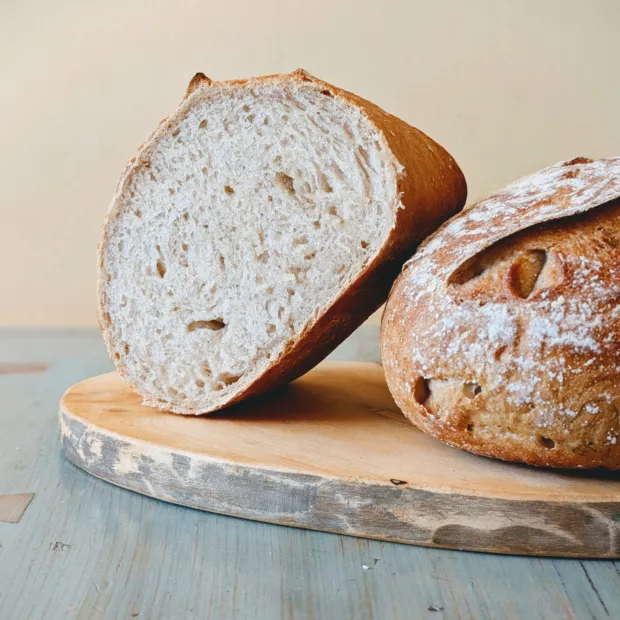
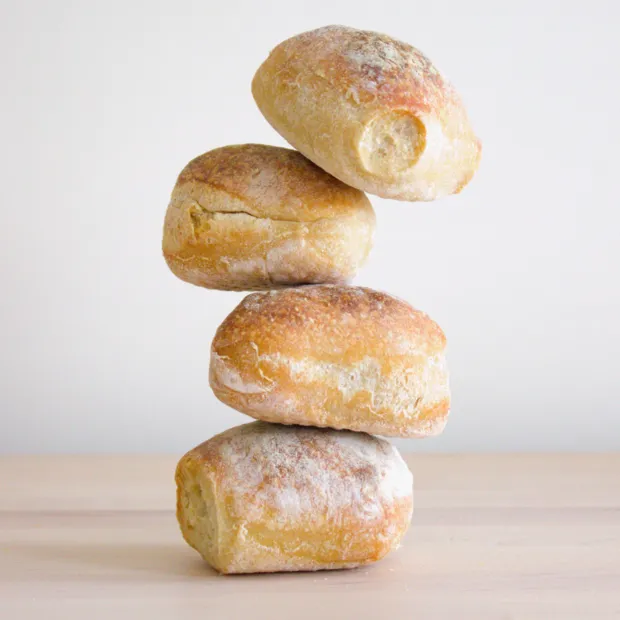
Four reasons this is the wrong idea for some people
Every method that solves a real constraint pays for it somewhere else. This one pays in four places, and none of them is hidden, so it is worth deciding about them now rather than in week three.
Do not sign up if any of these is a dealbreaker
- It needs freezer space, and a real amount of it. A box of breads, pastries and pasta is not a small parcel. If your freezer is already a game of Tetris, this changes your kitchen before it changes your breakfast.
- It needs an oven and about twenty five minutes. Most items go in from frozen with no thawing, which is the whole point, but twenty five minutes is still twenty five minutes. This is a weekend and weeknight-dinner habit, not a thing you do at 7:40 on a Tuesday on the way out.
- It is a membership, not a shop. Boxes recur. Wildgrain sends a reminder four days before each order by email and SMS, and skipping, pausing, rescheduling or canceling is done from the member account. That is a good version of the arrangement, but it is still an arrangement, and it will keep arriving until you tell it not to.
- It is not competing with the cheapest loaf in the store. A sourdough loaf runs $8 to $10, croissants are $12 for four, chocolate croissants $9. That is bakery pricing, because it is bakery bread. If your current bread budget is a two dollar loaf off the shelf, this is a category change, not a swap.
What you get for accepting those four is narrow and specific: bakery-grade bread and pastry, at the age they are supposed to be eaten, in a house that is not near a good bakery, at a time of your choosing. If that particular problem is not one you have, none of the above is worth $89 a box to you and you should stop reading here.
What arrivesThe box, the plans and what things cost
The subscription is built rather than bought: you pick a plan, then choose the items in the box from the bread, pasta and pastry ranges, with sauces and butters as add-ons. Four plans exist because four sets of constraints exist.
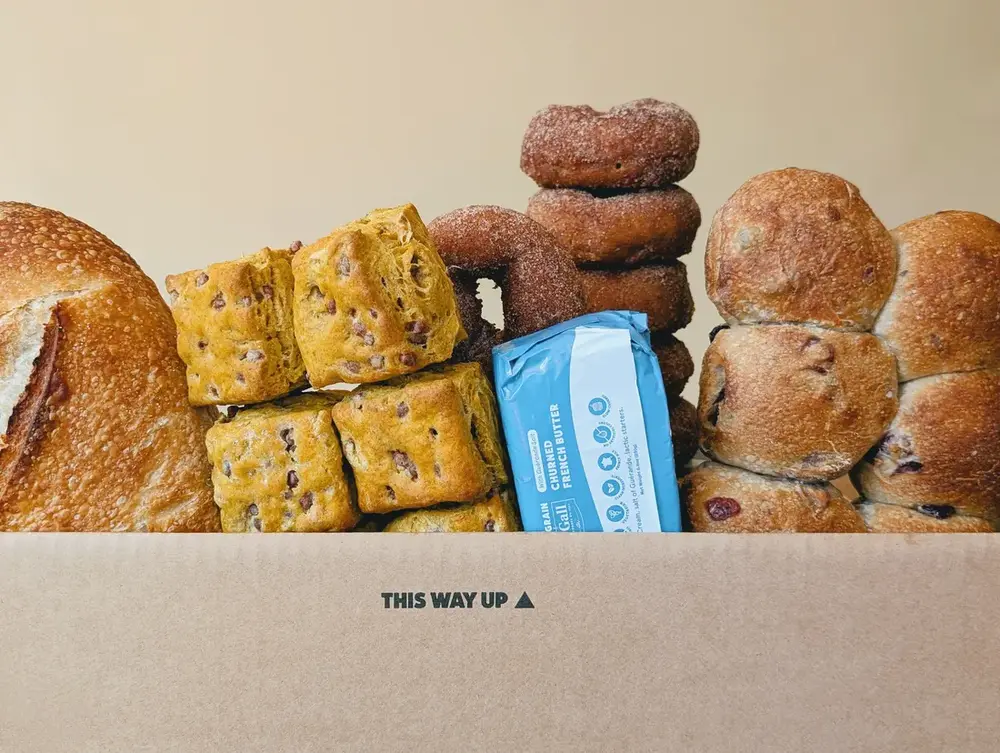
Individual prices are published on the site, so the arithmetic is checkable rather than vibes:
| Item | Size | Price | Bakes in |
|---|---|---|---|
| Wildgrain Box, base box | Box | $89 | You choose the items |
| Plain sourdough loaf | 1 loaf | $8 | From frozen |
| Sourdough demi baguettes | 2-pack | $8 | From frozen |
| Croissants | 4-pack | $12 | From frozen |
| Chocolate croissants | 4-pack | $9 | From frozen |
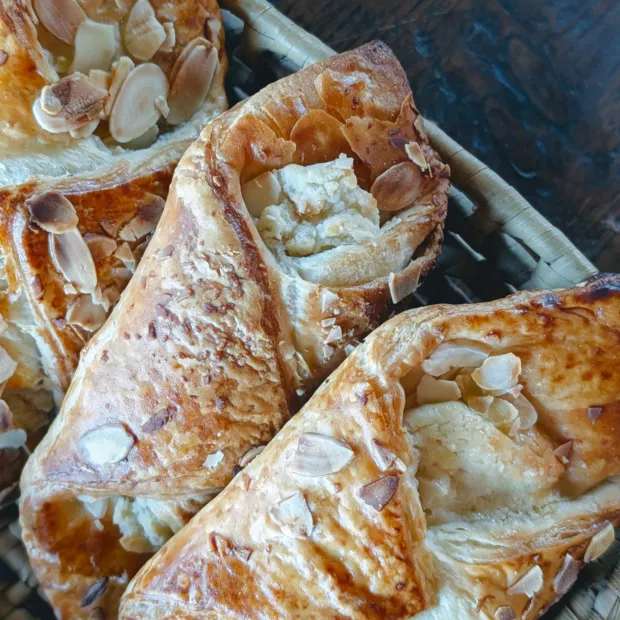
| Almond croissants | 4-pack | $12 | From frozen |
| Multigrain croissants | 4-pack | $8 | From frozen |
| Croissants Box, four varieties | 16-pack | $59 | From frozen |
| Gluten-free sourdough loaf | 1 loaf | $10 | From frozen |
| Fresh rigatoni | 12 oz | $10 | Minutes |
| Slow-churned French butter, salted | 8.8 oz | $8 | Not applicable |
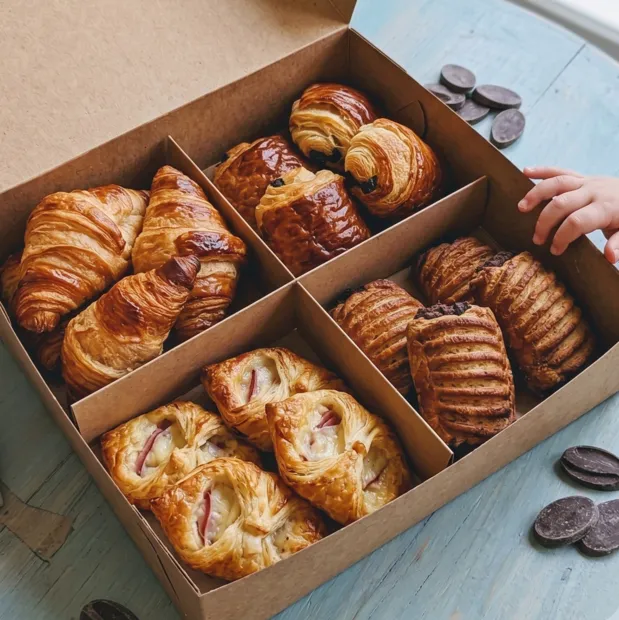
Croissants Box
Four 4-packs: classic, ham and cheese, chocolate, chocolate avalanche.
$59 for 16 · straight from frozen, no prep
See it on wildgrain.com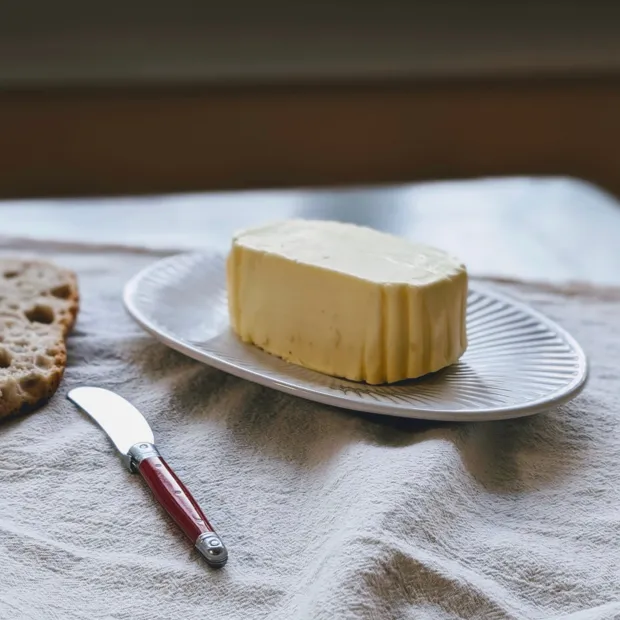
Slow-Churned French Butter
100 percent grass-fed cream, churned over 24 hours by a century-old French creamery.
$8 for 8.8 oz · add-on, not a box item
See it on wildgrain.com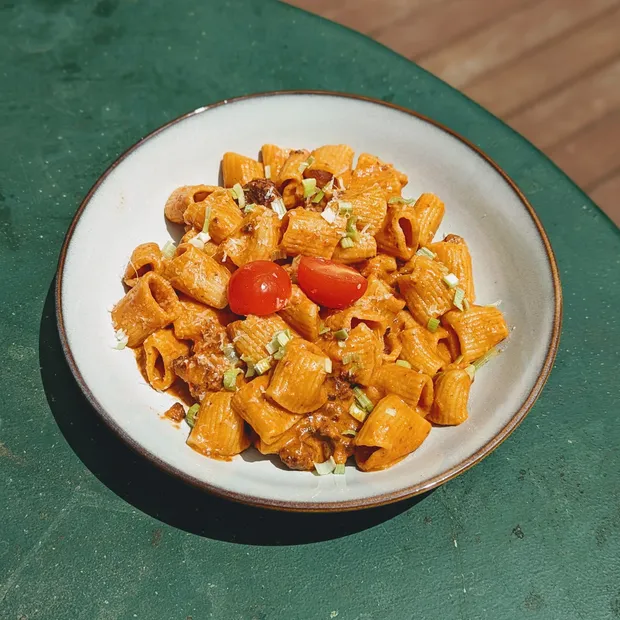
Fresh Rigatoni
Fresh pasta from the same partner network, cooked from frozen.
$10 for 12 oz · from the 10 minute pasta range
See it on wildgrain.comMembership itself carries a set of published terms that are worth knowing before rather than after: free shipping on every order, 5 percent back in credit on every membership order, two meals donated to a food security nonprofit of your choice per box at no extra cost, and a four-pack of sourdough croissants free in every delivery for as long as the membership runs. The company values that last one at $144 a year and it is the offer their whole front page is currently built on.
The part of the model that is not about physics
One thing has been left out of the argument so far, and it deserves to be said plainly because it is the part that is not a clever logistics trick.
Wildgrain does not own the bakeries. It partners with small, independent bakers and pasta makers around the country, who make the goods the traditional way and then flash freeze them. The founders, Johanna Hartzheim and Ismail Salhi, describe starting the company after spending months replacing stale supermarket bread with their own recipes for their family, and they describe the partner network in terms of keeping artisan producers alive. The team is small and works out of Somerville, just outside Boston.
Which is a claim about who gets paid, not about how the food tastes, and those are different kinds of statements. But it does explain the range. No single bakery makes excellent sourdough and excellent laminated pastry and excellent fresh ravioli, because those are three different crafts with three different rooms. A network can.

What to do with all of this
The croissant in Paris was not better because it was French. It was better because it was young, and it was young because you were standing next to the oven that made it.
You cannot move to Paris and you should not have to. What you can do is move the oven, which means accepting one strange-sounding idea: that the best way to get bakery-fresh bread in your house is to have it arrive frozen and unbaked, and to spend twenty five minutes finishing it yourself.
Everything in this article is a consequence of that one move. The twenty hour ferment happens at the bakery because it has to happen somewhere and it may as well happen where the expertise is. The freezing happens because it stops the clock. The last twenty five minutes happen in your kitchen because that is the only place close enough to your plate for the clock to still read low when you take the first bite.
The bakery was never the point. The last hour was the point, and it is the only part you were ever going to be able to control.
Wildgrain currently gives new members a four-pack of sourdough croissants in every delivery for the life of the membership. The offer is stated as valid for new members on select subscription plans, in the contiguous United States, until August 31, 2026 or while supplies last, and it excludes plans of four items or fewer. If you were going to test the idea at all, testing it on croissants is the fair test, because croissants are the hardest case.
Build your first box and claim the croissants Four plans · free shipping always · skip, pause or cancel any time · two meals donated per order