What actually changes when you change litter
Tracking Is a Shape Problem. Odor Is a Chemistry Problem.
Cat owners score litter on three things, and the scores do not move together. The reason is that they are not the same kind of problem.
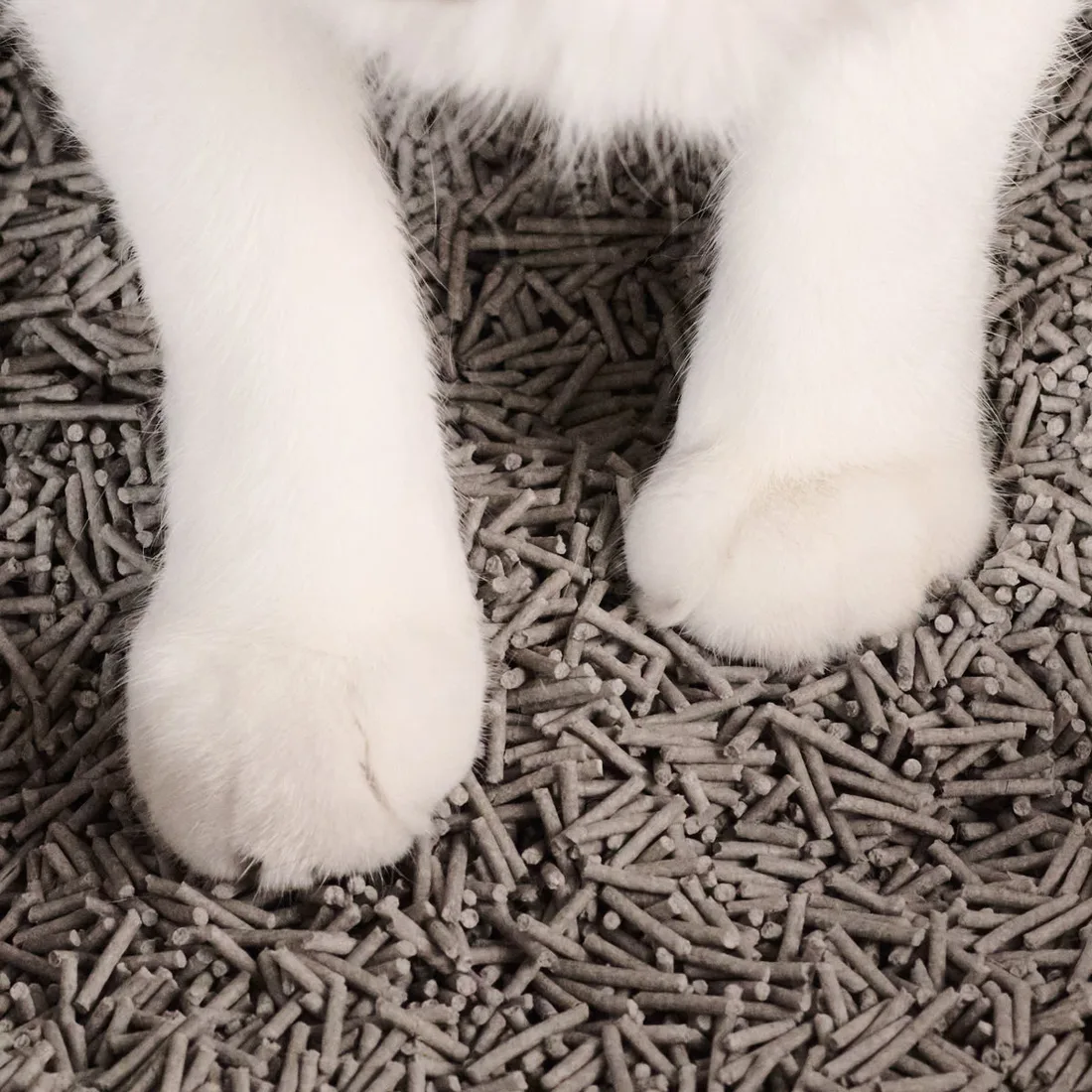
You sweep the floor around the box. An hour later there is a fresh trail of grains running out of the bathroom, along the hall, and stopping at the couch. You did not miss a spot. The litter left on its own, carried out on four paws, the way it does every day.
So you buy a different bag. Sometimes the trail gets shorter. Sometimes it does not, and this one smells worse than the last one. After the third bag, most people give up on the idea that there is anything to understand here and settle for a mat by the door.
There is something to understand, and it is simpler than the shelf makes it look. Cleaning up after a cat is not one problem. It is three, and they have three different causes. Grains on the floor is a question of shape. Haze in the air is a question of how the material was screened. What the room smells like on day two is a question of chemistry, and chemistry is the one that no amount of pellet engineering can fix.
Once you separate them, the shelf reads differently, and so do the reviews.
The evidenceBuyers grade all three, and one of them lags
Tuft + Paw asks its customers to rate exactly these three properties, on a one to five scale, at the moment they leave a review of Really Great Cat Litter. Every one of those ratings is published on the product page, alongside the star rating and the reviewer's name.
That makes the answer countable rather than arguable. Across the 2,401 most recent scored reviews, posted between December 2025 and August 2026, the three properties do not land in the same place.
Really Great Cat Litter, average buyer score out of 5
2,401 scored reviews published on tuftandpaw.com, December 22, 2025 to August 25, 2026. Bars are drawn to the scale of the rating, from 0 to 5.
A quarter of a point looks like a rounding error. It is not, because averages hide the shape of a distribution. Look instead at how often a buyer gave a property the worst possible mark. Clumping was rated one out of five by 3.5 percent of them. Odor control was rated one out of five by 11.6 percent, more than three times as often.
So a meaningful group of people are having two completely different experiences with the same bag. They are getting the clean floor. They are not getting the clean-smelling room. That is not a manufacturing inconsistency. It is the material doing exactly what the material does, and not doing what it never did.
Pellet shape decides what ends up on your floor. It has almost no say in what your hallway smells like on Tuesday.
Problem oneTracking is geometry, not stickiness
Litter does not cling to a cat. It gets caught. A cat's paw closes when it digs, and the gaps between the toes and the pads become small pockets. Anything narrow enough to sit inside one of those pockets gets carried out of the box and released a few steps later, when the paw opens again.
Which means the property that decides tracking is not texture or weight. It is whether a single piece of litter fits in the gap.
This is why the two cheapest and most common litters are also the two that travel furthest. Tuft + Paw's own guide to clay puts it plainly: clay particles “are often very small and dusty, making them prone to tracking outside of the litter box and scattering throughout the home”. Crystal litter has the same problem for the same reason, and the brand's guide to it is equally direct: it is “made from finer, sand-like particles that are super easy to track and spread throughout the home”.
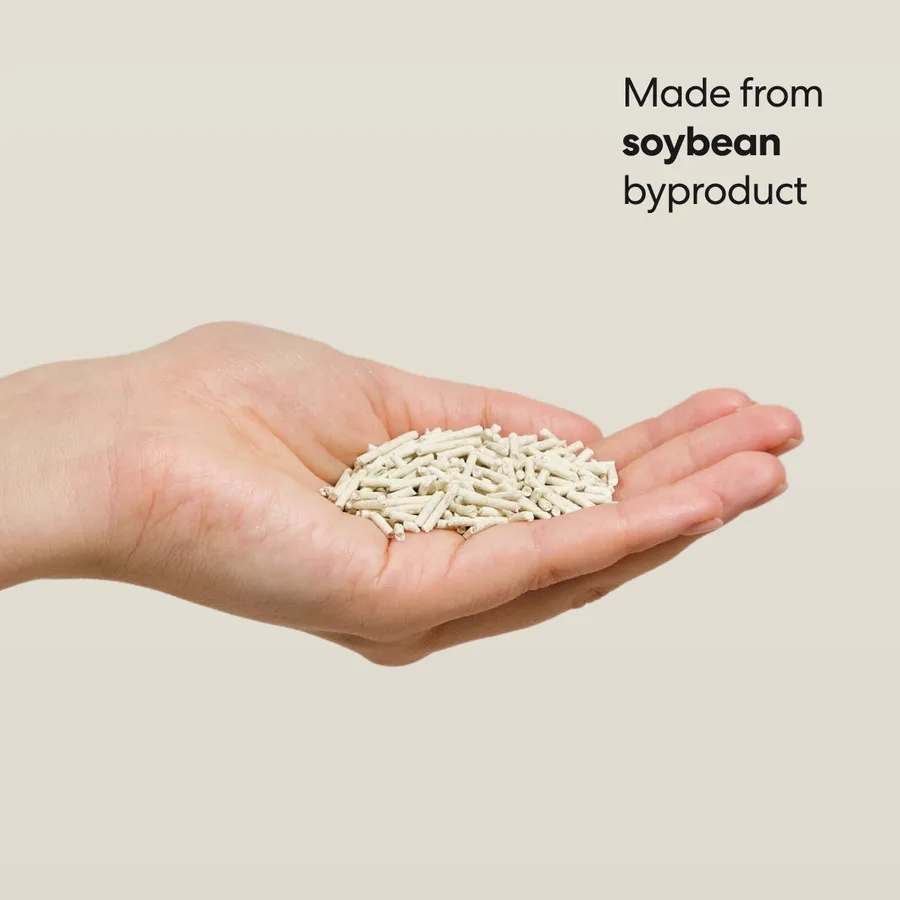
Tofu litter is not doing anything clever here. It is simply a different shape. Soy fiber left over from making soy milk is dried and compressed into cylindrical pellets, and the geometry does the rest.
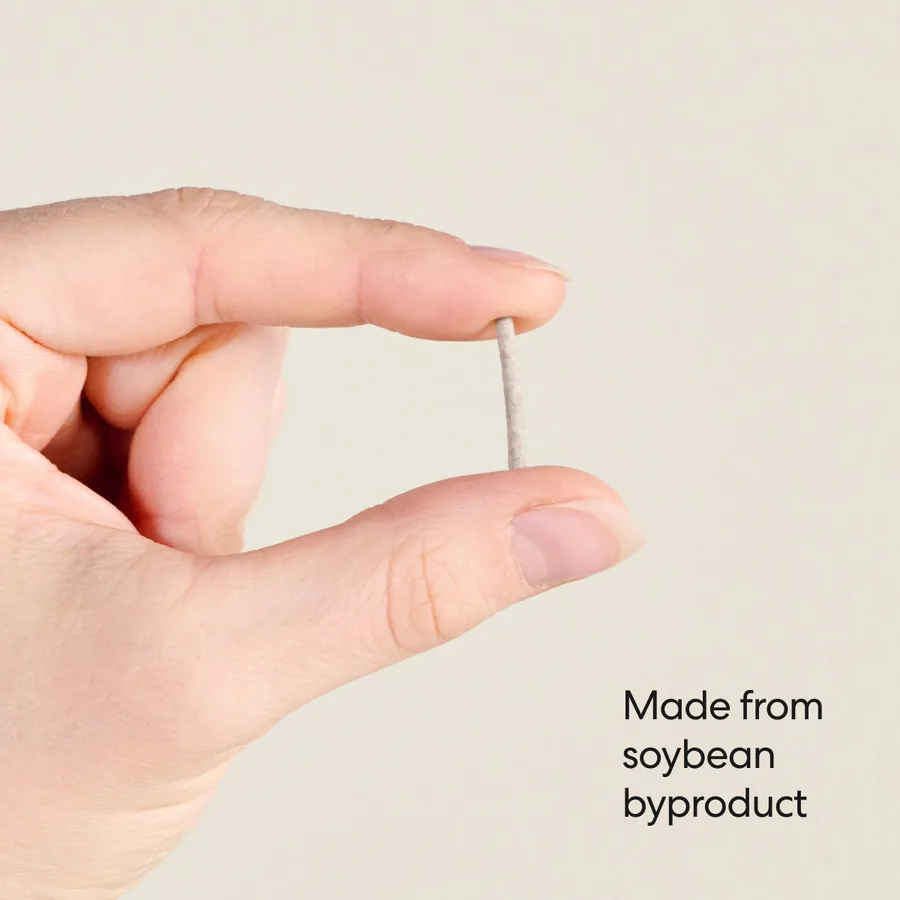
“No dust and it's soft on cats paws but also big enough for almost 100% no tracking. No other litter beats them on such low tracking.”
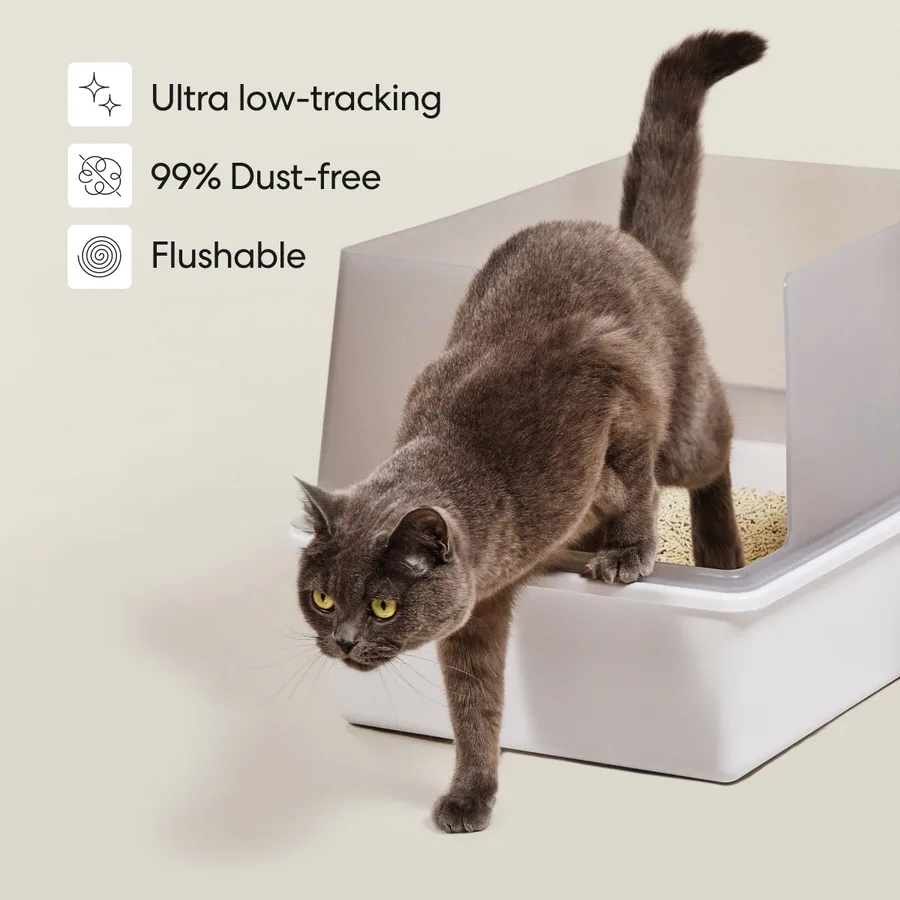
Lora R., 5 stars, verified buyer · scored tracking 5 out of 5 · published on tuftandpaw.com, August 22, 2026The buyer scores agree, and they agree at a useful level of detail. Low tracking averages 4.12 out of 5 across the 2,401 reviews, and 78.9 percent of buyers put it at four or better. It is the second strongest of the three properties, and it is the one people write about first.
It is not unanimous, and the exceptions are worth knowing. Cats with long fur between the toes carry more of anything. A shallow box with low walls throws more of anything. Neither is a property of the litter.
Problem twoDust is decided before the bag is sealed
Dust is the fraction of a litter that is too fine to be litter at all. It is made in two places: during manufacture, when material is crushed or cut, and afterwards in the box, as pieces grind against each other. The first kind can be screened out. The second cannot.
That is the whole reason a litter can arrive low dust and become dusty. Tuft + Paw's guide to crystal notes it about a competing material with unusual candour: silica gel “will break down and become dustier with use. Fresh out of the bag, crystal litter can be very low dust, but they do tend to get much dustier over time.”
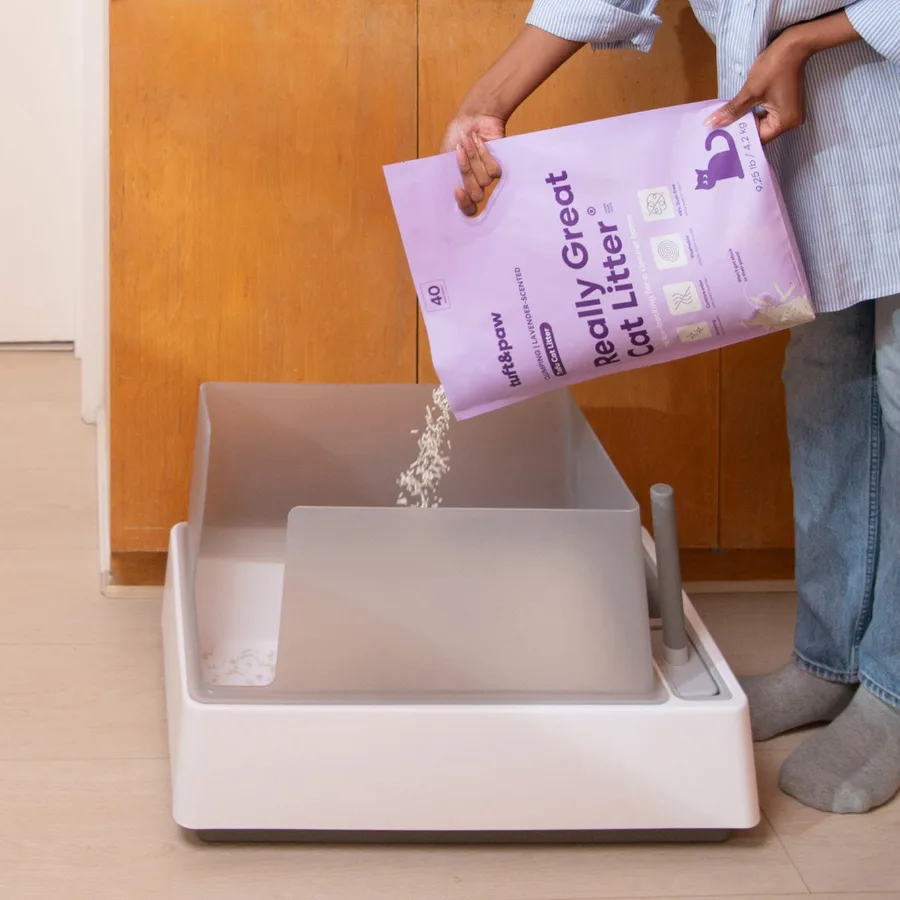
Tofu pellets are compressed rather than crushed, which leaves less fine material to begin with, and Tuft + Paw runs the product through three screening passes before bagging. The claim on the bag is 99 percent dust free. What that number describes is the first kind of dust, the kind you would otherwise meet as a cloud when you pour.
There is a health argument attached to this one, and it is worth stating carefully, because it is routinely stretched. Clay litter carries crystalline silica dust. Tuft + Paw's guide cites the CDC in describing it as “a known carcinogen when inhaled” that can cause respiratory issues in cats and humans, and notes that in industrial settings workers exposed to silica dust wear respirators.
Crystal litter is a different substance and does not carry that risk. The brand's own guide is explicit about the distinction: crystal litter is made of amorphous silica gel, not crystalline silica, and the processing “makes silica gel completely harmless, whereas crystalline silica dust (the kind found in clay litter) is a known carcinogen if inhaled”. Anyone who tells you crystal litter and clay litter share a dust hazard is collapsing two materials that are not the same.
Three kinds of dust, three different stories
- Clay. Crystalline silica. Dusty by nature, and dustiest at the pour. The one with a real inhalation hazard behind it.
- Crystal. Amorphous silica gel, not the hazardous form. Low dust when new, dustier as the beads break down with use.
- Tofu. Compressed plant fiber, screened three times. No mineral dust to release. Rated 99 percent dust free by the manufacturer.
Material descriptions as published by Tuft + Paw in its cat guides on clay, crystal and tofu litter.
Clumping decides whether urine ever leaves the box
Solid waste is easy. Every litter lets you lift it out. Urine is the question that separates the categories, and the difference is not about convenience. It is about whether the urine leaves the house or stays in the box until you empty the whole thing.
A non-clumping litter absorbs. The liquid spreads through the bed, the water evaporates, and what was dissolved in it stays behind. Tuft + Paw's guide to crystal describes the mechanism without flinching: liquid is pulled into the microscopic pores of the beads, “eventually, the water evaporates and leaves the smelly compounds behind”. You scoop the solids daily. The urine is still there.
This is the property Tuft + Paw's buyers rate highest, and by the widest margin: 4.42 out of 5, with 67.2 percent giving it a perfect score. It is also the property that produces the fewest complaints, at 3.5 percent of buyers rating it one out of five.
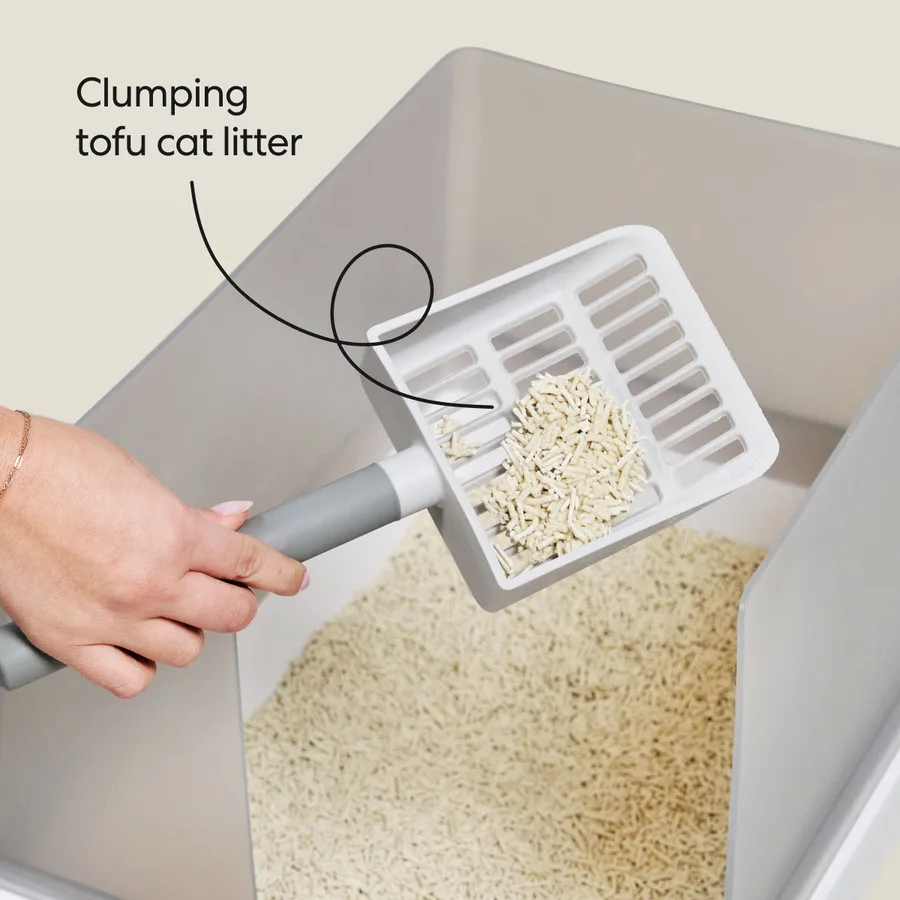
It is worth being precise about what clumping is doing for the smell, because this is where the categories get muddled. Removing urine daily removes tomorrow's odor. It does nothing about the odor of the urine that is in the box right now, in the minutes and hours before you get to it. Those are two different jobs, and only one of them belongs to the clump.
The trade-offWhich brings us to the part nobody puts on the front of the bag
Tofu litter has a known weakness, and the most useful place to read about it is Tuft + Paw's own guide to the material, where the cons are listed next to the pros. Two entries appear there. Some cats dislike pellets. And tofu litter “needs deodorizing additives for good odor control”.
That is a manufacturer publishing the limitation of the category it sells. It is also the correct physical description. Soy fiber is very good at holding liquid and binding. It is not, by itself, an odor adsorbent. Clay and crystal have a pore structure that traps odor compounds as a side effect of what they are. Plant fiber does not, so the odor control has to be added.
Which is exactly what the three formulas are. They are not three scents. They are three different answers to the one problem the pellet cannot solve on its own.
Odor control score by formula, out of 5
Buyers who named a single formula: 847 for OdorStop, 502 for Lavender, 721 for Charcoal. The share rating odor one out of five falls from 13 percent on Charcoal to 8 percent on OdorStop.
The gap between the top and bottom formula is nearly four tenths of a point, which is larger than the gap between odor control and low tracking across the whole product. Put another way: choosing the right formula moves your odor result more than choosing tofu over clay does.
And that is the honest end of the story, because the formula that wins on odor pays for it.
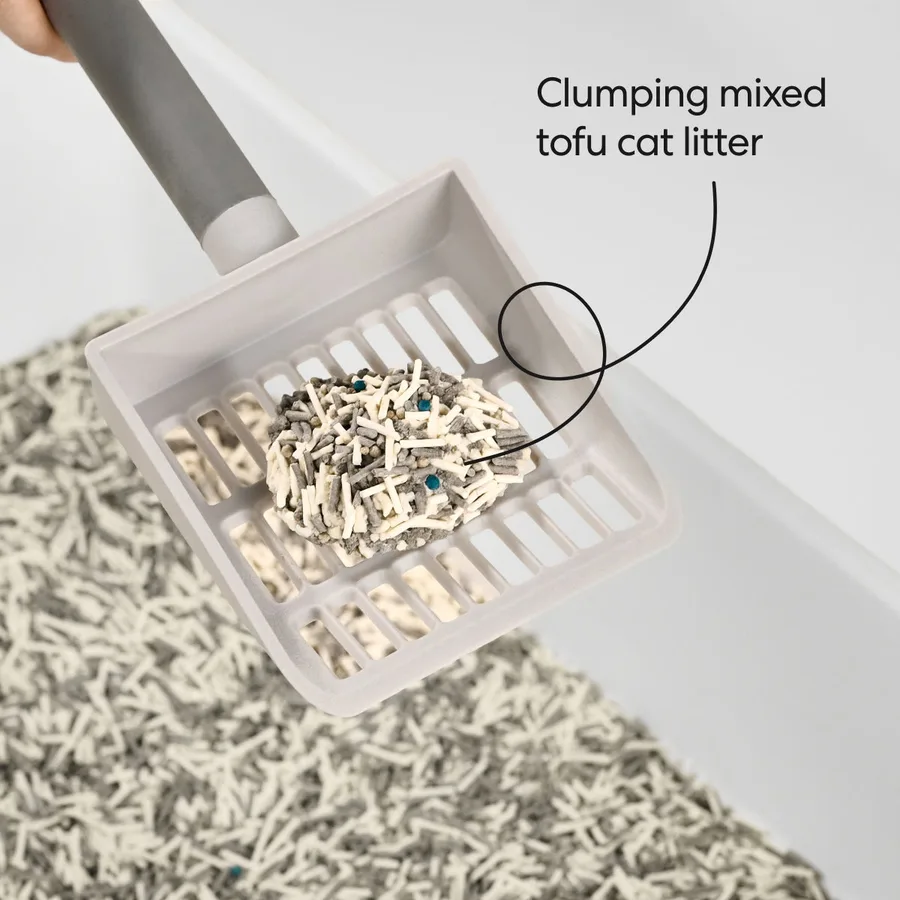
Tuft + Paw describes OdorStop as a “triple-action blend” that “combines charcoal-infused tofu pellets, premium pea litter, and low-dust bentonite”. Bentonite is clay. Adding it is what buys the odor performance, and it takes two things away in the process, both of which the brand states in its own FAQ.
The first is the flush. Tuft + Paw's answer on septic safety is unambiguous: “We do not recommend flushing our OdorStop formula, as it contains bentonite which does not break down as easily.” The second is the weight. The pure tofu formulas are described as 58 percent lighter than clay. OdorStop is described as 50 percent lighter.
Swipe the table sideways. Set side by side, the three formulas are a single decision with a visible price tag.
| Formula | Deodorizer | Odor score | Tracking score | Flushable | Vs clay weight |
|---|---|---|---|---|---|
| Charcoal unscented |
Activated carbon | 3.72 | 4.23 | Yes | 58% lighter |
| Lavender lightly scented |
Dried lavender petals | 3.81 | 4.02 | Yes | 58% lighter |
| OdorStop multi-cat |
Charcoal, pea litter and bentonite | 4.11 | 4.08 | No | 50% lighter |
Scores are buyer averages from the 2,401 scored reviews described above, restricted to reviewers who named a single formula. Ingredients, flushability and weight comparisons are as published by Tuft + Paw.
Read the tracking column as well. Charcoal, the formula with no added mineral, scores highest on tracking at 4.23. OdorStop scores 4.08. The blend gives back a little of the thing the pellet was bought for. It is a small amount, and for a household with three cats it will be an easy trade. For a household with one cat and a plumbing situation the owner enjoys not thinking about, it may not be.
“Bought this thinking it would be healthier for both cat and humans but im not so sure. Its not easily sifted through and breaks off little pieces while trying to sift. Also it does not mask any odors!”
Katy D., 3 stars, verified buyer, Charcoal formula · scored tracking 4 out of 5 and odor control 1 out of 5 · published on tuftandpaw.com, August 24, 2026Her two scores are the article in miniature. Tracking four. Odor one. She bought the unscented formula, whose deodorizer is activated carbon, and she expected masking. Activated carbon does not mask. It adsorbs, which is a slower and quieter thing, and on a bad day in a small bathroom it loses.
This is the single most common way a good litter produces a disappointed buyer, and it has nothing to do with quality control. It is a mismatch between what the formula does and what the person in the aisle assumed it would do.
“I love that my kitty doesn't track it everywhere & she adapted to it immediately. I flush her feces which I like so it keeps the odor down. I blend it with some of the lavender litter to help with odor.”
Barbara L., 5 stars, verified buyer, two years on the product · published on tuftandpaw.com, August 24, 2026Barbara arrived at the same conclusion by experiment. She kept the tracking result she wanted and went looking for the odor result separately, by mixing. Tuft + Paw confirms that the formulas can be blended, since apart from the deodorizer they are the same product.
DisposalWhat flushable means, and the four conditions attached to it
Flushability is the one property of this category that sounds like marketing and turns out to be literal. Because the pellet is plant fiber, it does not just soften in water, it disintegrates. Tuft + Paw states that its Unscented and Lavender formulas “have been third-party tested for flushability, even when clumped”, and explains the apparent contradiction the way a materials engineer would: a small amount of liquid makes it clump, full submersion breaks it apart.
The result is that the used litter leaves the building immediately instead of sitting in a bin by the back door, which is where a large share of household cat smell actually lives.
The conditions matter more than the claim, and Tuft + Paw publishes all of them rather than burying them.
Before you flush anything
- Not OdorStop. The bentonite in the blend does not break down. The brand recommends against flushing it.
- Small amounts, and check locally. Flushing cat litter is regulated at municipal level and is illegal in California. The brand advises confirming with your municipality.
- Indoor cats on commercial food. The toxoplasmosis concern applies to cats that hunt prey or eat raw meat. Tuft + Paw publishes a full guide on this rather than waving it away.
- Not with very old plumbing. The brand's own guidance is to avoid flushing in homes with aged pipework, and to let clumps dissolve before flushing.
All four conditions as published by Tuft + Paw in its product FAQ and its cat guides on flushable and tofu litter.
For everything that does not go down the toilet, the landfill arithmetic is the other half of the picture. Clay is strip mined and does not biodegrade, and Tuft + Paw's guide notes that it swells when exposed to water in landfill, taking up more space than it did in the bag. Silica gel does not biodegrade either. Plant fiber does.
The honest noThree situations where this is the wrong litter
A page about litter that ends in a recommendation for every household is not a page about litter. These three exclusions come from the manufacturer's own published answers, which is the most reliable place to find them.
You run an automatic litter box
Tuft + Paw's answer is direct: most self-cleaning boxes “are designed for fine, clay-style litters and haven't quite caught up to natural, pellet-based litters like tofu”, so reliability with automatic systems can be hit or miss. A rake and a sifting mechanism built around sand-sized particles will not handle cylinders gracefully. If the automatic box is non-negotiable, the litter has to fit the machine.
Your cat has already told you it dislikes pellets
Pellets feel different underfoot, and a minority of cats object. This is listed as a con in the brand's own guide. A cat that has previously refused a pellet or wood litter has given you real information, and the transition below is unlikely to change its mind.
Your storage is damp
Plant fiber can develop mold if it is stored in humid conditions, which mineral litter will not do. The brand recommends a cool, dry, well ventilated spot, using an opened bag within three to six months, and resealing it tightly.
Cats vote on litter, and they vote with their feet
Changing litter is the one part of this that is genuinely a behavioral problem rather than a materials problem. A cat that dislikes a new surface does not complain. It finds a different surface, and by then you have two problems.
The method that works is gradual replacement in the same box, in the same place, with nothing else changed at the same time. Tuft + Paw's guidance is not to move the box, not to change the box, and not to attempt a transition just after adding another cat to the household.
Transition schedule as published by Tuft + Paw. The brand states that most cats move over within three to five days and offers a 30 day money-back guarantee on a first order if the cat refuses.
CostWhat a month actually costs
Tofu litter is a premium material and the brand does not pretend otherwise. Its own guide places it above clay and roughly level with crystal, and adds that “the improved performance in tracking, dust, and cleaning is worth the price for many cat parents”, which is the right way to put a price question: not cheaper, better at three specific things.
The per pound figure is the one that lets you compare across the aisle. At $29 for 9.25 pounds, a single bag works out to $3.14 per pound. Buying five at $24 a bag brings it to $2.59 per pound. Tuft + Paw's own guide puts crystal litter at $3 to $4 per pound, so the five-pack lands below the range it quotes for the premium mineral alternative, and the single bag lands inside it.
| Pack | Price | Per bag | Per pound |
|---|---|---|---|
| 1 bag | $29 | $29.00 | $3.14 |
| 3 bags | $79 | $26.33 | $2.85 |
| 5 bags | $120 | $24.00 | $2.59 |
Prices as listed on tuftandpaw.com on August 25, 2026. Per pound figures calculated from the published 9.25 lb bag weight. Free shipping applies over $49, and a first subscription is discounted 25 percent.
The decisionPick the formula for the failure you actually have
If you have read this far, the choice is no longer between brands. It is between three answers to the odor problem, and you already know which one applies to your house.
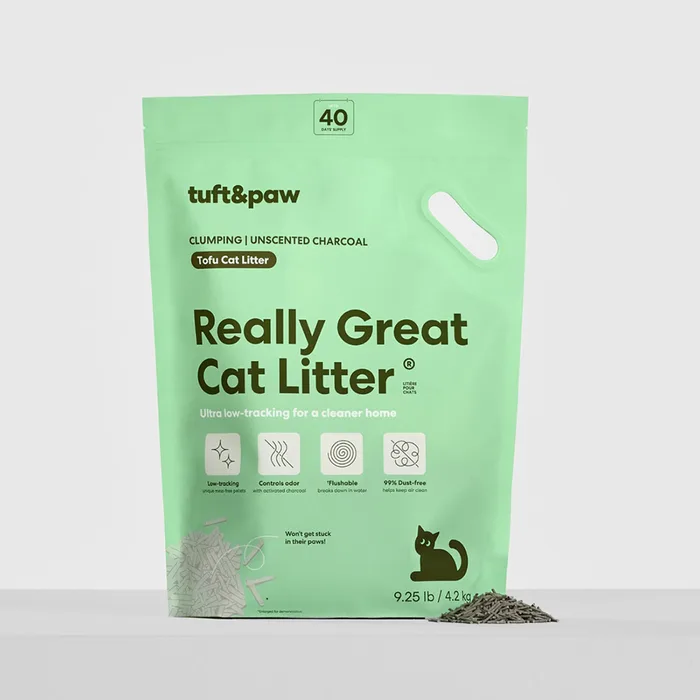
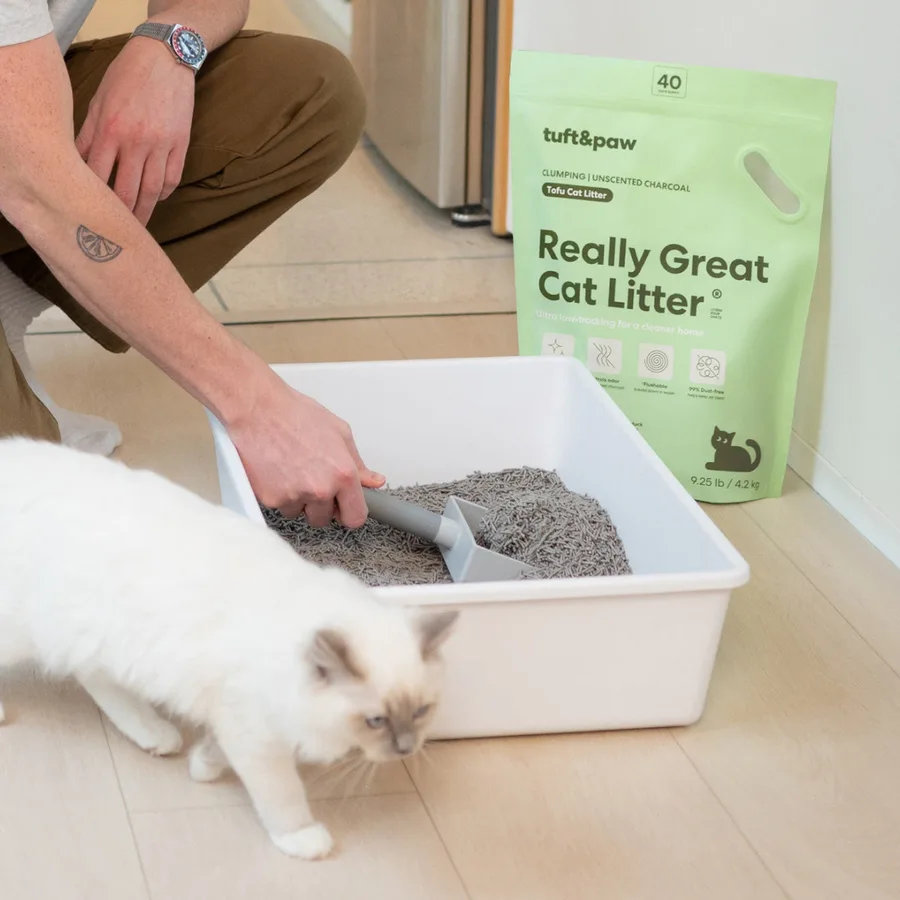
Charcoal, unscented
One cat, and floors are the complaint. Activated carbon absorbs odor rather than covering it. Best tracking score of the three.
Tracking 4.23 · Odor 3.72 · Flushable
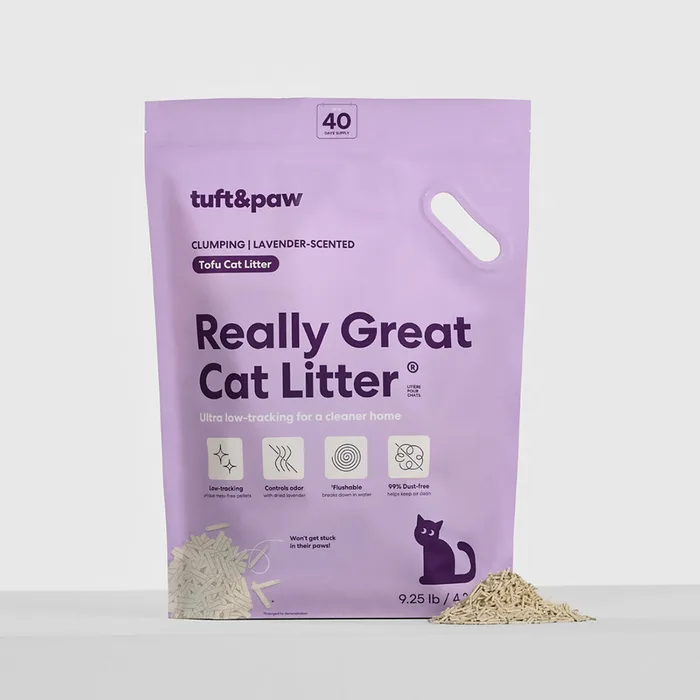
Lavender
You want a scent, but a mild one. Real dried petals at roughly one percent, not concentrated oil, which is why the brand considers it cat-safe.
Tracking 4.02 · Odor 3.81 · Flushable
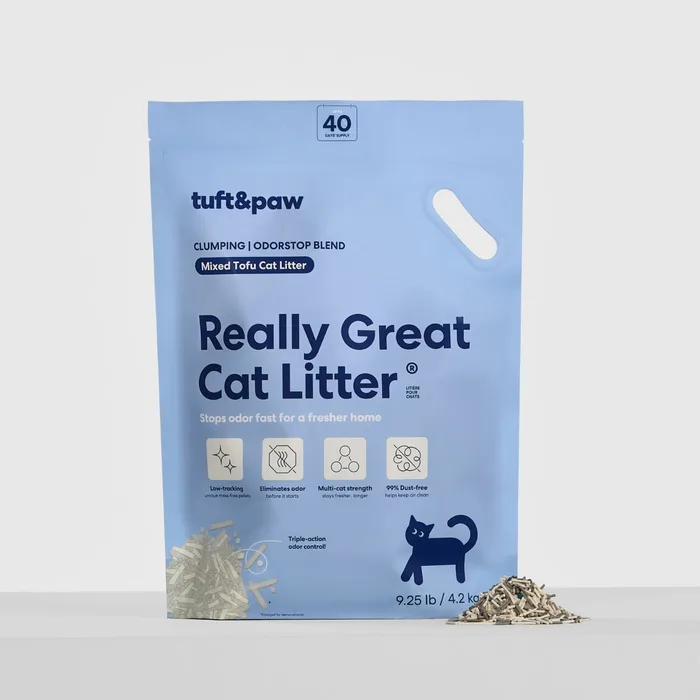
OdorStop
Two or more cats, and smell is the complaint. Bentonite added for odor power. You give up the flush and a little of the tracking.
Tracking 4.08 · Odor 4.11 · Not flushable
The short version
Grains on the floor is a shape problem, and a long compressed pellet solves it in a way that sand-sized clay and crystal cannot. Haze in the air is a screening problem, solved before the bag is sealed, and it is worth knowing that only one of the three mineral options carries a real inhalation hazard. Whether urine leaves the box at all is decided by clumping, and it is the property this litter's buyers rate highest.
Smell is the one that is not solved by the pellet, by the manufacturer's own account, and it is the one that produces almost all of the disappointment. It is solved by the deodorizer, and the deodorizer is what you are choosing between when you choose a formula. Charcoal absorbs. Lavender adds a light real scent. OdorStop adds clay, and takes back the flush.
Buy the one that answers the complaint you actually have, not the one on the front of the display.
See all three formulas and their buyer scores Really Great Cat Litter · $29 a bag, about a month for one cat · 4.4 from 11,941 reviews · 30 day money-back guarantee