Kitchen instruments
The warranty does not cover deep fryers. The reviews are full of them.
14,306 ThermoWorks customer reviews, read end to end. The accidents repeat, and so does the outcome.
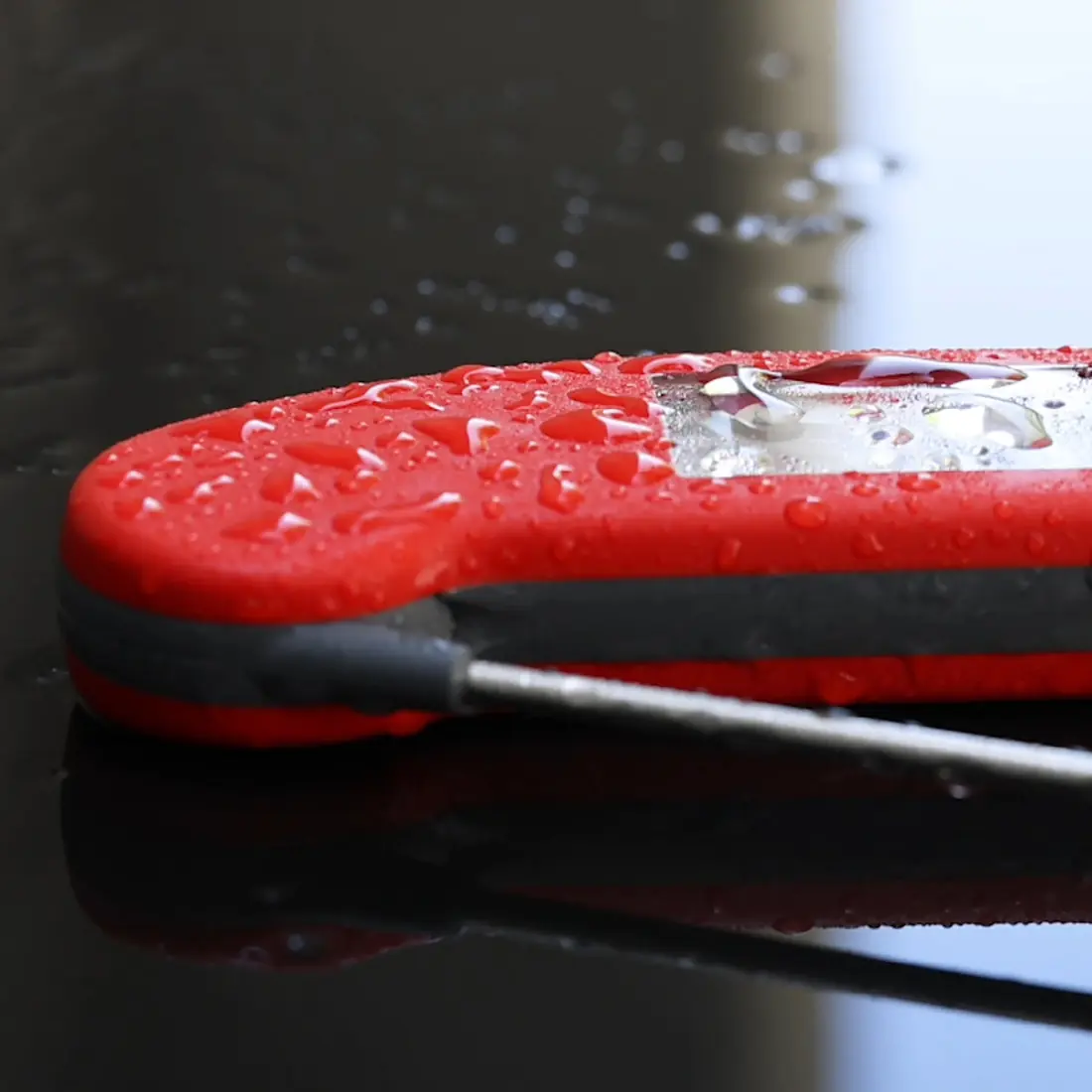
It is a busy Friday night in a restaurant kitchen. A grill cook fumbles a thermometer and it drops into the fryer. Not onto the fryer. Into it, past the grate in the bottom, past the heating coils, all the way down. Nobody can go in after it. The oil has to be drained first, and that takes fifteen minutes.
The thermometer that came out was a Thermapen. It still worked. Two months later it was still working, which is when its owner sat down and wrote about it in the review section of the company that made it.
★★★★★
“My grill cook fumbles her Thermopen and it falls into the fryer. It sinks like a stone past the grate in the bottom, past the heating coils, all the way to the bottom. It was 15 minutes before we were able to drain the oil out so we could retrieve it. Much to our surprise it still worked! This thing was fully submerged in 325 degree grease for 15 minutes. I am writing this review two months after what has become known as ‘the baptism by fryer’, and this Thermopen is still going strong.”
William A., review titled “Baptism by Fryer”, February 26, 2026. Published on thermoworks.com
Stories like that one are the reason this article exists. They sit in public, on the product pages of a family-owned instrument company in American Fork, Utah, next to the buy button, and almost nobody reads past the first screen of them. So we read all of them. Fourteen thousand three hundred and six reviews across their sixteen most reviewed cooking instruments, pulled from the same public feed the website itself uses, on August 27, 2026.
What comes out is not a marketing story. It is closer to an accident log, and it has a shape.
Nobody at ThermoWorks will promise you any of this
Start with the thing that makes the whole subject interesting. The company does not claim its instruments survive fryers, and it could not, because its own warranty says so in writing.
From the published warranty
“The product warranty and guarantee does not cover damage caused by fair wear and tear, abnormal storage conditions, incorrect use, accidental misuse, abuse, neglect, misapplication or modification.”
thermoworks.com/pages/product-warranty, read August 27, 2026
Read that list again with the fryer in mind. Accidental misuse. Abuse. Neglect. Every survival story on their site is, by their own definition, an event they owe you nothing for. The five-year warranty printed on the Thermapen ONE page covers a manufacturing defect. It does not cover a turkey fryer, a snowbank, or a toddler.
Which means the durability question has no official answer. There is no claim to check, no lab report to request, no number on the box. The only evidence that exists is other people's accidents, written down by the people who had them, published by the company on its own store, and left there.
What 14,306 reviews actually say
Here is the count, before any interpretation. Sixteen products with at least one published review, every review on every page, keyword-matched and then read by hand where it mattered.
The corpus, counted August 27, 2026
Counts are keyword matches against the full review text, so they include a handful of false positives such as melted chocolate. Every review quoted in this article was read in full and is linked to the product page that publishes it. Source: the public reviews feed behind thermoworks.com.
The Thermapen ONE alone carries 4,150 reviews and an average of 4.87. That average is not the interesting number. This is the interesting number.
The fire stories
Sixteen reviews in the corpus describe the body of a ThermoWorks instrument being melted, burned, or hit by something on fire. Not the probe, which is a length of steel and is supposed to be in the heat. The body. The plastic part with the screen and the battery in it.
They are worth reading in sequence, because the sequence is the argument.
★★★★★
“While deep frying a turkey I laid it too close to the fryer, burning at 350 degrees. It melted to the point that I can see the electronics inside of it but, it still works like a charm.”
Barry C., November 27, 2021. Published on thermoworks.com
★★★★★
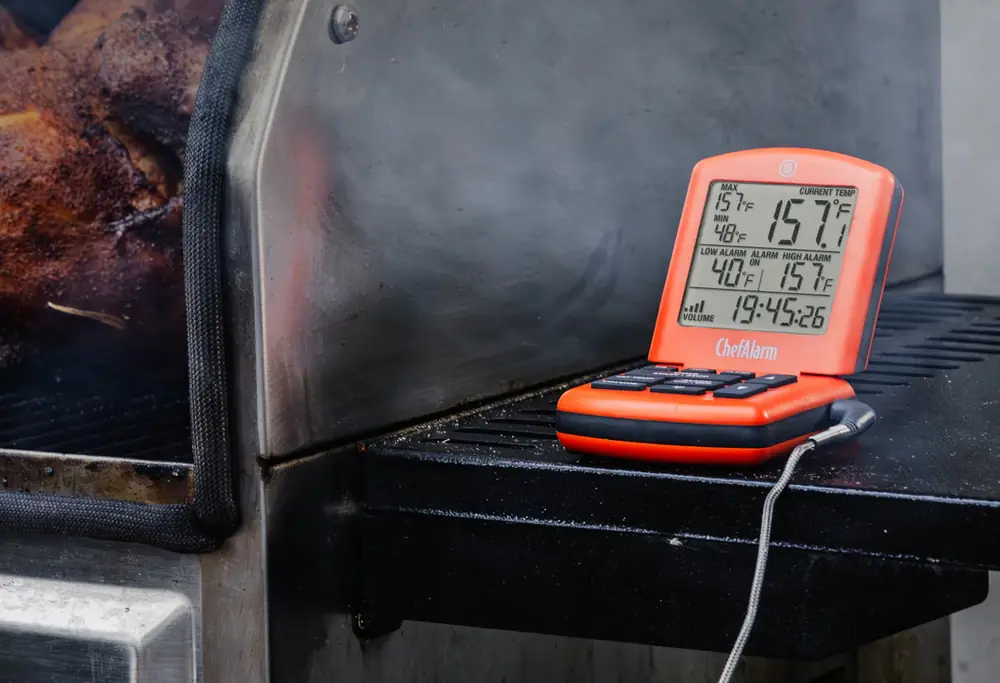
“I left mine unattended under a kettle grill. A piece of burning coal fell on it, right on the ‘low alarm’ section of the screen. The screen melted a bit, but it also put out the bottom part of the coal that was touching it and the coal continued burning on top of it. There's still a piece of coal stuck on the outside of the screen, but the electronics were not damaged. The ChefAlarm still works perfectly and temp readings are accurate.”
Danny, review titled “burning-coal-tough”, April 30, 2018. Published on thermoworks.com
★★★★★
“Put my DOT on the stove backsplash. Had no idea the backsplash got so hot! DOT screen went black and plastic housing began melting and deforming. I thought I'd ruined my new thermometer. Took it down and as it cooled the screen came back to life! It still worked!”
Joe P., June 11, 2025. Published on thermoworks.com
★★★★★
“3 years ago it was magnetically attached to the side of a propane smoker that caught fire. The heat was enough to melt the plastic holding the magnets and kickstand and warp the back (and make it fall 4 feet to the deck), but a new set of probes and 3 years later it's still going strong. Every time I think it dies it just keeps going.”
Brad N., review titled “Built to take a pounding”, September 20, 2025. Published on thermoworks.com
And the same event with a different ending, from a customer who was annoyed enough to leave two stars:
★★☆☆☆
“Coals fell too close to the air intake in the firebox and the foam seal caught fire and melted Billows. Amazingly, it still works. Unfortunately, it is melted, and I can no longer attach it to my firebox.”
Daniel C., review titled “Melted”, June 11, 2025. Published on thermoworks.com
That last one is the honest version of the whole pattern. The electronics survived the fire. The plastic that held the thing where it needed to be did not, so the product was finished anyway.
The temperatures involved are not marginal
Every number below comes from a review or from a published ThermoWorks specification. None of them are estimates.
Where these accidents actually happen
Bar lengths are drawn to scale against 700°F for the numbered rows. Sources: Thermapen ONE specifications, the ThermoWorks ice bath guide, and the reviews quoted above.
★★★★★
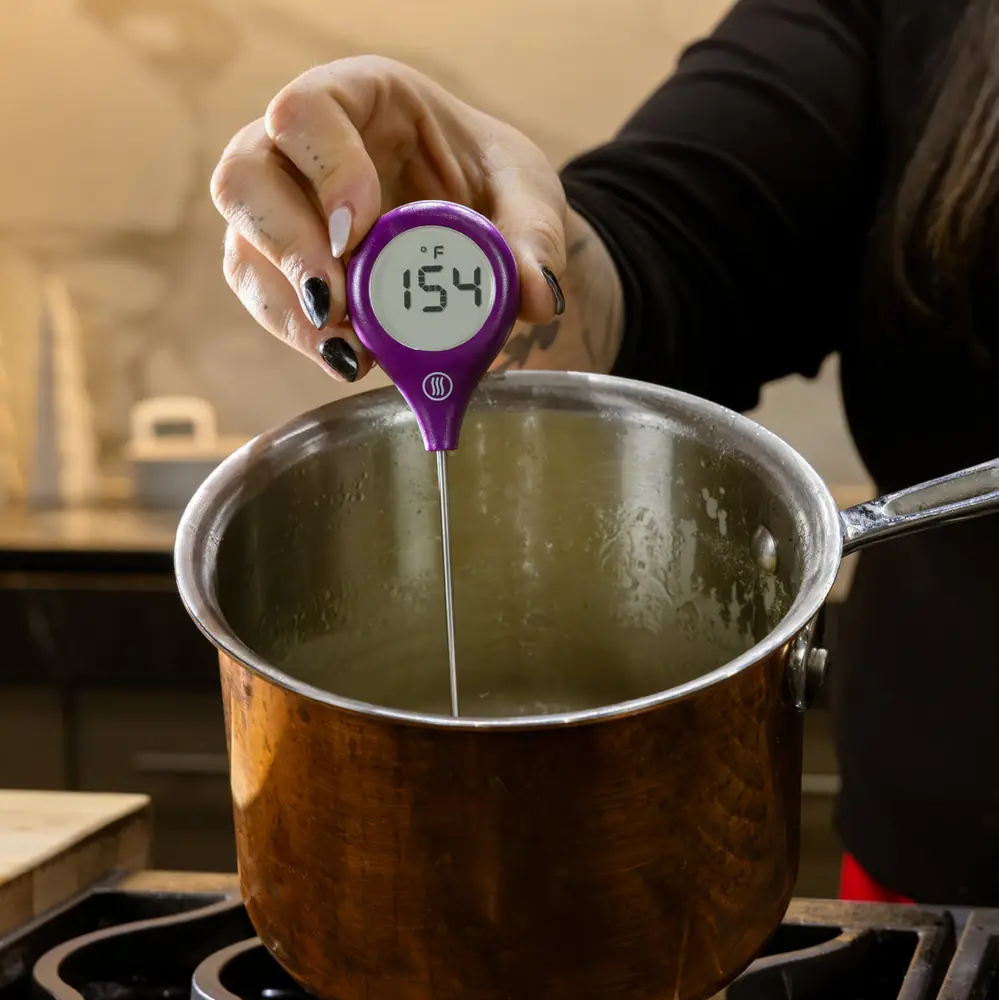
“Accidentally dropped it into a pot of 375° oil. Took a minute to get it out of there under the chicken, but I cleaned the oil off and like a Timex watch it took a licking and kept on ticking. No ill effects. I'm totally impressed!”
John M., review titled “Waterproof AND oilproof!!!”, May 21, 2023. Published on thermoworks.com
The probe is rated to 572°F. The body is rated to 122°F.
This is the single most useful line on the entire ThermoWorks website, and it is buried in a specification table under a heading most people never open.
- Measurement range−58 to 572 °F
- Operating range−4 to 122 °F
- Accuracy±0.5 °F from −4 to 248 °F
- Response time1 second
- SensorType K thermocouple
- IP ratingIP67 waterproof
- Battery life2,000 hours, one AAA
- Warranty5 years
Thermapen ONE published specifications, thermoworks.com, read August 27, 2026.
Two ranges, and they differ by 450 degrees. The measurement range is what the steel tip is allowed to read. The operating range is where the rest of the instrument is designed to sit while it does it. A hundred and twenty two degrees is a hot day in Phoenix. It is not a grill lid, a smoker wall, a backsplash, or the rim of a fryer.
So the correct way to read the survival stories is not that these instruments are indestructible. It is that they keep working a very long way outside the envelope their maker publishes, and the reason is structural.
Why the case can go and the reading can stay
Schematic, drawn to explain a principle, not a measurement of any specific instrument. The outer shell can deform badly without the sealed module inside it caring. What ends an instrument in this review corpus is never heat by itself. It is heat, impact or wear that opens one of the three marked points and lets water in afterwards.
That is exactly what the sixteen fire reviews describe when you tally the outcomes rather than the drama.
Sixteen melted or burned bodies, by outcome
Counted across Thermapen ONE, Classic Thermapen, ThermoPop 2, Smoke, Signals, DOT, ChefAlarm and Billows. In twelve of the sixteen, the instrument had been set down on, stuck to, or left attached to something hot. Three reviewers do not say where theirs was. The sixteenth is the one that matters most, and it is next.
★☆☆☆☆
“Warning, the plastic outer case and clear view cover to the LCD area are not heat resistant. We took the probe out from the BBQ and it touched the clear area of the LCD screen plastic and outside cover melted. I expected the cover to be more heat resistant.”
Brian K., one star, February 20, 2022. Published on thermoworks.com
A folding thermometer has a hot steel probe swinging back toward its own display. That is the one failure mode in the entire corpus that happens with the instrument in your hand, and it is worth knowing about before it happens to yours. Pull the probe clear of the meat, let it cool for a second, then fold.
The water stories are less dramatic and more useful
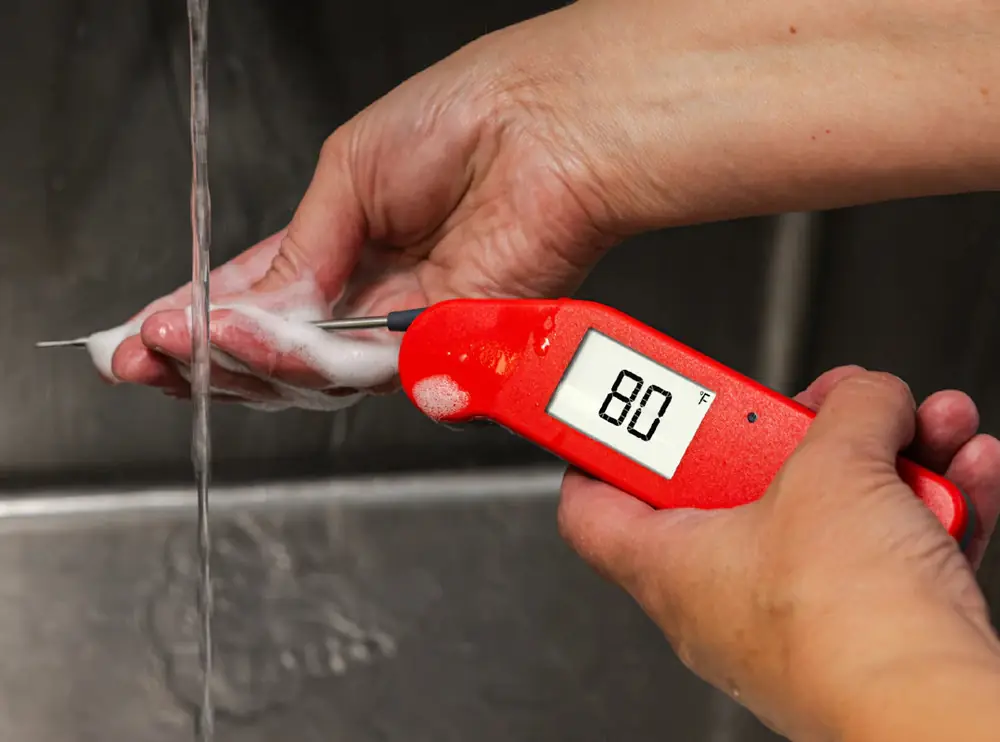
Fifty one reviews describe submersion of one kind or another. The Thermapen ONE carries an IP67 rating, which is a specific claim under an international standard and not a marketing adjective.
What IP67 actually means
- First digit, 6Dust tight. No ingress of dust at all.
- Second digit, 7Protected against immersion in water to one meter, for thirty minutes.
Defined by IEC 60529, the standard the rating comes from. The rating describes a test, not a lifetime. It says nothing about oil at 325 degrees, and it says nothing about what happens once the seal has been opened for a battery change.
Thirty minutes at one meter. Now read what people actually did.
★★★★★
“Wasn't sure I believed they were waterproof but 2 weeks ago my son in law put the dishes in the sink which I then filled with water. An hour later I came back and discovered my thermapen at the bottom of the sink completely submerged. It's still working perfectly.”
Lesley W., July 15, 2022. Published on thermoworks.com
★★★★★
“Over the years this thing has taken so much abuse, I've left it in the oven, in the rain, dishwasher, and it keeps on ticking. It's hands down helped me become a better cook in the kitchen and on the BBQ, and outlasted any other thermometer I've owned.”
My J., review titled “Thermapen is a freaking tank”, April 16, 2020. Published on thermoworks.com
An hour in a full sink is double the immersion time the rating covers. A dishwasher is hot water under pressure, which the rating does not cover at all. Both instruments lived. And then there is the other column, which is short but not empty:
★★★☆☆
“I had actually borrowed it from my neighbour and went to wash it and it fell in the sink. The screen now has condensation inside that won't go away and I'm doubtful it will work for much longer.”
Chad F., three stars, April 12, 2023. Published on thermoworks.com
Two people drop a Thermapen in a sink. One comes out reading correctly after an hour, one fogs up in a few seconds. That is not a contradiction and it is not luck. It is the difference between a sealed capsule and a capsule that has been opened, cracked, or worn, which is the subject of the section after next.
Three feet of snow, three months
The best story in the corpus is not about heat at all, and it belongs to a $109 alarm thermometer rather than a pen.
★★★★★
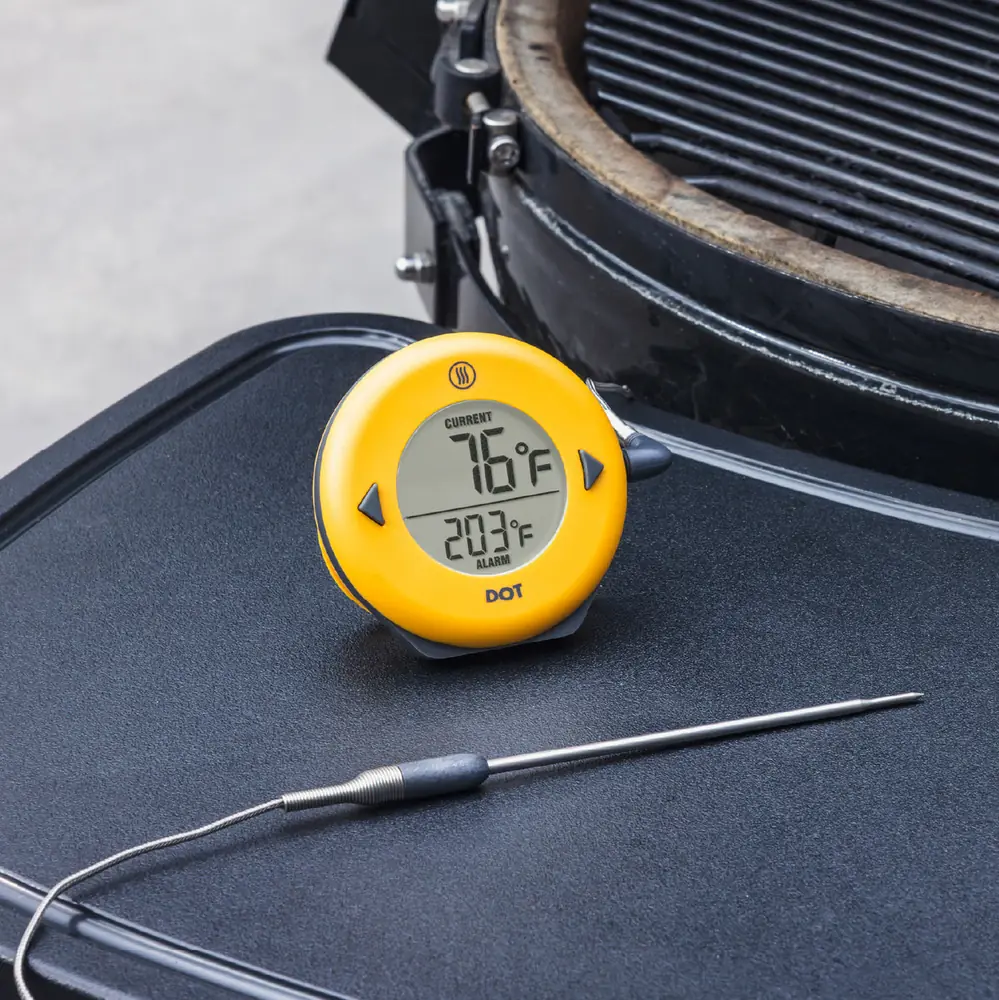
“Was doing a smoke in January, 23 degrees outside, pulled my butts off when they finished and forgot to pick up my smoke. Meanwhile it had snowed over a foot and I had snow blow that area burying my smoke in over 3 foot of snow. It had frozen in for the winter. 3 months later, I finally found the smoke unit. It was still turned on and working. Wow do the batteries last a long time in this thing! The screen was discolored but functional. That was 3 years ago and I use this unit monthly.”
Buriedin S., review titled “Takes a lickin and keeps on tickin”, December 4, 2018. Published on thermoworks.com
Three details in there are worth separating out. It was still switched on, so the batteries ran for three months under snow. The screen was discolored but working, which is the same case-versus-electronics split as every fire story. And the reviewer was still using that same unit monthly three years later.
Time shows up over and over in this corpus once you look for it. A hundred and thirty three reviews mention owning one for years or a decade. Two of them state the arithmetic plainly:
“I've had my Smoke for ten years. The case has been partially melted, the magnets have fallen out, and the stand has broken off. Not bad after ten years. This is not the end of the story! I just ordered a new one!”
Fred C., March 30, 2024, on the Smoke product page
“I've owned the MK 4 for nearly 10 years, initially for my BBQ restaurant, recently dropped it for the 100th time and broke the battery door. The MK4 still works fine, with a taped up battery door.”
Kenneth S., verified buyer, May 24, 2026, on the Thermapen ONE product page
What actually kills one
The whole point of reading 14,306 reviews rather than the first twenty is that the failures cluster, and they cluster in two places that have nothing to do with fryers. Which one applies to you depends entirely on whether the instrument you buy has a cable coming out of it.
If it fits in your hand, watch the battery door
Eighty four reviews across the corpus name the battery door, the back plate, its screw boss or the seal ring behind it. Twenty four of those are three stars or below, and they read like three versions of one event.
★☆☆☆☆
“The first time I needed to change the battery, the housing inside of the back plate that holds the screw CRUMBLED when I went to unscrew it, making this thing no longer water tight and there is no way to screw in the back plate anymore.”
Aaron, one star, June 24, 2026. Published on thermoworks.com
★☆☆☆☆
“Took the back off and discovered there was water all over the inside! Never even submersed it, would wash and dry immediately. When taking the back off I discovered there was a little red plastic ring that was completely broken!”
Keith B., one star, September 10, 2022. Published on thermoworks.com
★★★☆☆
“The battery cover broke on mine so I asked for the opportunity to purchase a replacement. Wonderfully, they sent me a replacement. The issue is the tolerance on the gaskets. The replacement covers have gaskets that are too large to allow the cover to close properly and give the tool water resistance.”
The1st, three stars, January 8, 2025. Published on thermoworks.com
That red plastic ring is the seal. Once it goes, the IP67 rating goes with it, and the instrument that shrugged off a full sink starts collecting condensation from a wet hand. Each of these people then washed a thermometer the way they always had, and this time it did not survive.
If it has a cable, watch the probe
The corded alarm thermometers are a different product with a different weak point, and the numbers are not close. Across Smoke, Signals, DOT, ChefAlarm, Square DOT, Billows and the RFX system there are 796 reviews at three stars or below. In 141 of them, eighteen percent, the complaint involves a probe failing, going inaccurate, or being replaced. Among the handheld pens the same search returns thirteen reviews in total.
ThermoWorks is not hiding this. It is in the warranty, in a single sentence that most buyers will never read:
The sentence that sets the real budget
“This warranty does not apply to probes, where a six-month period is offered. The six-month period may also apply to a probe where it is an integral part of an instrument.”
Five years on the pen. Six months on the wire. That is not a loophole, it is an accurate description of what a thin thermocouple cable does when it is repeatedly clipped to a grate, run under a lid, splashed with fat and coiled up wet. Probes are consumables. Buy the alarm knowing you will replace probes, keep them out of standing water, and use the spool, and the corded units in this corpus run for years. Several run for ten.
The third killer applies to everything and is not an event at all. It is exposure over months, which is the one thing a sealed capsule cannot out-wait:
★★★★★
“I used one for a long time and left it outside on a black surface where it got rain and extreme heat. Yep, it died after the abuse so I instantly replaced it.”
Trey H., verified buyer, August 6, 2026. Published on thermoworks.com
So the practical reading of 14,306 reviews comes down to four lines, none of which appear anywhere on the product page.
What the corpus is actually telling you
- Single accidentsSurvivable, well past the published operating range, as long as the shell stays closed.
- Weak point, handheldsThe battery door, its screw boss and its gasket. Open it carefully and rarely.
- Weak point, corded alarmsThe probe. Six months of warranty, and eighteen percent of their negative reviews.
- The slow killerMonths of sun and rain outdoors, which nothing sealed survives.
Two of those have a cheap answer. The $16 magnetic silicone boot, which is what the ten year restaurant owner quoted above bought after he finally broke a battery door. And bringing the instrument indoors, which is the single behavior separating the ten year owners in this corpus from the two year ones.
Why it was sitting on the grill in the first place
Here is the question the survival stories never ask. Twelve of the sixteen melted instruments had been set down on, or stuck to, something hot. Why would anyone put a thermometer on a smoker wall, a grill lid, or a backsplash?
Because they were waiting. And thirty nine reviews in this corpus say so directly, in the same words, without being asked.
“My hand would get hot holding it there waiting on it to show the temp. Seconds do count and add up.”
Albert H., verified buyer, August 17, 2026
“No burning fingers waiting for the reading to settle.”
John W., verified buyer, March 13, 2026
“I melted a cheap thermometer waiting for the thing to read the temperature.”
Ken D., May 18, 2022. All three published on the Thermapen ONE page
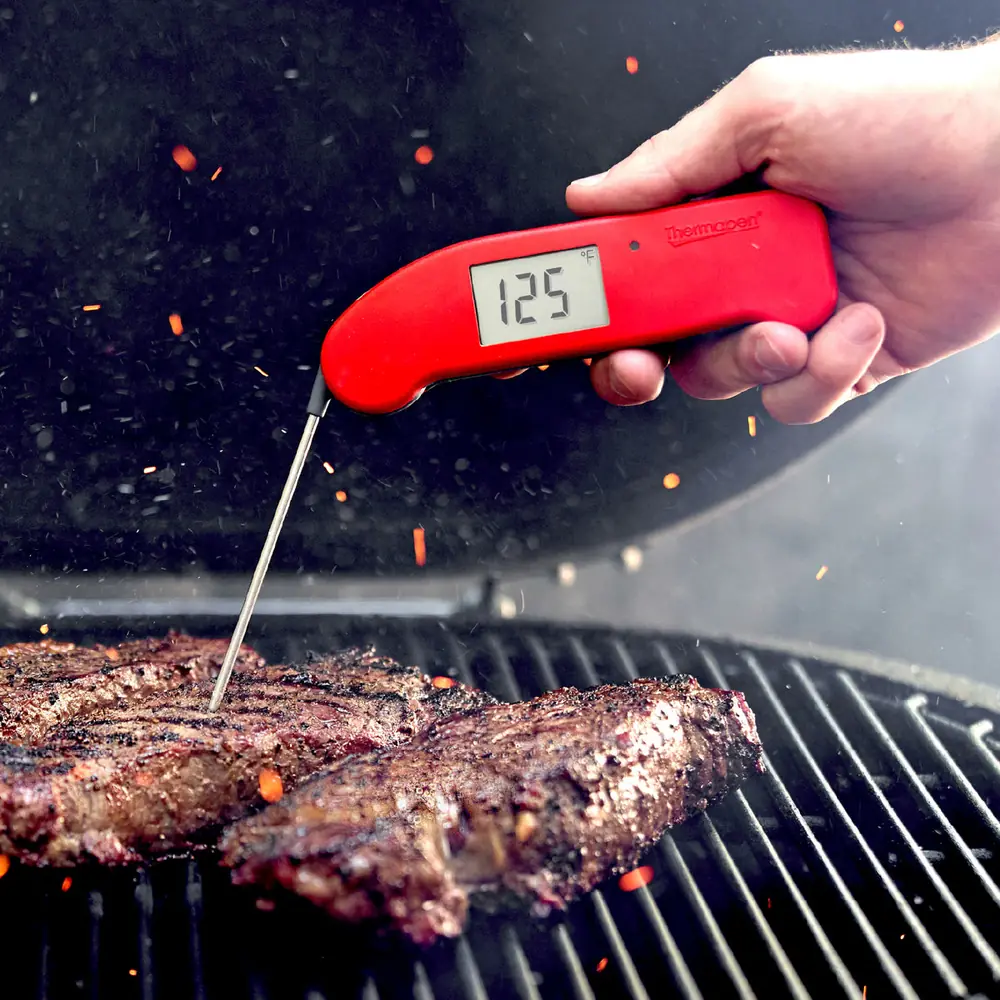
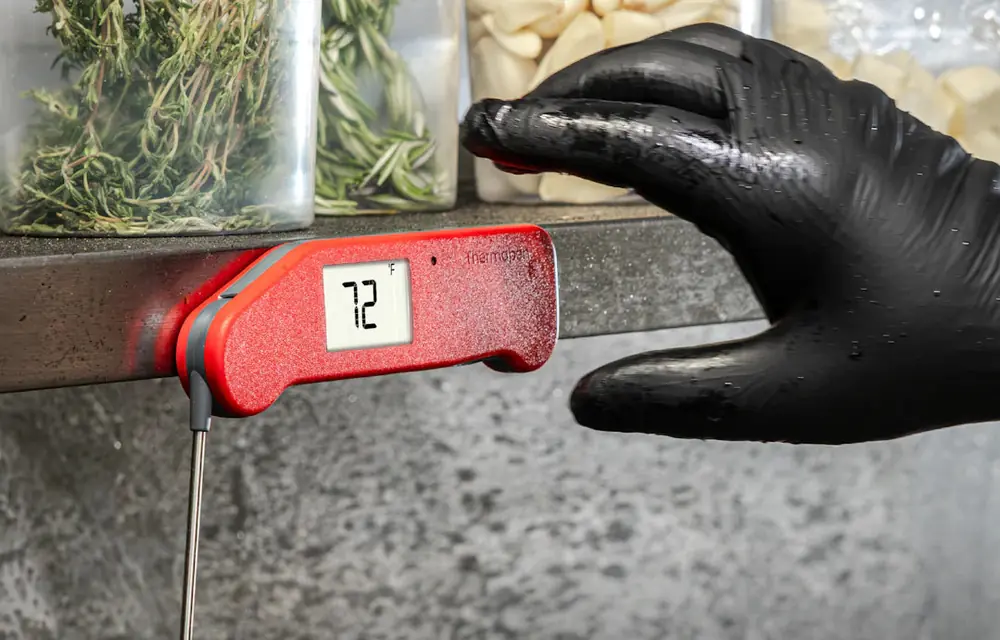
Sixty six reviews mention the lid. An open grill lid loses heat, so a slow reading costs the cook twice: once in skin and once in temperature. The obvious response is to stop holding it, put it down somewhere within reach, and come back. Somewhere within reach, at a grill, is somewhere hot.
Which turns speed from a convenience into the durability feature. And ThermoWorks publishes the numbers, for its own products, against its own products.
Four seconds does not sound like a problem until you count what happens inside it. Your hand is over the coals for four seconds instead of half of one. The lid is open for four seconds instead of half of one. And if you are checking six chicken thighs rather than one steak, you are doing that six times, which is when people start looking for a flat surface to leave the thermometer on.
What the number in the window is worth
None of the above matters if the reading is wrong, and durability arguments have a way of quietly replacing accuracy arguments. So it is worth saying what ThermoWorks actually publishes about the number itself.
Every instrument ships with a NIST-traceable calibration certificate carrying the serial number of the unit in the box. Not a model-level document. That one.
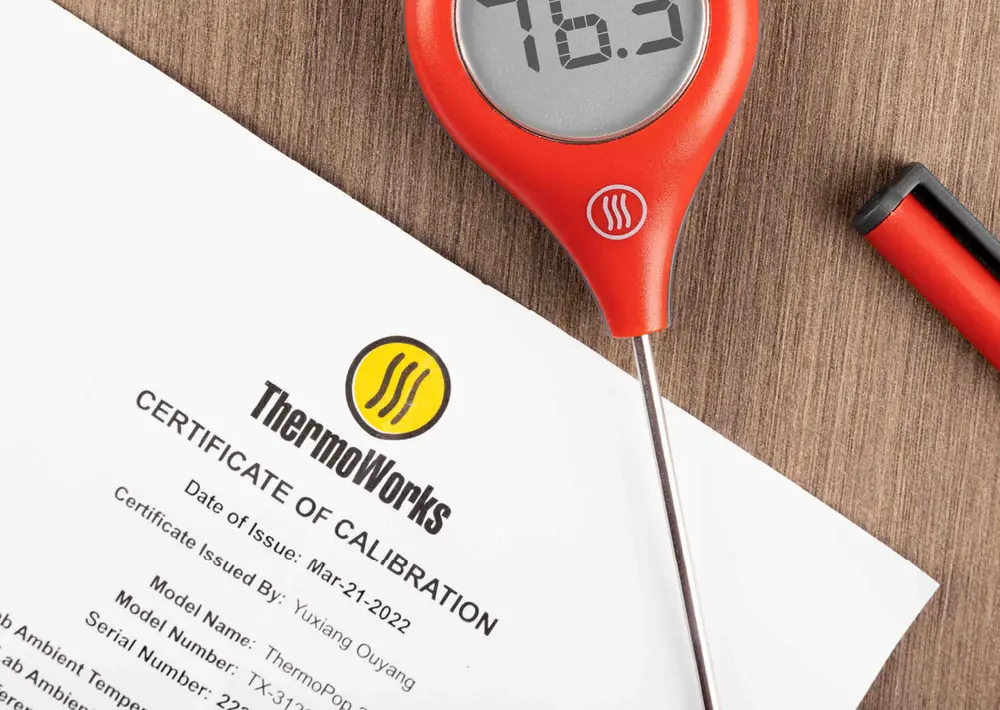
Behind that certificate is an A2LA accredited laboratory in Utah which, by the company's own account, tests every new product against a reference thermometer with a precision of ±0.000027°F. That number is not a claim about your thermometer. It is a claim about the ruler they measure your thermometer with, which is the correct way round.
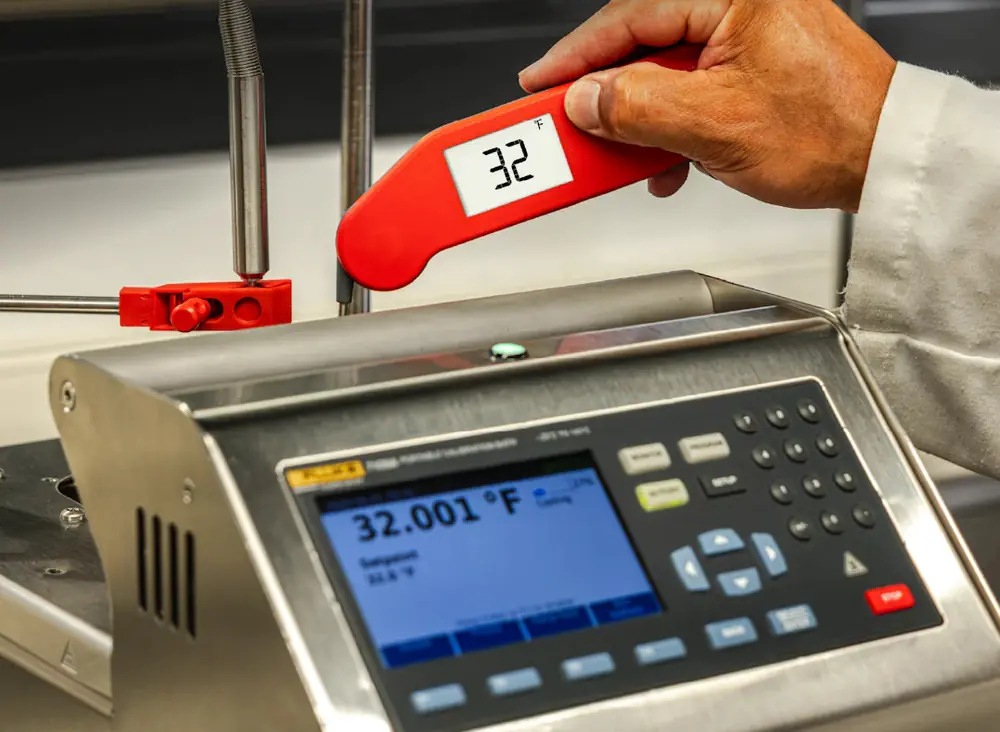
And then there is the least glamorous number on their website, which is a staff list.
People listed on the ThermoWorks team page
Counted by hand from thermoworks.com/pages/about-us on August 27, 2026. A company that staffs repair at four times its engineering headcount is a company that expects its instruments to come back and go out again. Which is roughly what the review corpus describes.
The reviews agree, including from people whose accident was self-inflicted and out of warranty. The customer who melted a Signals against a burn pot got the entire unit replaced and shipped to Canada. The customer who dropped a probe into a grill was sent a new one. This is the same company whose written warranty excludes accidental misuse, which suggests the document and the practice are not the same thing.

Which one, and what to expect from it
The corpus splits the range cleanly. Speed decides how often you reach for it. The seal decides how long you keep it.
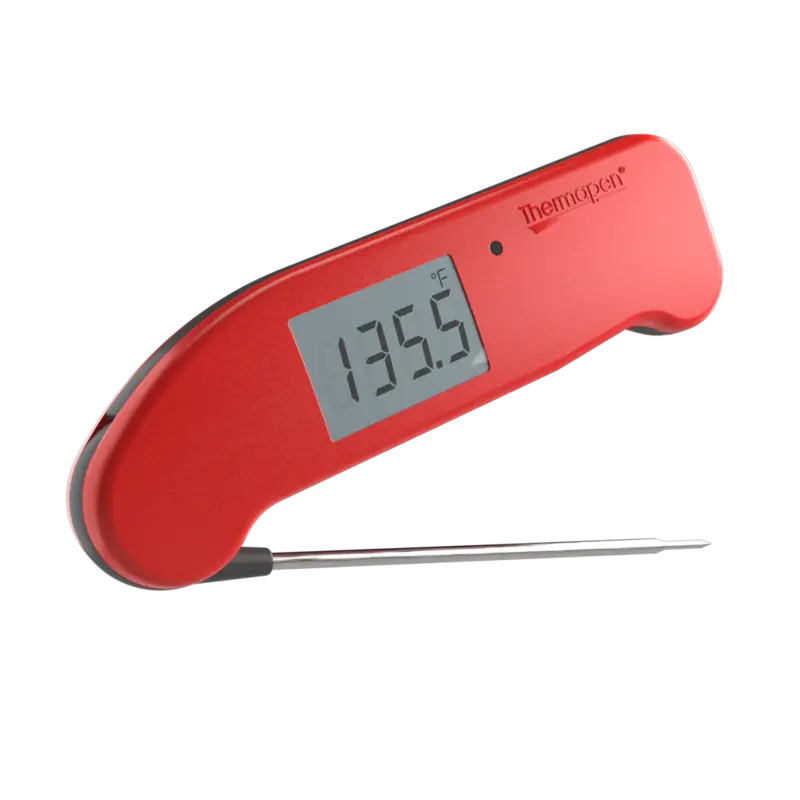
Thermapen ONE
$74 $115
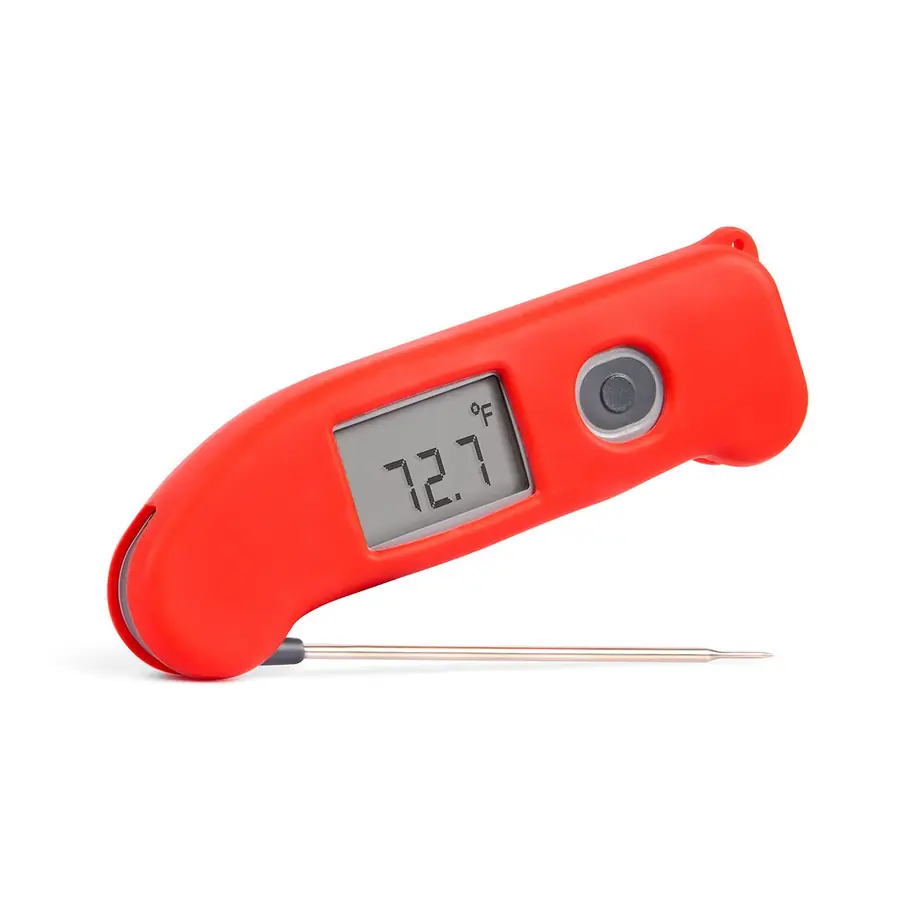
The one in most of the stories above, including the fryer. One second, ±0.5°F, IP67, five year warranty, NIST certificate in the box.
4,150 reviews, 4.87 average, 3,883 of them at five stars.
See the Thermapen ONE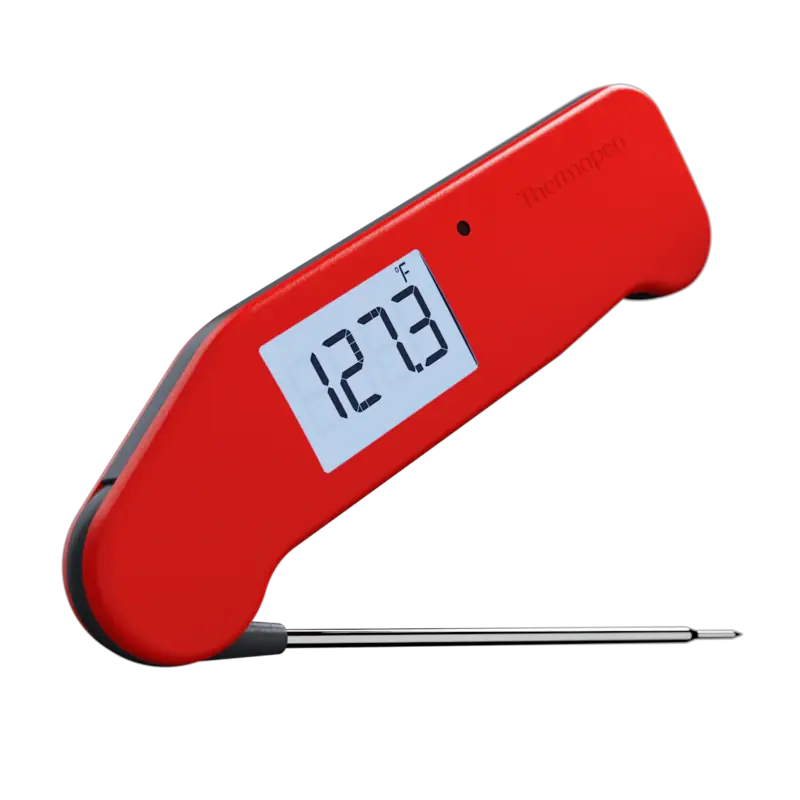
Thermapen NANO
$119
0.4 seconds, and magnets in the back so the place you put it down is a vertical wall. IP67, five year warranty, ±0.5°F.
The speed argument, taken to its conclusion. Buy it if you temp six things at a time.
See the Thermapen NANO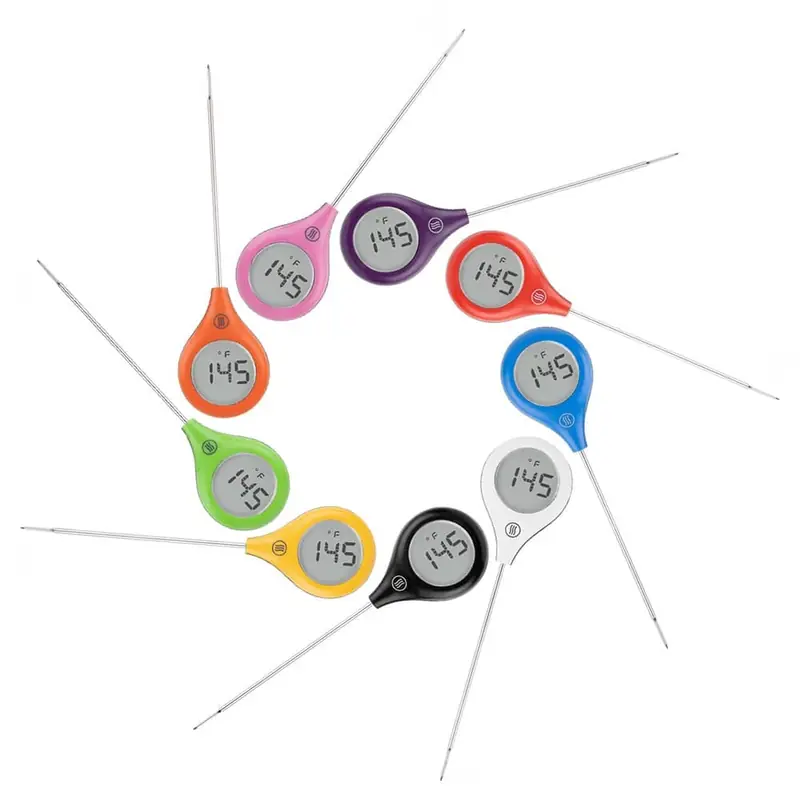
ThermoPop 2
$39
The one that came out of a pot of 375 degree oil with no ill effects. Three to four seconds on the long probe, ±1°F, NIST certificate.
614 reviews, 4.61 average. The honest budget answer, slow on purpose.
See the ThermoPop 2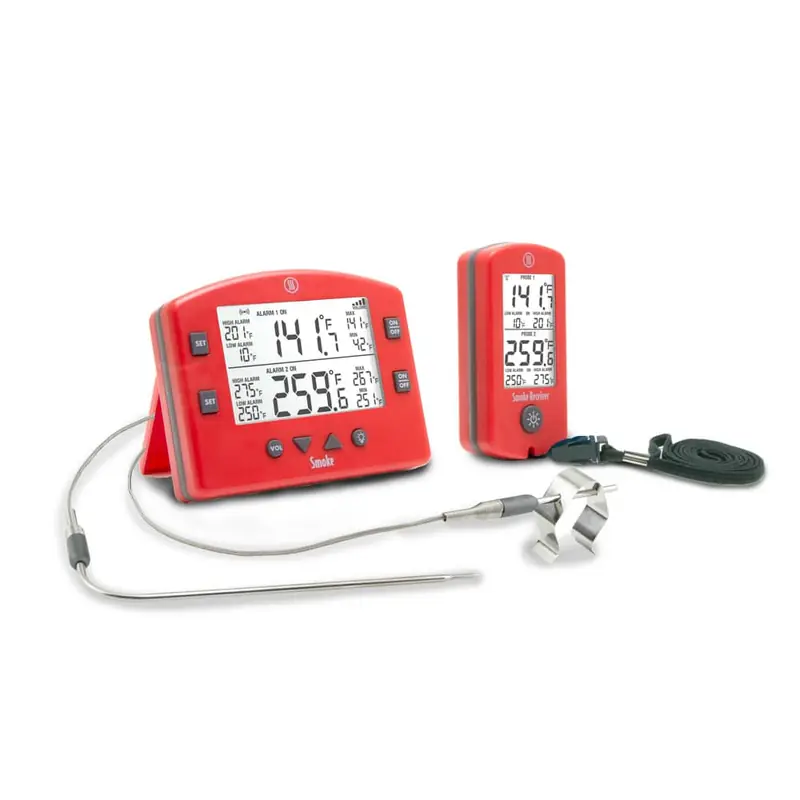
Smoke
$109
Two channels, a receiver good for 300 feet, no phone and no wi-fi required. The one that spent a winter under three feet of snow and was still switched on.
1,850 reviews, 4.70 average.
See the Smoke| NANO | ONE | ThermoPop 2 | |
|---|---|---|---|
| Price | $119 | $74 | $39 |
| Response time | 0.4 s | 1 s | 3 to 4 s |
| Measurement range | −58 to 572 °F | −58 to 572 °F | −58 to 572 °F |
| Operating range, body | −4 to 122 °F | −4 to 122 °F | 32 to 122 °F |
| Best accuracy | ±0.5 °F | ±0.5 °F | ±1 °F |
| IP rating | IP67 | IP67 | Not published |
| Warranty | 5 years | 5 years | General policy |
| Battery life | 1,000 h | 2,000 h | Not published |
| Certificate | NIST-traceable | NIST-traceable | NIST-traceable |
One last thing worth saying plainly, because the fryer story makes it easy to forget. None of this is a promise. The company will not give you one, its warranty rules it out in writing, and it would be strange to buy a thermometer on the assumption that you will drop it in oil.
What the 14,306 reviews give you is something less exciting and more useful. They tell you what the failure looks like when it comes, which part it starts in, and roughly how long people who look after theirs get to keep it. On this evidence, that is closer to a decade than a season, and the deciding factor is whether it spends its nights in a drawer or on a smoker.