How to check what you are buying
Every supplement says lab tested. One line decides whether it means anything.
Identity, potency, contaminants, batch. A certificate of analysis has four things worth reading, and one of them is usually missing.
Pick up almost any bottle of supplements and either the label or the ad that sold it to you says third party lab tested. It is one of the most common phrases in the industry and one of the least informative. It does not say what was tested. It does not say against what number. It does not say which batch, or whether the batch in your hand is the batch that was tested.
The document behind the phrase answers all of that, and it takes about ninety seconds once you know which lines to read. Plenty of brands never show it to you. Some publish a summary. A few publish the full signed report for every batch they have released, which is the interesting case, because then anyone can sit down and check the arithmetic themselves.
What follows is that check, run on two products from a brand that publishes the documents: Nootropics Depot, in Tempe, Arizona. Everything quoted here is public and dated, and every document is linked at the foot of the page. Nothing in the arithmetic below asks you to trust anybody, which is the whole reason it is worth doing.
What “lab tested” can legitimately mean
- One heavy metals screen, run once, on one batch, some years ago.
- A supplier’s certificate for the raw powder, rather than a test of the finished capsule.
- A different batch than the one in your hand.
- No number at all. Just the word passed, with nothing to compare it to.
What a published report has to say
- Identity. The plant is the plant, confirmed by a named method.
- Potency. Milligrams of the active per capsule, against a figure set in advance.
- Contaminants. Arsenic, cadmium, mercury, lead, each with a result and a limit.
- Traceability. A lot number that matches the one printed on your bottle.
Three of those four are cheap and everybody who bothers does them. The fourth is the one that costs money, and it is the one that tells you whether the capsule is worth swallowing.
The line that mattersContaminant testing tells you what is not in the capsule. Only the assay tells you what is.
A heavy metals screen is a good thing and you want it. It is also, on its own, close to meaningless as a quality signal, because it can come back clean on a capsule filled with rice flour. Absence of lead is not presence of ginseng.
The line that carries the weight is the potency assay. It is the one that says: we claimed this much of the active compound, we measured it, here is the number we got. It is more expensive than the contaminant panel because it usually needs a validated method built for that specific compound, and because a brand that publishes it has nowhere to hide if the number comes in low.
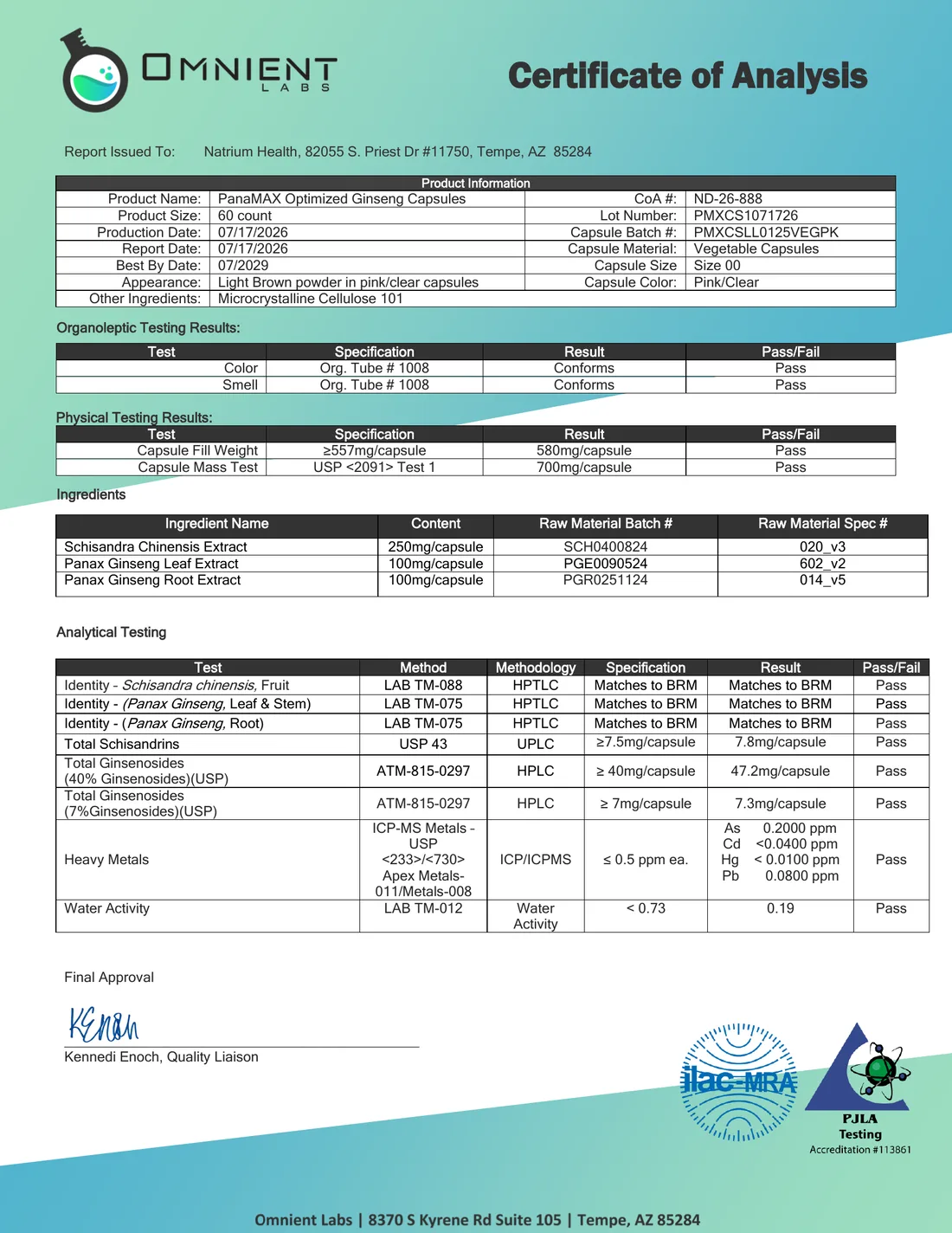
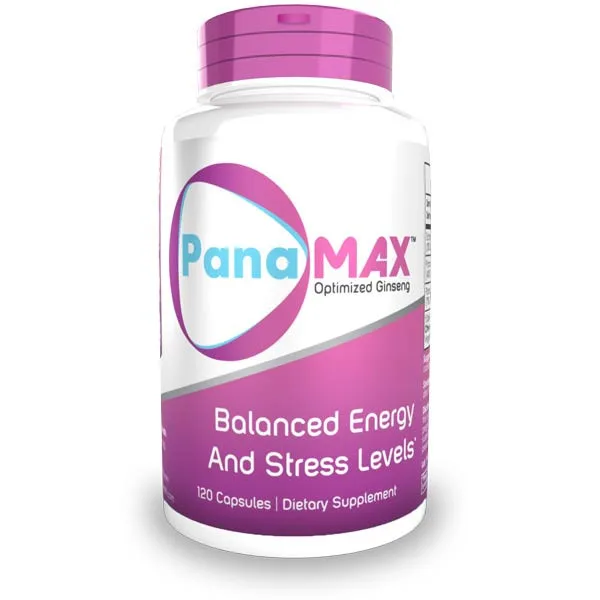
Here is what that looks like when it is done properly. PanaMAX is a ginseng capsule that sells for $35.99 for sixty. The label says each capsule holds 100 mg of a Panax ginseng leaf extract standardized to 40 percent ginsenosides, 100 mg of a root extract standardized to 7 percent, and 250 mg of a Schisandra extract standardized to 3 percent schisandrins.
Do the multiplication and those percentages become three hard numbers: at least 40 mg of ginsenosides from the leaf, at least 7 mg from the root, at least 7.5 mg of schisandrins. Now open the report for the batch and look at the specification column. It says exactly those three numbers.
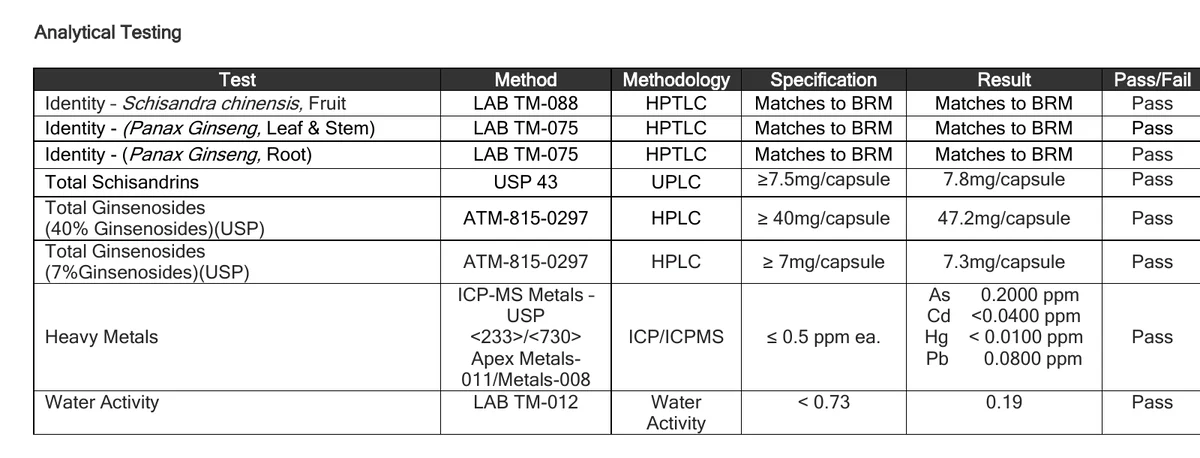
| Label claim | Specification | Measured |
|---|---|---|
| Leaf extract100 mg at 40% ginsenosides | ≥ 40 mg per capsule | 47.2 mg +18% |
| Root extract100 mg at 7% ginsenosides | ≥ 7 mg per capsule | 7.3 mg +4% |
| Schisandra250 mg at 3% schisandrins | ≥ 7.5 mg per capsule | 7.8 mg +4% |
| Heavy metalsarsenic, cadmium, mercury, lead | ≤ 0.5 ppm each | 0.20, <0.04, <0.01, 0.08 ppm |
Lot PMXCS1071726, produced 17 July 2026, methods HPLC and UPLC, heavy metals by ICP-MS. Every figure in the last two columns is copied from the signed report linked at the foot of this article.
That is the whole exercise. The label makes a claim in percentages, the specification turns the claim into milligrams, and the result says whether the milligrams are there. When a brand publishes the report, checking it is arithmetic, not faith.
Three different batches, three identical results. This is normal, and here is why.
Line up the reports for three separate PanaMAX lots and something jumps out immediately. Lot PMXCS1082125 from August 2025, lot PMXCS1061226 from June 2026 and lot PMXCS1071726 from July 2026 return the same three numbers to the decimal: 47.2, 7.3 and 7.8. If you have ever suspected a supplement company of writing the same certificate over and over with a new date on top, that is exactly what it looks like.
It is not what happened, and the reason is worth understanding, because it is the single most common misreading of these documents.
A raw material arrives at the facility in one large batch and goes into quarantine. That batch is tested once, thoroughly, and given a number. It then gets drawn down over months into different production runs: sixty count bottles, one hundred and twenty count bottles, sometimes a different product entirely. Every finished lot that draws on that raw material inherits its analytical figures, because it is physically the same material.
Level 1 · Raw material batch
Level 2 · Capsule run
Level 3 · Finished lots, one certificate each
Same raw material, therefore the same assay figures on all three reports. The dates, sizes and lot codes differ because the bottling did.
You can verify this yourself without taking anyone’s word for it. Every one of those reports prints three separate batch numbers, not one: the raw material batch, the capsule run, and the finished lot. On the three certificates above, the raw material line reads PGE0090524 every time. That is the tell. Identical results with identical raw material batch numbers is bookkeeping. Identical results with different raw material numbers would be the thing to worry about.
Nootropics Depot publishes an explanation of this in its own support library, under the blunt heading Why Identical Numbers Across Different Lots is Normal and Expected. Publishing the answer to the most damaging-looking question about your own paperwork is not a small thing.
Two years apartThe harder test: does the number hold when the raw material changes?
Inheriting figures from one raw material batch proves consistency in bookkeeping. It does not prove consistency in sourcing. For that you have to compare two lots built from genuinely different material, and the seven published PanaMAX certificates make that possible.
The oldest is lot PMXCS1072324, produced 23 July 2024, built from leaf batch PGL0331122, root batch PGR0330120 and Schisandra batch SCH0400722. The newest is the one at the top of this page, produced 17 July 2026, built from PGE0090524, PGR0251124 and SCH0400824. Different plants, different harvests, different suppliers’ deliveries, two years apart.
| Per capsule | Lot …1072324 23 Jul 2024 | Lot …1071726 17 Jul 2026 |
|---|---|---|
| Leaf ginsenosidesfloor 40 mg | 48.7 mg | 47.2 mg |
| Root ginsenosidesfloor 7 mg | 7.8 mg | 7.3 mg |
| Schisandrinsfloor 7.5 mg | 7.6 mg | 7.8 mg |
| Raw material batches | PGL0331122 PGR0330120 SCH0400722 | PGE0090524 PGR0251124 SCH0400824 |
Both certificates are signed and published on the same product page. The leaf assay drifts by 3 percent across two years and entirely different source material, and stays above the floor in both cases.
Three percent of drift on a botanical extract across two years is the sort of number that only shows up when someone is buying to a specification rather than buying whatever is cheapest that quarter. It is also, and this matters more, a number you can confirm in two clicks rather than a sentence in a brand’s About page.
Want to check the arithmetic yourself? The seven batch certificates for this product sit at the bottom of its page, one per lot, free to open.
See PanaMAX and its lab reportsPanaMAX Optimized Ginseng Capsules, $35.99 for 60 count. Nootropics Depot, Tempe, Arizona.
The mushroom aisle, where one extra line separates a supplement from ground rice
Ginseng is a well-behaved example. Mushrooms are where reading a report stops being a hobby and starts saving money.
The active fraction people buy functional mushrooms for sits in the cell wall of the fungus, and it is measured as beta glucan. There is a cheaper way to make the powder: grow the mushroom’s root network on sterilized grain, usually brown rice, then dry and grind the whole thing, rice included. Nootropics Depot has an article about this practice that does not mince words. Rather than print a beta glucan figure, it says, producers of that kind of powder tend to advertise a large number of polysaccharides, which is true, because starch is a polysaccharide and brown rice is mostly starch.
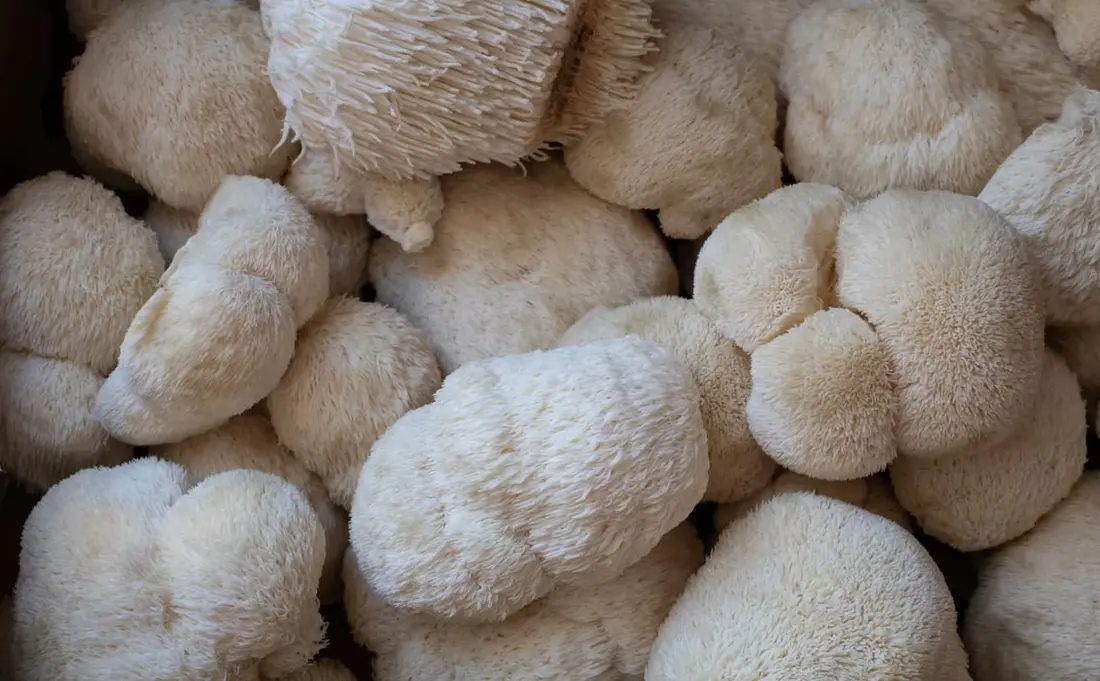
There is a single line on a report that settles the argument, and it is the one to go looking for: alpha glucan. Alpha glucan is the starch-type sugar. Beta glucan is the fungal one. Print both and the ratio between them tells the reader instantly how much of the capsule is mushroom and how much is the substrate it grew on.
Lucidimax is a reishi capsule, $39.99 for sixty. Here is the analytical block from lot LUMCS1063026, produced 30 June 2026.
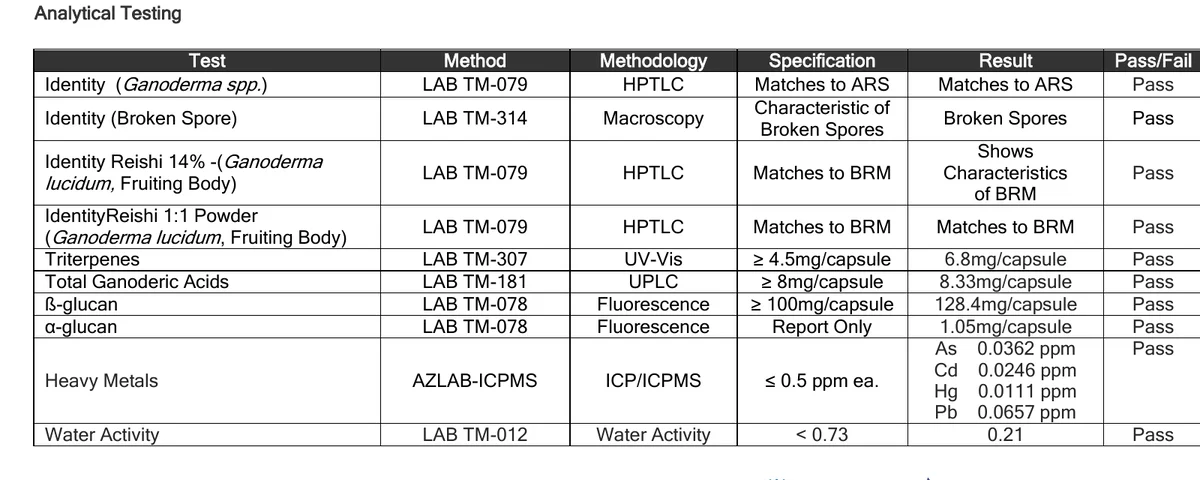
Read that pair of numbers slowly. For every milligram of starch-type glucan in the capsule there are roughly a hundred and twenty of the fungal kind. A powder made of rice with mycelium through it would not produce that ratio, and no amount of copywriting can hide it once the number is on the page.
The Report Only marking is worth a note of its own. It means the laboratory measured the value and printed it without setting a pass or fail limit. Nobody is obliged to publish a figure they have not committed to. Publishing it anyway is how a company signals it is comfortable with what the instrument says.
The label, per serving of two capsules
- 200 mg beta glucans
- 16 mg ganoderic acids
- Three reishi extracts and cracked spores
The report, doubled for two capsules
- 256.8 mg beta glucans measured
- 16.66 mg ganoderic acids measured
- 2.1 mg alpha glucan, reported and unhidden
Certificates report per capsule. Labels claim per serving. Lucidimax is dosed at two capsules, so the report figures double before you compare them. Doing that multiplication in the shop is the whole skill.
That last point catches people out constantly. A report saying 128.4 mg looks like a shortfall against a label promising 200 mg until you notice the label is talking about two capsules and the laboratory is talking about one. Eight certificates are published for this product. The arithmetic works on each of them.
Who signed itA report is only worth the laboratory behind it, so read that part too
Every certificate quoted here carries the same name at the top and the same address at the bottom: Omnient Labs, 8370 South Kyrene Road, Suite 105, Tempe, Arizona. It is a building with a sign on it.
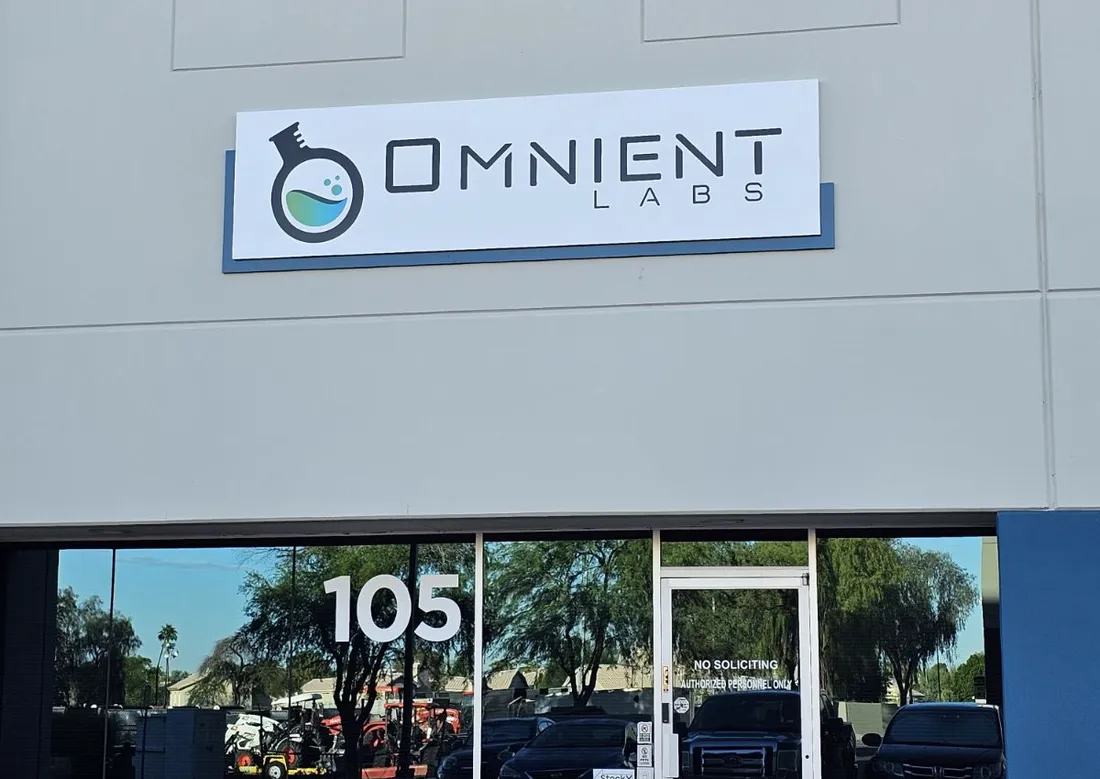
Here is the part a careful reader should want stated plainly, and which the brand states itself on its own website: Omnient Labs is owned by the same person who owns Nootropics Depot. So is Supplement Logistics, the facility that manufactures the capsules. They are separate legal entities with separate teams, they sell manufacturing and testing to other brands, and the founder’s published explanation for building them is that he stopped trusting outside contractors after, in his words, corner-cutting, lies about batch specs, and receiving contaminated product.

“I wasn’t satisfied with the ISO-accredited labs that were available to us, so I created Omnient Labs.”
Paul Eftang, founder and chief executive of Nootropics Depot, in his published letter at nootropicsdepot.com. The company reports operating across roughly 80,000 square feet in Tempe with about 90 staff.
Common ownership is a real question and it deserves a real answer rather than a shrug. The answer is that laboratory accreditation was never a test of who owns the laboratory. ISO/IEC 17025 is a test of technical competence and quality management, assessed on site by an outside accreditation body, which audits methods, equipment, calibration and staff competence and can withdraw the accreditation. What it certifies is that the instrument reading is trustworthy. Who paid for the instrument is a separate question, and one you answer by looking at whether the numbers survive comparison, which is what the two sections above were doing.
What you can check in under a minute is that the paperwork agrees with itself.
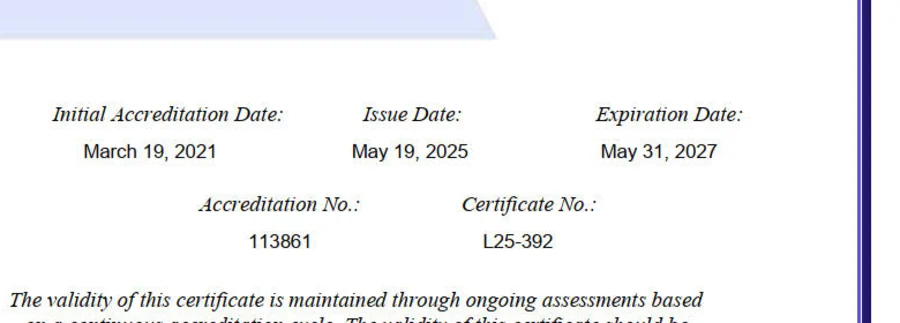
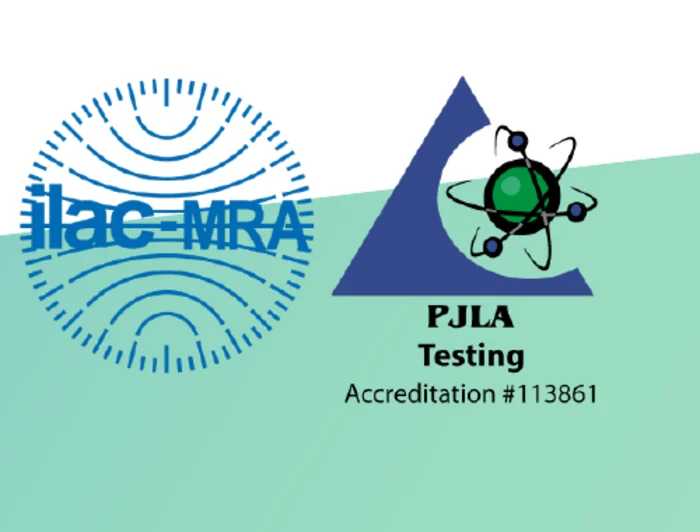
Accreditation 113861, both times. The certificate itself instructs the reader that its validity should be confirmed through the accreditation body’s own website, which keeps a public directory of accredited organizations.
The other two certificatesOne of these is an accreditation, one is an audit, and one is just a filing
Three certificates appear on every Nootropics Depot product page, and they do very different jobs. Treating them as interchangeable badges is the mistake the badges are designed to encourage.
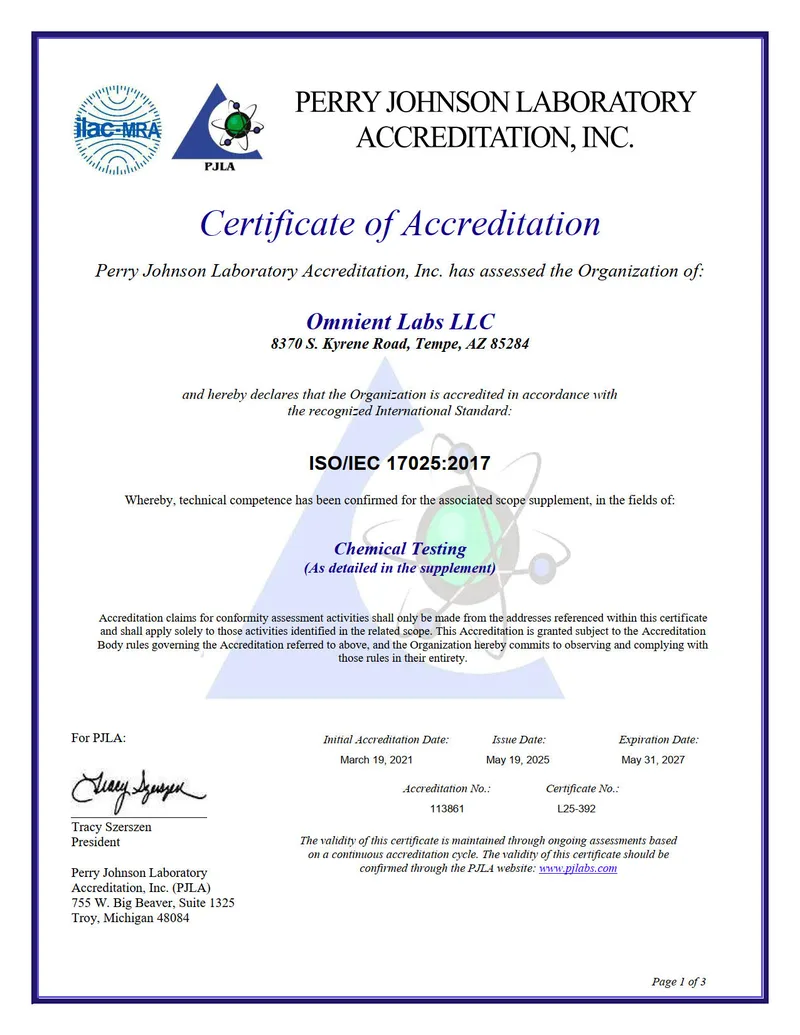
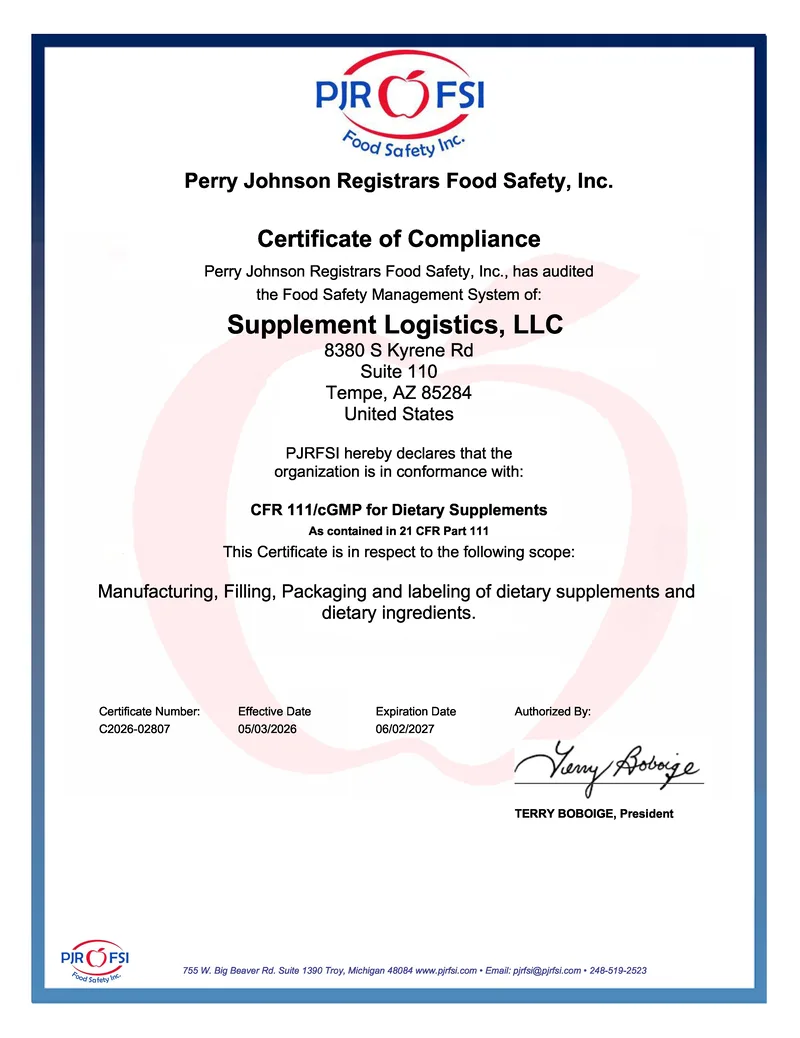
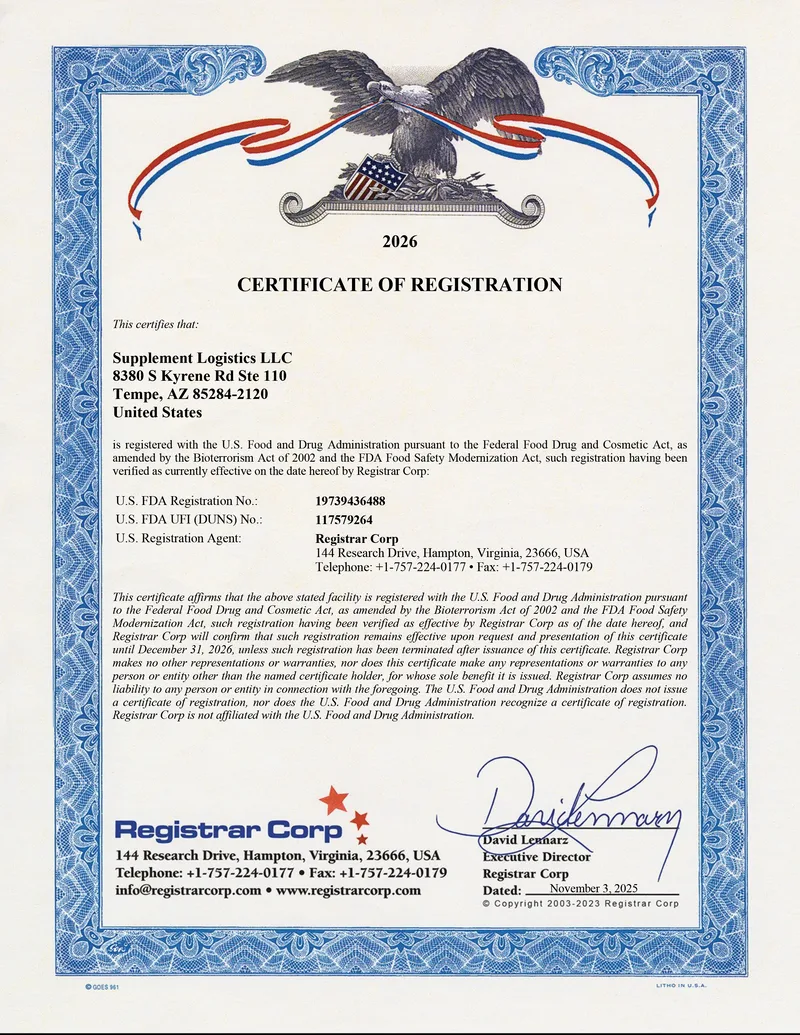
The laboratory accreditation is the strong one
An outside body has audited the methods, the equipment, the calibration and the people, and can take the accreditation away. It is the reason a number on the report is a number rather than an assertion. Accreditation 113861, certificate L25-392, first granted 19 March 2021, current issue 19 May 2025, valid to 31 May 2027.
Perry Johnson Laboratory Accreditation, Inc., for Omnient Labs LLC, scope: chemical testing.
The cGMP certificate audits the factory, not the product
A registrar has inspected the manufacturing system against 21 CFR Part 111 and certified conformance for manufacturing, filling, packaging and labeling. It says the process is controlled. It says nothing about how much ginsenoside ended up in your capsule, which is why the assay still matters. Certificate C2026-02907, effective 3 May 2026, expiring 2 June 2027.
Perry Johnson Registrars Food Safety, Inc., for Supplement Logistics, LLC, Tempe, Arizona.
The FDA certificate is a filing, and it says so itself
Registering a food facility with the FDA is a legal obligation, not a seal of approval, and this is the document that proves the point most elegantly. In its own fine print: “The U.S. Food and Drug Administration does not issue a certificate of registration, nor does the U.S. Food and Drug Administration recognize a certificate of registration.” Any brand implying otherwise is hoping you will not read down that far.
Issued by Registrar Corp for Supplement Logistics, LLC, registration 19739436488, dated 3 November 2025.
That third one is the reason this article exists. The supplement aisle is full of documents that look like approval and are not, and the only defense is knowing which line to read. Once you do, the brands that publish everything stop looking like the ones making the most noise and start looking like the ones with the least to lose.
What buyers sayThe reviews are on the page, including the ones that are not flattering
PanaMAX carries a 4.0 average across fifteen customer reviews on its own product page. That average is not four because the low reviews were pruned. It is four because they are sitting there.
“Ordered this for the second time and I’m really grateful for the amount of calm it’s given me. In my country ginseng is very popular but over-commercialized, expensive, and of questionable quality. I never feel like I need to second guess when ordering from you guys, always grateful.”
5 out of 5 Adams · PanaMAX product page
“Taken alone, it really helps my mood while giving me a clear mind and motivation to carry out multiple tasks without being overwhelmed. Highly recommend to anyone sensitive to caffeine or stimulants in general.”
5 out of 5 Nathan Couch · PanaMAX product page
“Although this does a wonderful job at mellowing out stimulation, it also makes me very tired. I’ve napped within 2 hours over half the time I’ve taken it. In a cognitive boost stack like advertised it is a big no.”
2 out of 5 Andrew B · PanaMAX product page
“Did not perform as advertised... I noticed no positive effects”
1 out of 5 Metanoia · PanaMAX product page
A verified assay tells you what is in the capsule. It does not tell you that the capsule will work for you, and the two low ratings above are a useful reminder of the difference. Adaptogens are not uniform in their effects and a brand that publishes the one-star review alongside the certificate is being consistent about the same thing in both places.
Ninety seconds, any bottle, including the ones already in your cupboard
None of this is specialist knowledge. It is five habits, and they work on any brand, including the ones that would rather you did not have them.
- Find the lot number on the bottle first. It is stamped on the label or the base. A brand that publishes reports will have one carrying that exact code. If the only document offered is generic, you have been shown a brochure, not a test.
- Read the specification column before the result column. The specification is the promise made in advance. A row that says only conforms, with no figure, has promised nothing that can be missed.
- Match the units to your serving. Reports are written per capsule. Labels are written per serving. Multiply before you compare, or you will accuse a good product of coming up short.
- Check that somebody measured the active. Heavy metals, microbes and water activity are all worth having and none of them say whether the compound you are paying for is present. Look for milligrams of the named ingredient.
- Read all three batch numbers. Raw material, capsule run, finished lot. Repeated results under the same raw material number are bookkeeping. Repeated results under different ones deserve an email.
Run that on the bottles you already own this evening. On a lot of them you will not get past step one, and that is the finding. The exercise is not really about any single brand. It is about the fact that the information exists, that it is cheap to publish, and that the decision not to publish it is a decision somebody made.
PanaMAX lot PMXCS1071726, produced 17 July 2026
The certificate reproduced at the top of this page. Six more lots for the same product sit beside it.
PanaMAX lot PMXCS1072324, produced 23 July 2024
The two-year comparison. Different raw material batches, same specification, 48.7 mg against a floor of 40.
Lucidimax lot LUMCS1063026, produced 30 June 2026
The reishi report with the alpha glucan line, marked Report Only at 1.05 mg per capsule.
The brand’s own explanations
Its guide to reading a certificate, its published position on mycelium grown on grain, and its page listing the laboratories it uses.
Understanding your COA · Fruiting bodies vs mycelium on grain · Meet our third party labs
Trust is a claim. A signed number is a fact you can check.
Nothing in this article required believing a supplement company. The label made a claim in percentages, the certificate turned it into milligrams, the instrument returned a figure, and the figure cleared the floor on two products, across two years and two different sets of raw material. That is what published testing is for. It replaces a promise with a document.
The phrase lab tested will keep appearing on everything. The difference is that from here you know which line to open it to.
Start where the numbers are already on the table. Every Nootropics Depot product page carries the batch certificates, the accreditation and the audit documents, at the bottom, unlocked.
Open PanaMAX and read the reports$35.99 for 60 capsules, $59.99 for 120. Made and tested in Tempe, Arizona. Free US shipping over $50.