Design notes · Mito Red Light
We dosed the MitoGLOW lower than our panels. On purpose.
The number that decides whether light therapy works is not power. It is how many sessions you finish.

There is a version of this mask that would have looked better on a spec sheet. More energy per square centimeter, a bigger number for the box, a session you could describe as intense. We had the parts. We build panels that do exactly that and we sell them a few clicks from here. With the MitoGLOW we went the other way, and the reasoning behind that is the only part of this product I still find genuinely interesting.
Here is the number we publish, and it is deliberately modest: 3 joules per square centimeter per ten minute session. Our own product page explains why in one sentence. The mask sits close to the skin and contours to the face, so a gentle dose is what makes it comfortable and convenient enough to use every day, across all skin types. It is a targeted complement to our higher output panels, not a smaller copy of one.
That sentence hides an argument about how these devices actually fail, and it is worth pulling apart.
The one number that can go to zero
Every specification on a light therapy device is a per session number. Irradiance is per session. Wavelength is per session. Coverage is per session. Multiply any of them by a session that does not happen and the answer is zero.
That is not a debating point, it is the arithmetic of our own protocol. We ask for five to ten minutes, three to six times a week, and we tell people that many users see a difference within two to four weeks of consistent use. Read that back slowly. The protocol is not one heroic treatment. It is roughly two hundred small ones a year, and every single one of them depends on a person deciding, again, to put the thing on.
Sessions completed is the only variable in that equation controlled by a human being rather than by a factory. It is also the only one that can collapse to nothing. A device that ends up in a drawer has an irradiance figure and a wavelength chart and a coverage map, and it delivers nothing at all.
Every figure on this page is published on mitoredlight.com. Individual results vary.
So we designed backwards from the failure. Not from the best session a person could theoretically have, but from the two hundredth one, on a Tuesday, when nothing about it feels special. Every decision below follows from that, including the ones that look like compromises.
What ten minutes actually puts on your skin
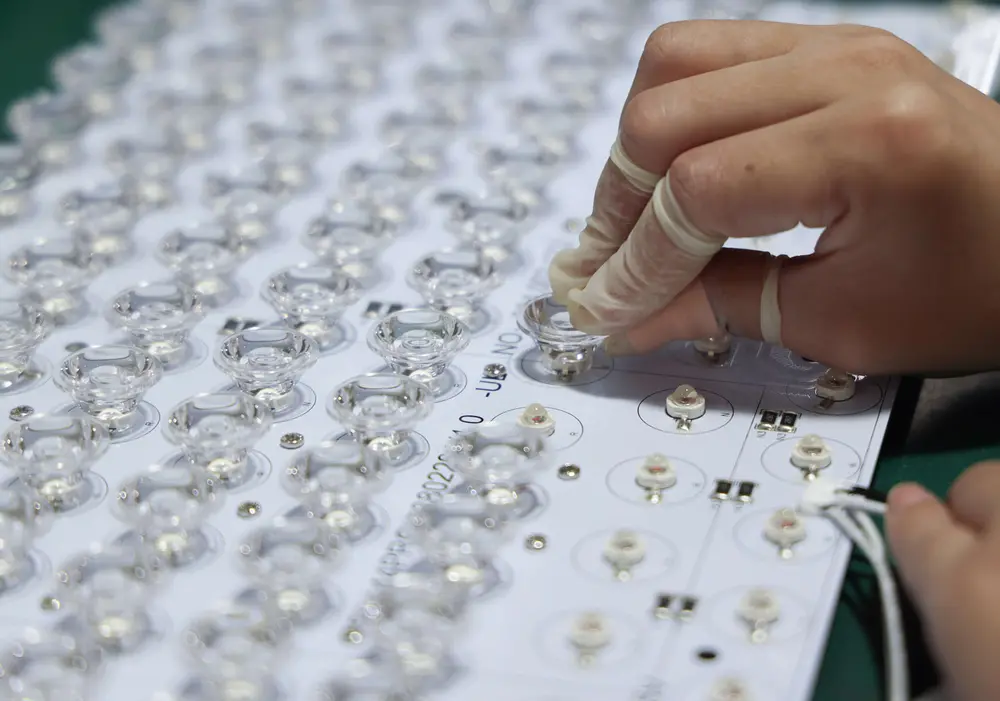
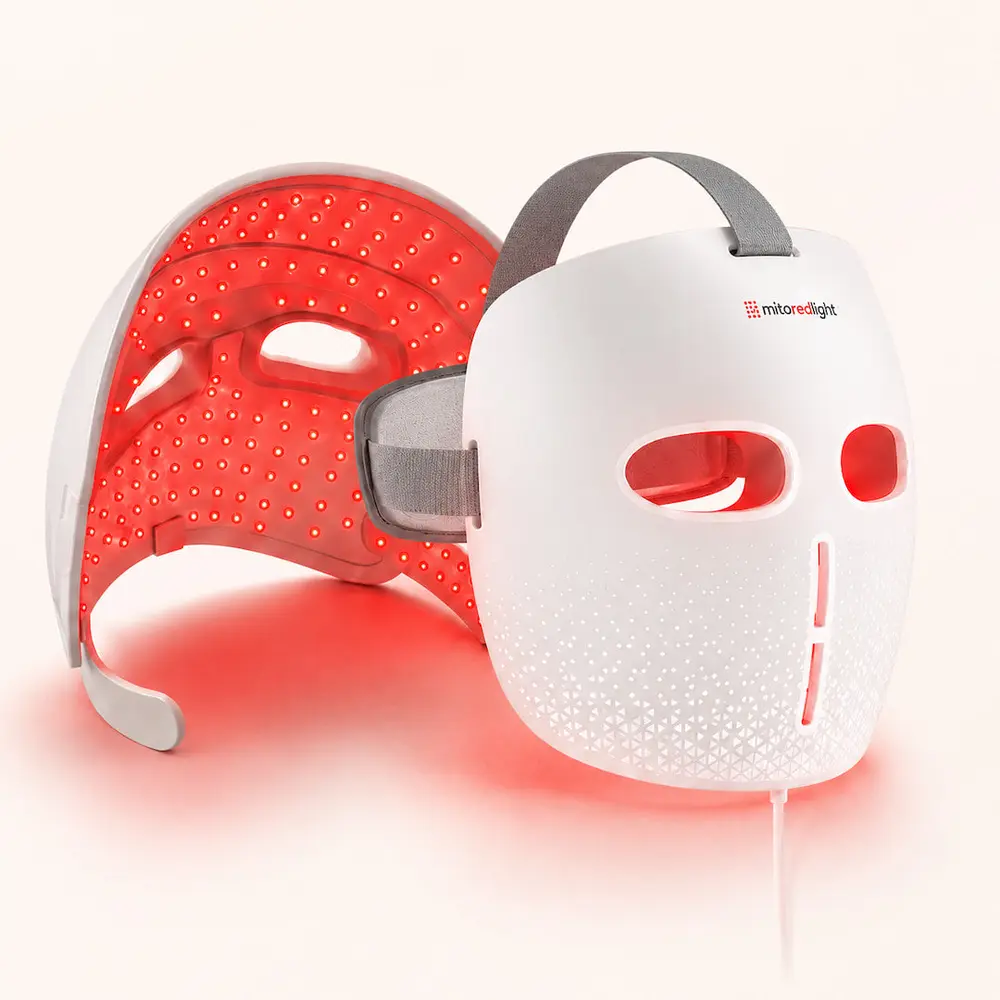
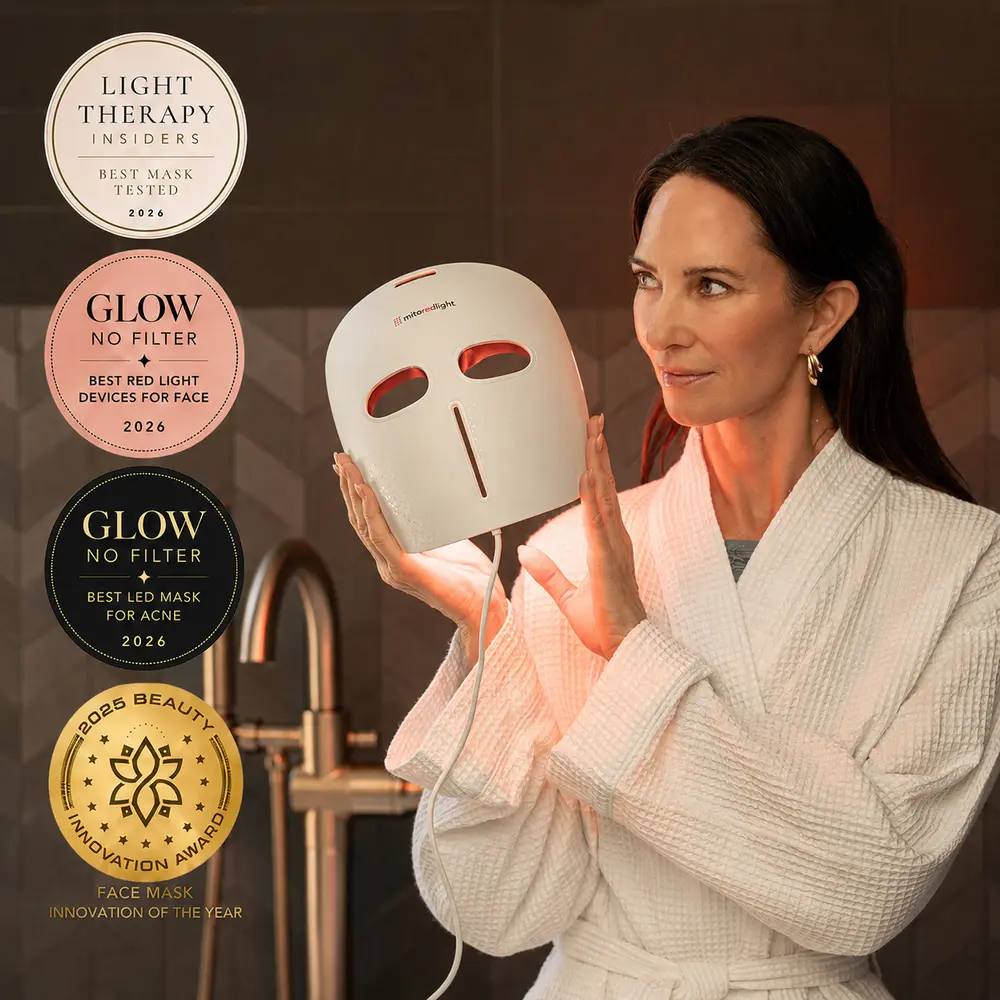
Ten minutes of light is not ten minutes of nothing. The mask carries 1,064 individual LED chips, arranged as 266 packages of four. That quad chip layout is the part most spec sheets flatten, because a competitor counting packages and a manufacturer counting chips can print very different numbers for the same hardware.
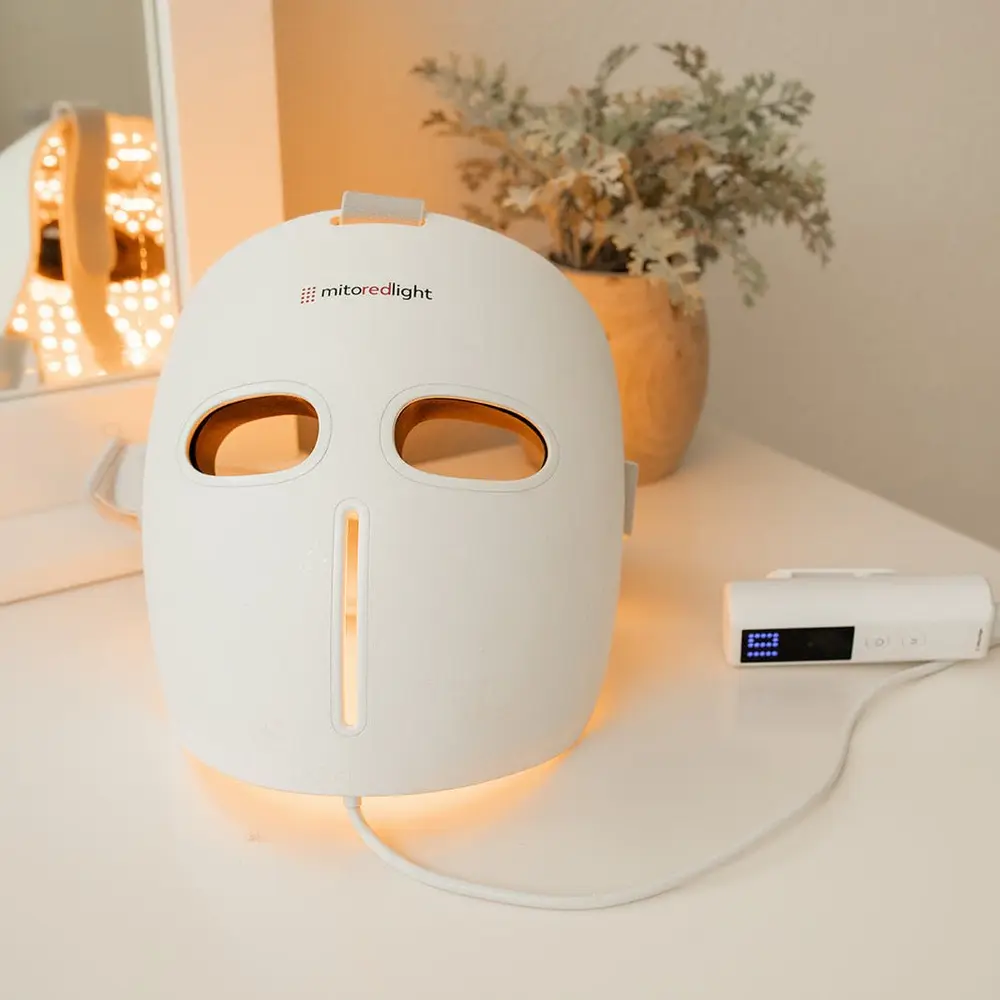
The mask does not touch your face. It hovers, and that was a design decision with three jobs: hygiene, since no skin contact means nothing transfers between sessions, comfort over a ten minute wear, and an even distance from the array to the skin so the coverage has no dead zones or hot spots.
Comfort reads like a soft benefit next to a wavelength chart. It is not. Comfort is the compliance feature. It is the difference between session four and session two hundred.
Four wavelengths, four jobs
The MitoGLOW runs four wavelengths, and each one is there for a different reason. This is how we describe them on the product page, and I am not going to dress them up further here.
Those four wavelengths combine into five modes, so a session can be aimed at one concern instead of averaging across all of them.
| Your concern | Mode | Wavelengths |
|---|---|---|
| Fine lines and firmness | Anti-aging | 630nm red |
| Breakouts | Purify | 465nm blue |
| Redness and uneven tone | Calm | 590nm amber |
| Deeper renewal and dullness | Deep Renewal | 630nm red plus 830nm near infrared |
| Breakouts and skin health together | Clarify | 465nm blue plus 630nm red |
If you have no idea which to pick, most people start on Deep Renewal for general skin improvement, or Clarify if breakouts are the main concern. The chin and neck attachment rotates, which extends the same session below the jaw without repositioning anything. That part is patent pending.
Comfortable mask, well built
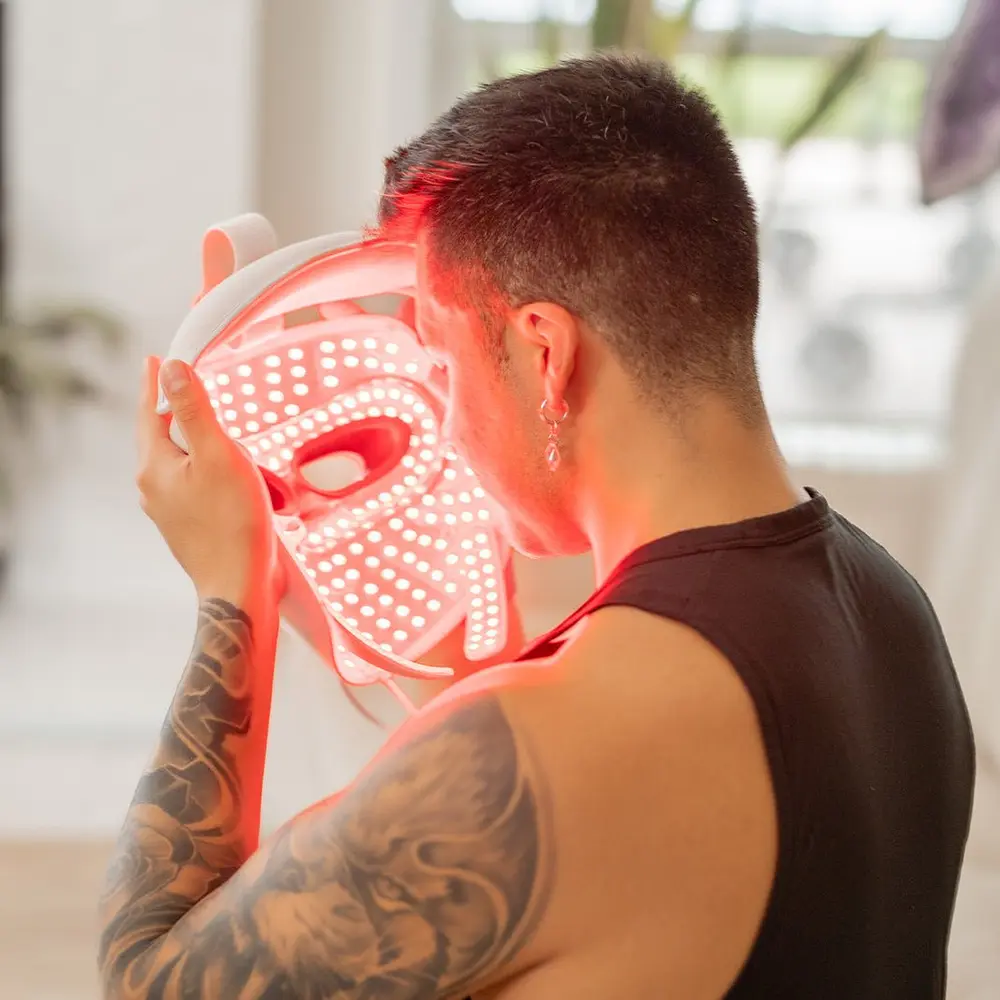
I like this mask better than my wife’s silicone mask because it doesn’t rest directly on your face, which makes it more comfortable to wear. [...] I also appreciate that the battery isn’t built in and appears to be replaceable if it ever needs to be replaced, which should help extend the life of the device.
Cleared, not registered
This distinction gets blurred constantly in our category, including by people selling against us, so let me be precise about what we hold and what we do not.
The MitoGLOW is FDA 510(k) cleared for the treatment of full face wrinkles. That is the same regulatory pathway as devices used in dermatology offices, and it is a different, higher standard than a device that is merely FDA registered. Registration is a listing. Clearance is a review.
What that clearance covers is the wrinkle indication. It is not a blanket endorsement of every use people find for the mask, and we are not going to pretend otherwise. The blue mode exists because 465nm has been studied for acne, the amber mode because 590nm has been studied for tone and radiance. Those are research based design choices, described as such. The cleared indication is the one written above.
One practical consequence of that clearance is worth knowing before you look at the price: because it is an FDA cleared medical device, the MitoGLOW is HSA and FSA eligible, which saves between 25 and 30 percent depending on your tax bracket.
What bought once actually costs
The mask is 499 dollars, one time. There is no cartridge, no refill, no subscription, and no appointment to book. Set against the protocol we publish, the interesting figure is not the price, it is the price divided by the sessions you are supposed to complete.
What ships, and what backs it
Free US shipping. A one year warranty and a sixty day money back guarantee. A 5200mAh battery that runs 60 to 70 minutes on a full charge and takes about three hours to fill. Non UV light, safe for Fitzpatrick skin types I through VI. If you take photosensitizing medication, have a photosensitive condition, or are under dermatologic care, talk to your clinician before you start.
499 dollars · sixty day money back guarantee · HSA and FSA eligible
The reviews I would rather you read
The mask holds 4.5 out of 5 across 80 reviews, and 90 percent of reviewers say they would recommend it. That average is made of 58 five star reviews, 14 fours, 4 threes, 1 two and 3 ones. I would rather show you the shape of it than the headline.
Two of those are the ones I would want to read first if I were spending 499 dollars.
results
i have used this for 6 weeks every day and have seen literally no change.
Almost perfect
The Mito Glow is my third red light device and while I love the attention to detail in its design and the ability to use different light modes on suggested timers, the battery life is disappointingly short. I find myself in need of charging it every two or three days, which can require a lot of planning for something I use at least 5 days a week.
Jeanine used it daily for six weeks and got nothing. That happens, and no honest account of a light device should hide it. Stephanie is charging every two or three days because she is running full sessions five days a week, which is a real limitation of a 60 to 70 minute battery and also, read from the other side, the exact usage pattern this product was designed to survive.
Here is what the other end of the distribution sounds like, and notice what these people are actually praising. It is almost never the light.
Great product
My whole house uses it daily, we have a light panel too but have been using the mask more consistently because it’s portable and we can use it around the kids without exposing them to it.
Highly Recommend
I noticed that after six weeks, skin texture had improved as well as pigmentation. This was very lightweight comfortable to wear while walking around the house and doing dishes or other house chores.
MitoGLOW Review
What I like most is that the results seem to keep improving the more I use it. It’s definitely one of those products where consistency pays off, and I’m starting to see that firsthand.
A household that owns a panel and reaches for the mask instead is not a review of the light. It is a review of the friction.The single most useful thing anyone has written to us about this product
Jacob owns one of our panels. The panel is more powerful. He uses the mask more, because the mask is the one he can wear while the house is awake. That trade is the entire thesis of this device, written back to us by a customer who was not trying to make a point about design.
What four weeks of it looks like
These are customer photos we publish on the product page, taken at four weeks on the protocol described under each one. They are individual experiences, not a promise. Outcomes depend on skin type, baseline condition, consistency, and everything else a person is doing.
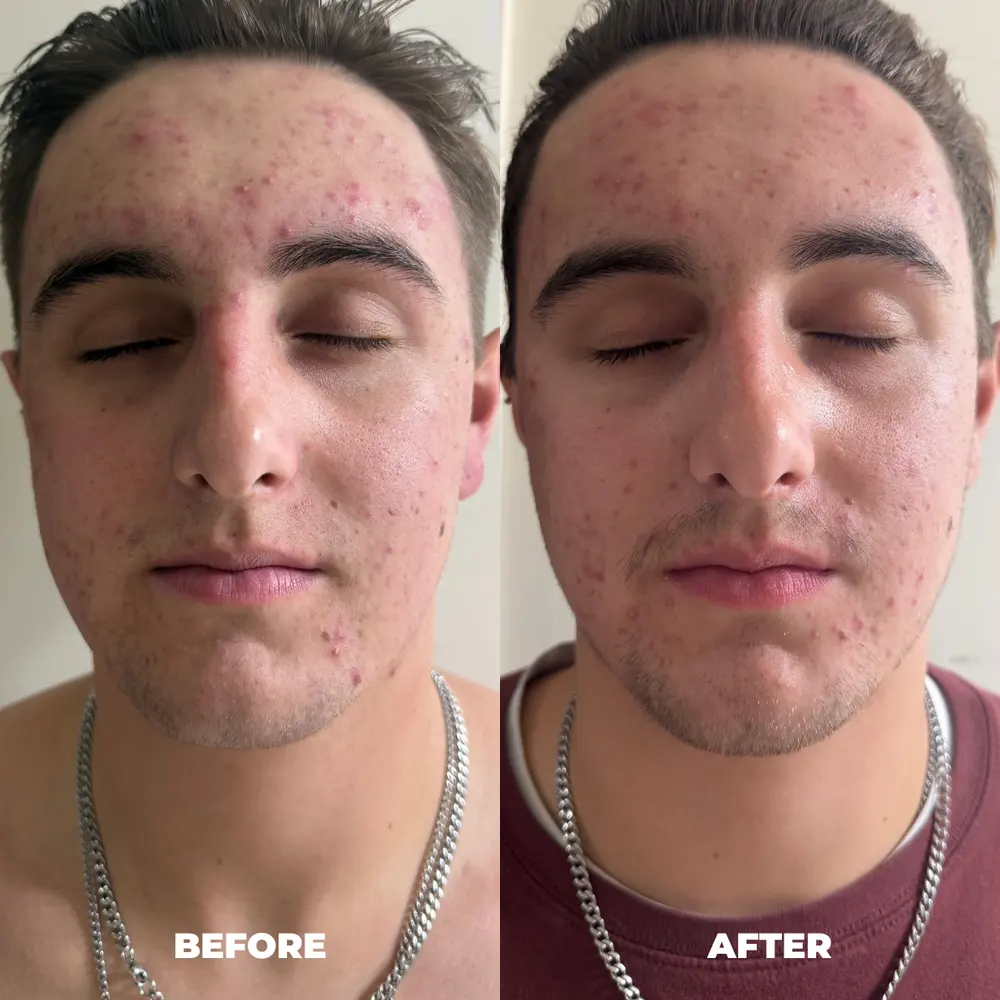
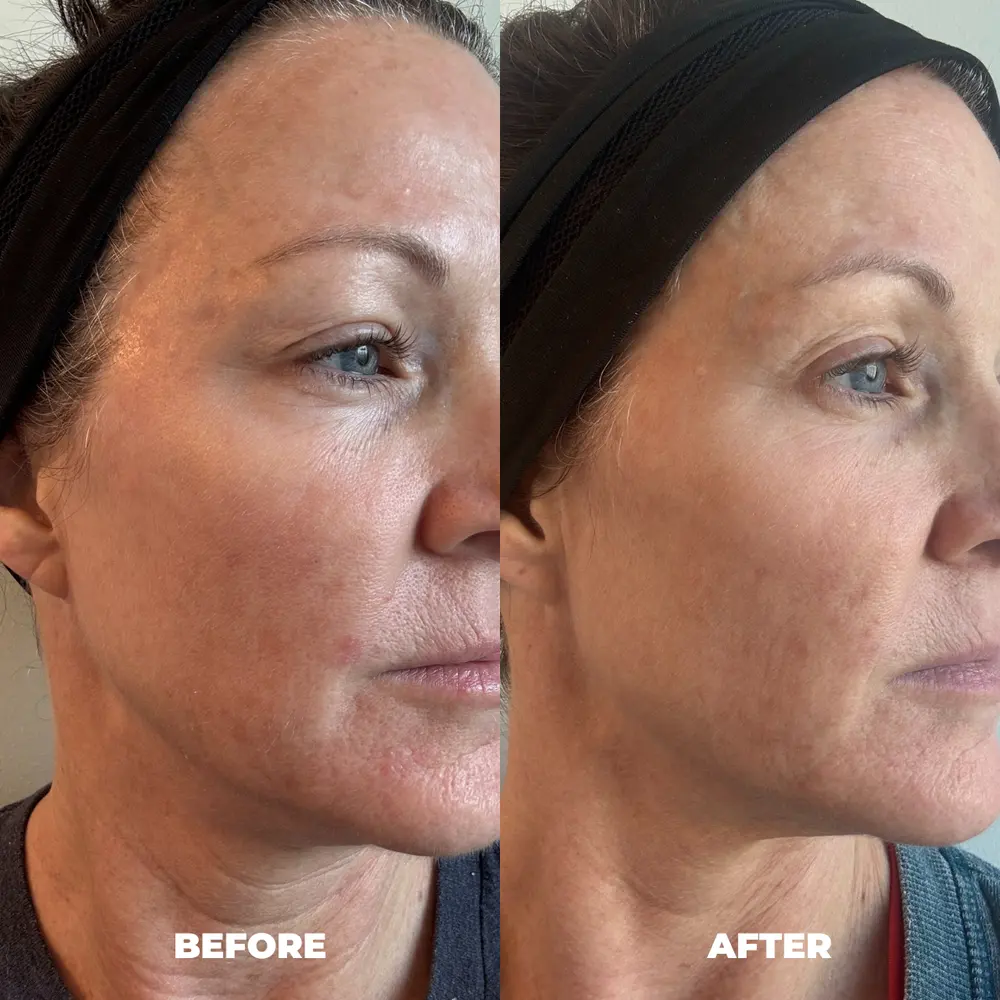
Both of those protocols are the same shape: ten minutes, five days a week, four weeks. Twenty sessions. That is the product.
When the mask is the wrong device
If what you actually want is coverage below the neck, the mask is not the answer and I would rather tell you now than take the return later. Our panels exist for that, they run 660nm and 850nm through the entry series and up to eight wavelengths at the top of the range, and they are a different purchase with different ergonomics.
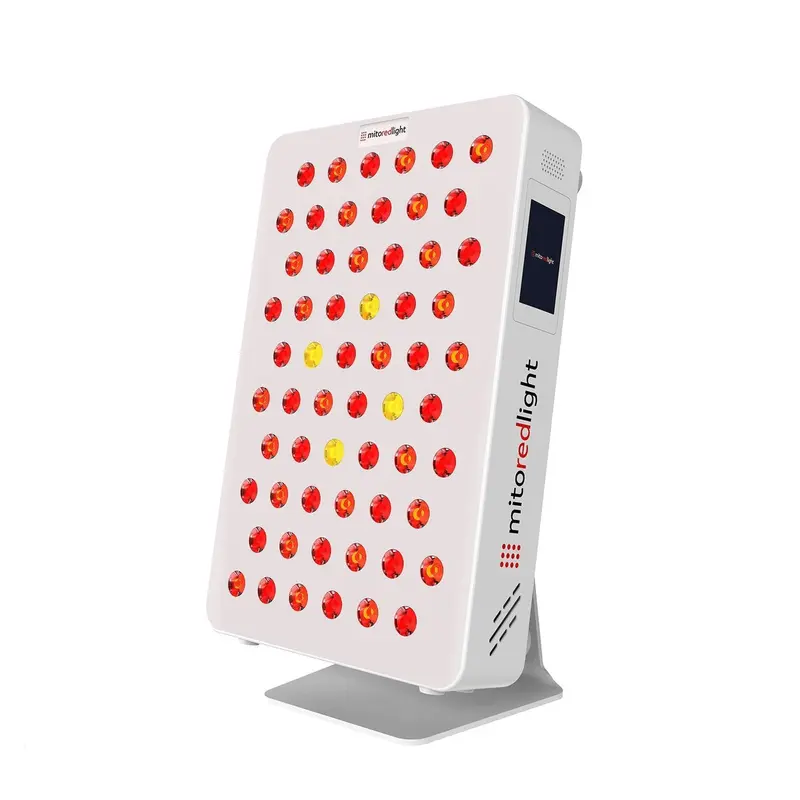
Very nice mask overall
I purchased this mask for the specs, and while I really liked it, I decided to go with a panel instead so I could also treat other areas of my body. [...] Mito has a great return policy though, so I was able to try the mask for 60 days, but then determined a panel would be better for me.
That is the sixty day window doing its job. It is there so the decision costs you a return label rather than 499 dollars.
What to expect, and when
Five to ten minutes a session, three to six sessions a week. Many users notice a visible difference within two to four weeks of consistent use, and consistent is doing the work in that sentence. Nothing here diagnoses, treats, cures or prevents any disease, and none of it substitutes for advice from your own clinician.
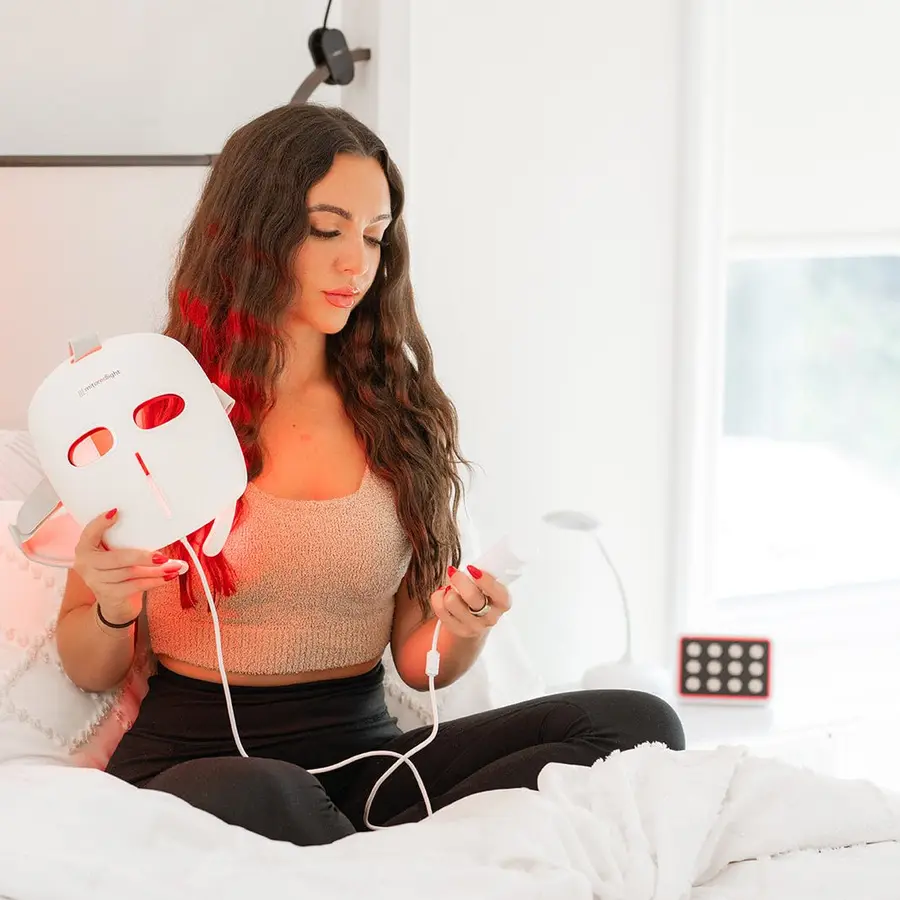
If it helps, stop thinking about the mask as a treatment and start thinking about it as a slot. Ten minutes, hands free, while the kettle boils or the email drafts itself. That is the only reason the dose is what it is.
499 dollars, once · free US shipping · sixty days to change your mind