Ultralight backpacking · Base weight
Weighed to the gram: what a complete ultralight kit actually costs you to carry
Three pieces decide your base weight. Here they are on the published scale, with the honest case against them.
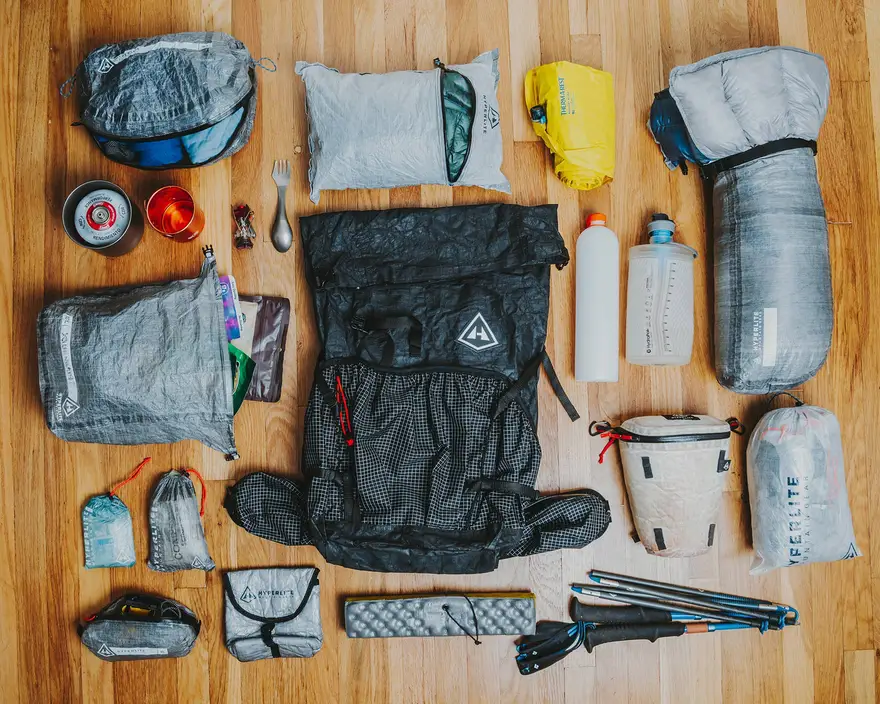
There is a phrase that follows this category around: serious backpackers only. It reads like a boast. It is closer to a warning label, and it is fair, because the gear really does screen the people who buy it.
The screen is not attitude. It is arithmetic. Buy this kind of equipment and you are agreeing to trade three things you may currently take for granted, in exchange for one number going down. The number is base weight: everything on your back except food, water and fuel. It is the only figure in backpacking that you fully control before you leave the house.
Almost all of it sits in three items. The pack, the shelter, the sleep system. Long-distance hikers call them the big three because everything else, all of it together, is rounding error next to them. So the honest version of the sales pitch is a table of numbers, and then a list of what those numbers cost you.
Here is that table, built entirely from published spec sheets.
The big three, published weights, in grams
Bars are to scale against 1,008 g, the heaviest pack in the range. Pack figures are the published average for size medium. Source: product spec tables on hyperlitemountaingear.com, read August 27, 2026.
Nothing else in the pack competes. The stuff sacks that hold your clothes weigh 34 grams. The bag that holds six days of food weighs 32. Once the big three are chosen, the rest of your base weight is decided by what you personally refuse to leave behind, which is a conversation about you, not about equipment.
Piece one
The pack: thirty ounces, and a hard ceiling
Four packs cover most of the long-trail use case, and three of them weigh almost exactly the same. The Windrider, the Southwest and the Junction are the same pack with different exterior pockets: mesh for visibility and drying, solid fabric for abrasion and privacy, or one of each. All three are $395 in the 40 liter size, and all three land within four tenths of an ounce of one another.
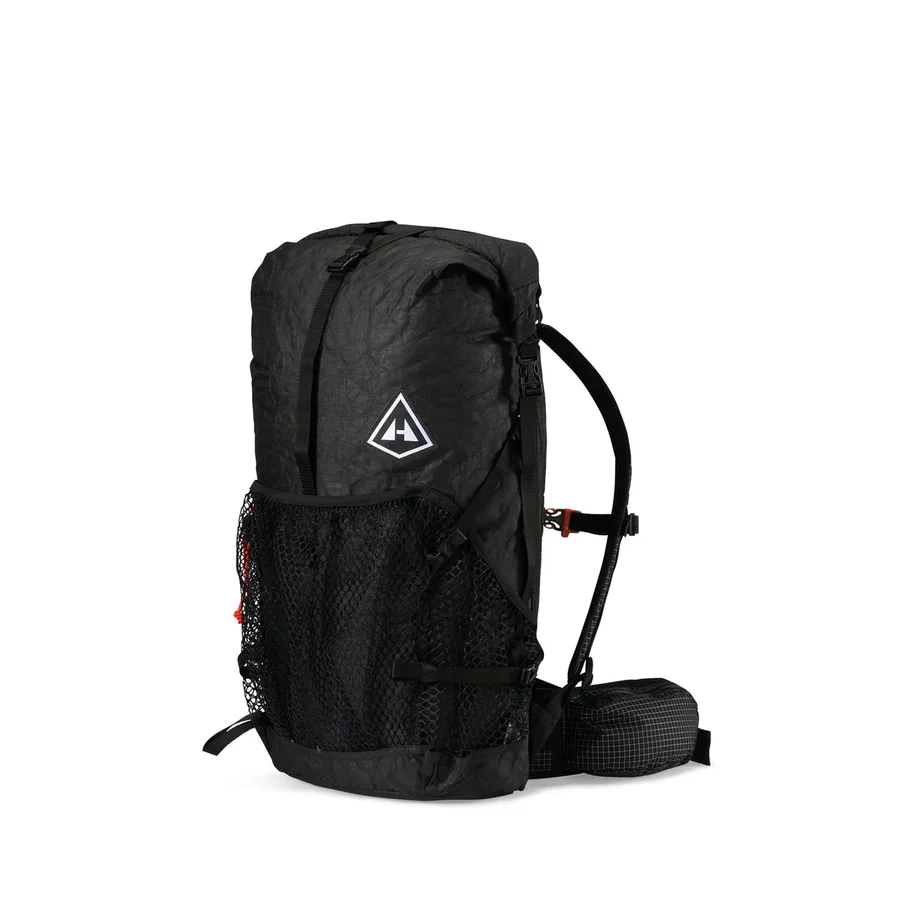
Windrider 40840 g · mesh pockets
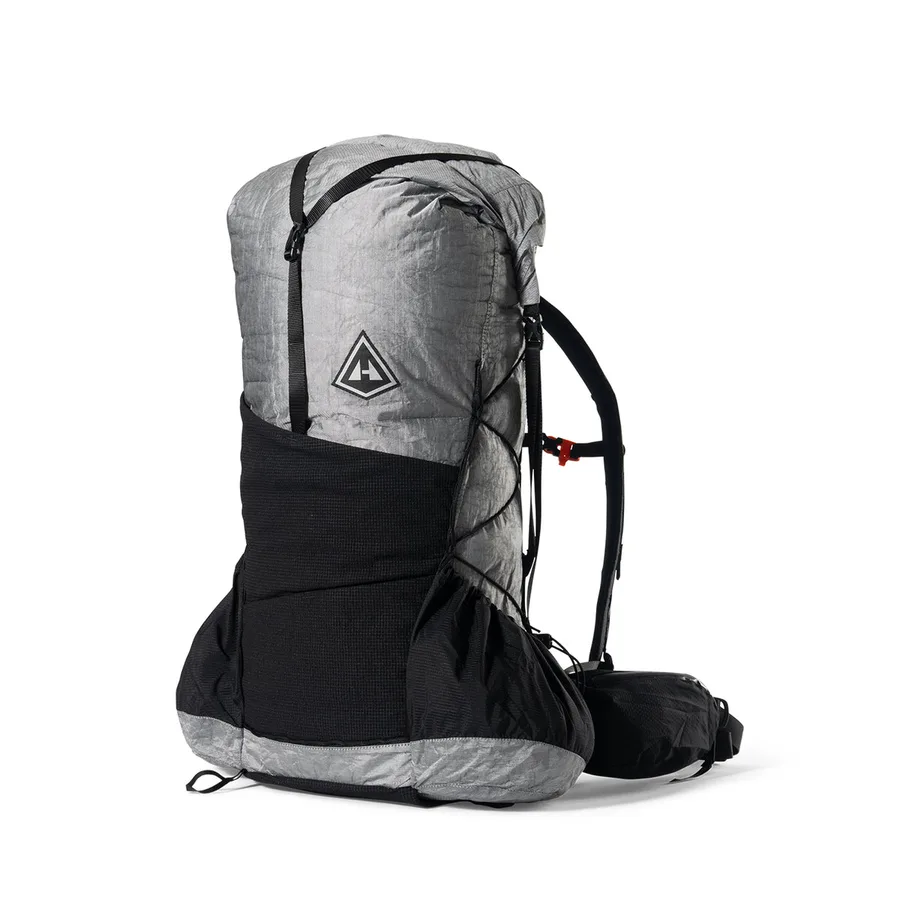
Unbound 40774 g · long-distance build
The interesting number on a pack spec sheet is not the weight. It is the load ceiling, because that is the manufacturer telling you where its design stops working.
| Pack | Weight | Ceiling | Price |
|---|---|---|---|
| Contour 35 35 L, frameless | 459 g 16.2 oz | 25 lb | $350 |
| Unbound 40 40 L, two stays | 774 g 27.3 oz | 40 lb | $395 |
| Windrider 40 40 L, mesh pockets | 840 g 29.6 oz | 40 lb | $395 |
| Southwest 40 40 L, solid pockets | 842 g 29.7 oz | 40 lb | $395 |
| Junction 40 40 L, one of each | 833 g 29.4 oz | 40 lb | $395 |
| Windrider 70 70 L, expedition | 986 g 34.8 oz | 60 lb | $450 |
Read the first row again. The Contour 35 saves you 381 grams over a Windrider, roughly thirteen and a half ounces, and it does that by removing the frame. Below 25 pounds of load, its own contents give it structure and it carries beautifully. Above 25 pounds it has nothing to give the weight to except your shoulders. That is not a flaw. It is a specification, published in the same table as the weight, and it is the single sentence that decides whether the lightest pack in the range is the right one for you.
Published load ceiling, in pounds
This is the number to decide first. It sets the maximum food carry, the maximum water carry and the maximum winter layer you can plan around. Source: product spec tables, hyperlitemountaingear.com.
The main fabric across the line was changed recently. Dyneema Woven Composite 3.9 uses the fiber in the woven face and in the internal core, and the maker describes it as combining the light weight of its older 3.8 hybrid with abrasion resistance that surpasses even the heavier 5.9. The packs got lighter and tougher in the same revision, which is unusual enough to be worth saying plainly.
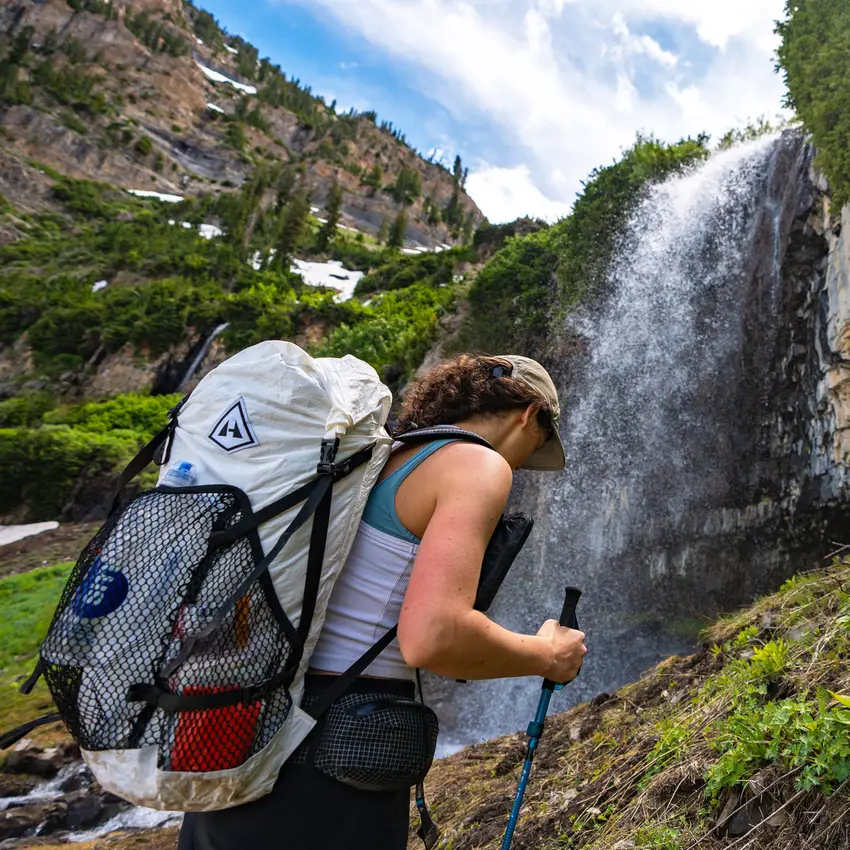
“I've had my Windrider 40L for five years and it's seen 3000+ miles of backpacking including thru hikes of the Long Trail and Appalachian Trail. Waterproof and durable, which has been super important on tricky granite climbs and unpredictable weather all along the east coast. Perfect for a lightweight, teetering on UL load as you're dialing in. Still carried 30# comfortably on one of my longest food carries of the AT and fits like a dream.”
Piece two
The shelter: from 235 grams to 813, and the skill each one asks for
The shelter is where the weight range gets wide, and where the trade is least about money and most about competence. Four options, laid out from lightest to heaviest, look like a ladder of skill more than a ladder of price.
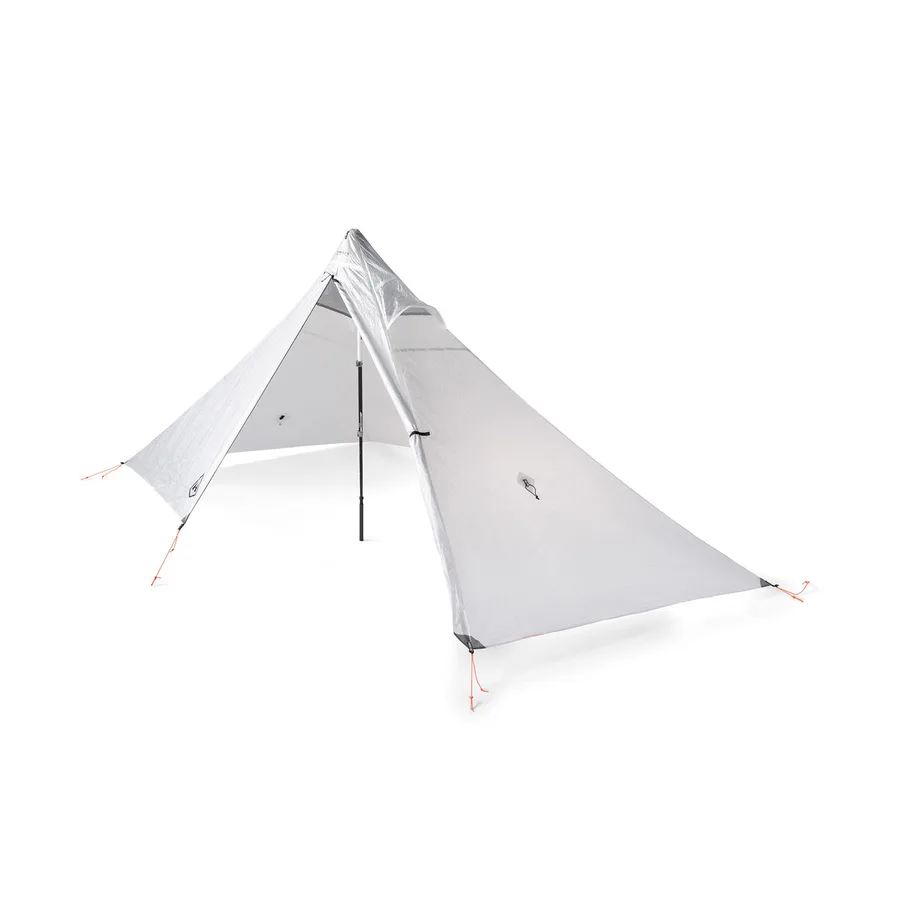
UltaMid 1235 g
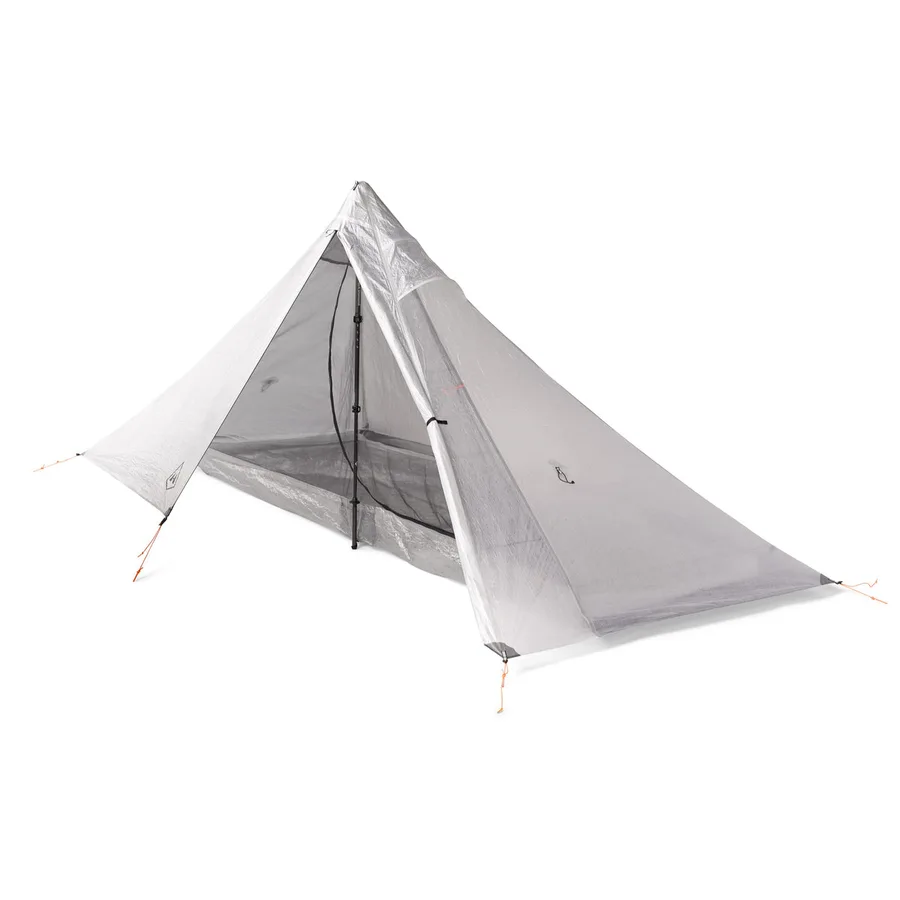
Mid 1454 g
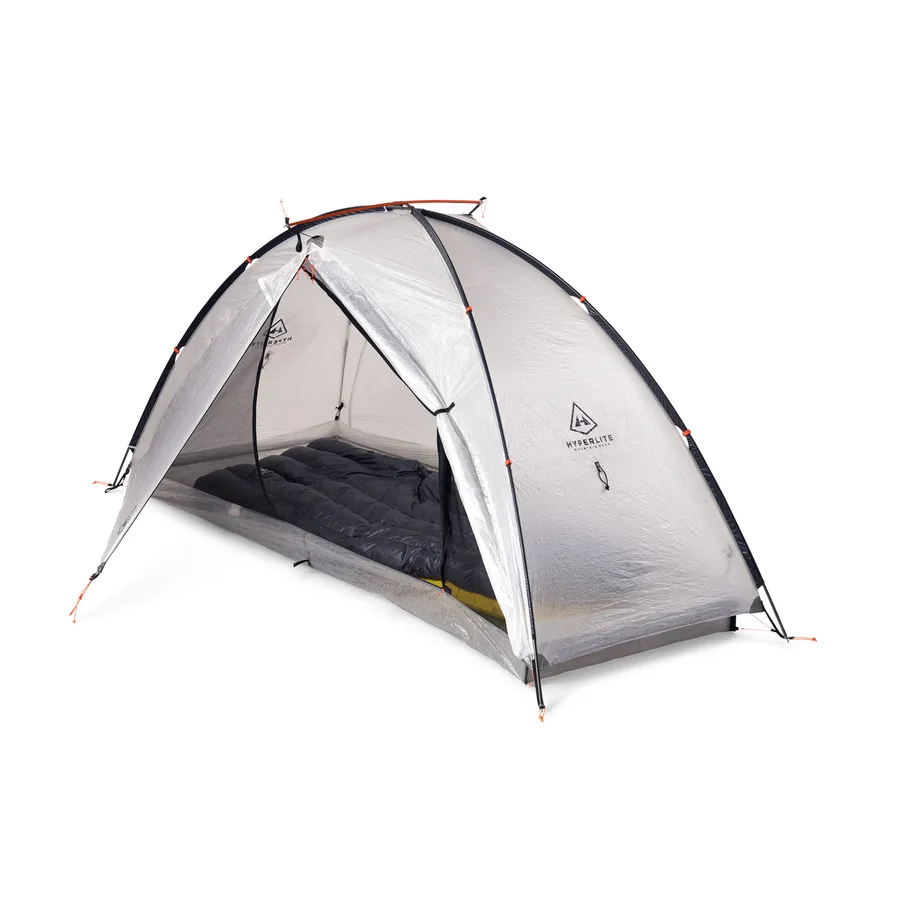
CrossPeak 1813 g
UltaMid 1, 235 grams, $450. A tarp. Forty square feet of covered ground, pitched on one trekking pole, packing to 7.5 by 4 inches. No floor, no bug netting unless you add an insert or a bivy, and no forgiveness for a bad pitch. It is the lightest shelter here by a factor of two and it assumes you have chosen a good site before you unpacked it.
Mid 1, 454 grams, $675. The same geometry, fully enclosed, with a height-adjustable bathtub floor and dual peak vents. Still one pole. You are paying 219 grams for a floor, a door and mesh.
Unbound 2, 624 grams, $775. Twenty-eight square feet, two vestibules, pitched on two 125 cm trekking poles. Rated for one or two people, which in practice means one person with room to sit up and cook, or two who like each other.
CrossPeak 1, 813 grams, $825. Freestanding, poles included in that figure, 487 grams of shelter and 326 grams of pole. This is the one you take when the ground will not hold a stake or when you do not want to think about the pitch at the end of a 25 mile day.
The shelter ladder: what each 100 grams buys back
Tarp only. No floor, no netting, one trekking pole. You supply the site reading.
Same shape, fully enclosed. Bathtub floor, mesh, dual peak vents, still one pole.
Two people or one with room to cook. Two vestibules, two trekking poles.
Freestanding, poles included in the figure. Pitches where a stake will not hold.
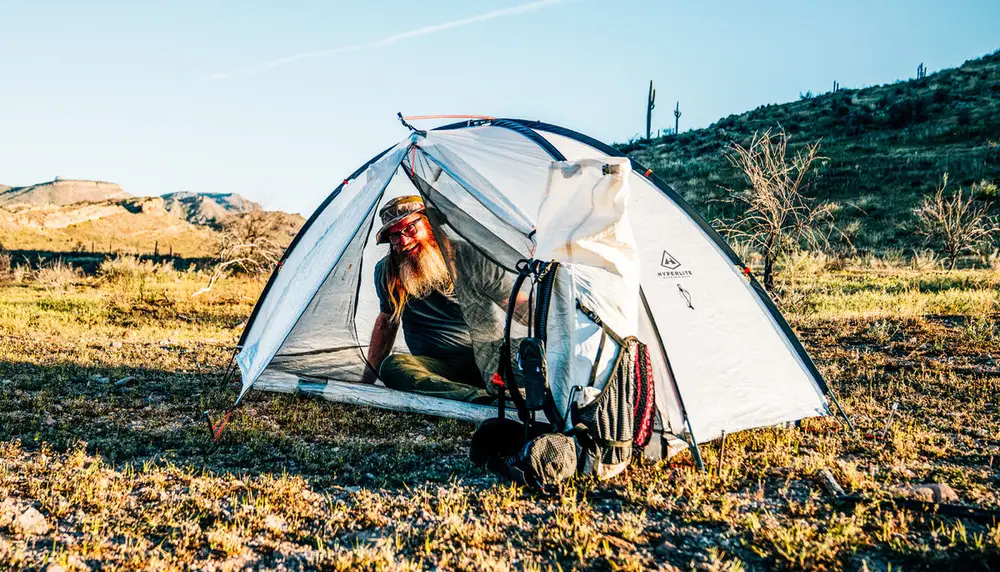
“Just wrapped up a thru-hike of the Colorado Trail and utilized this as my shelter. It served me very well for this trip and I look forward to more adventures with it. Key takeaways - ultralight, low volume, storm worthy, quick drying, simple to setup, plenty spacious for one, cleverly featured, and just all around awesome!”
Piece three
Sleep: 349 grams for three seasons, 570 for a cold one
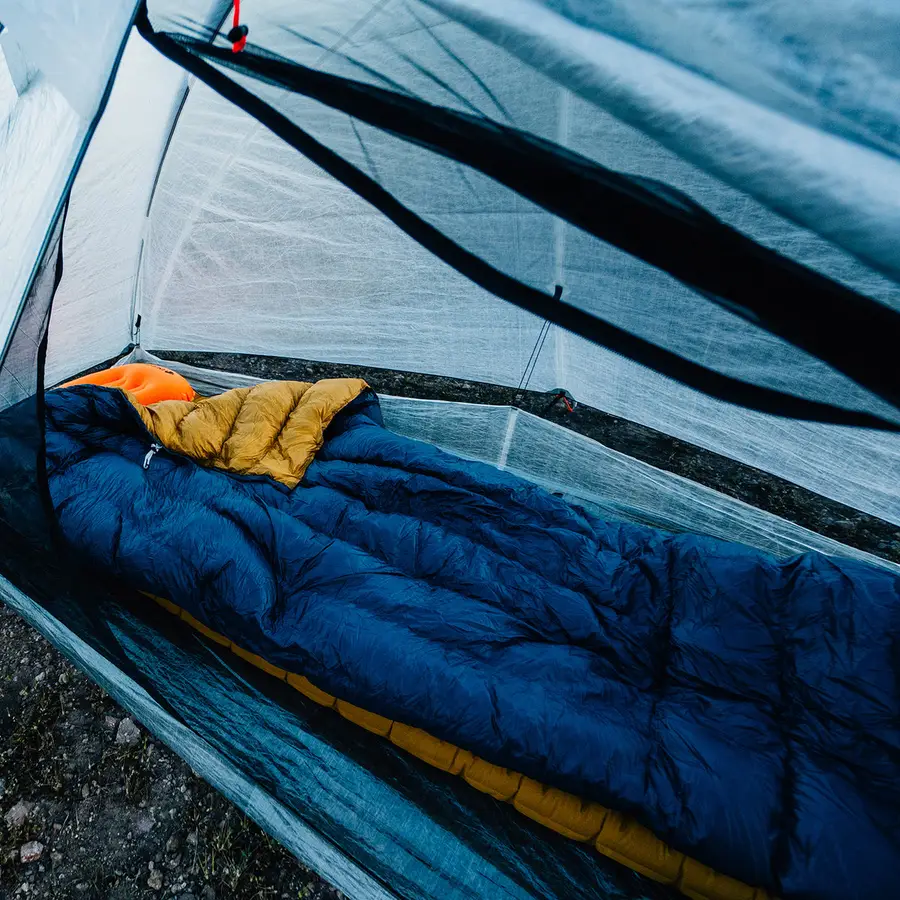
A quilt is a sleeping bag with the bottom removed, on the argument that the down you lie on is compressed and therefore doing nothing. What you save is real and it is published: the 40 degree quilt in regular length weighs 408 grams, 14.4 ounces, with 251 grams of 1000 fill power down inside a 7d micro-ripstop shell. The short version is 349 grams. Step down to 20 degrees Fahrenheit and the regular goes to 570 grams.
12.3 oz · $430
14.4 oz · $430
18.6 oz · $530
20.1 oz · $530
Both quilts use the same construction: three-dimensional baffles, vertical over the upper body and horizontal at the footbox, a sewn closed footbox, a neck drawcord, and two straps that hold the quilt to your sleeping pad so a restless night does not open a draft. The published fill tolerance is plus or minus 8 grams, which tells you something about the level at which this company is arguing with itself.
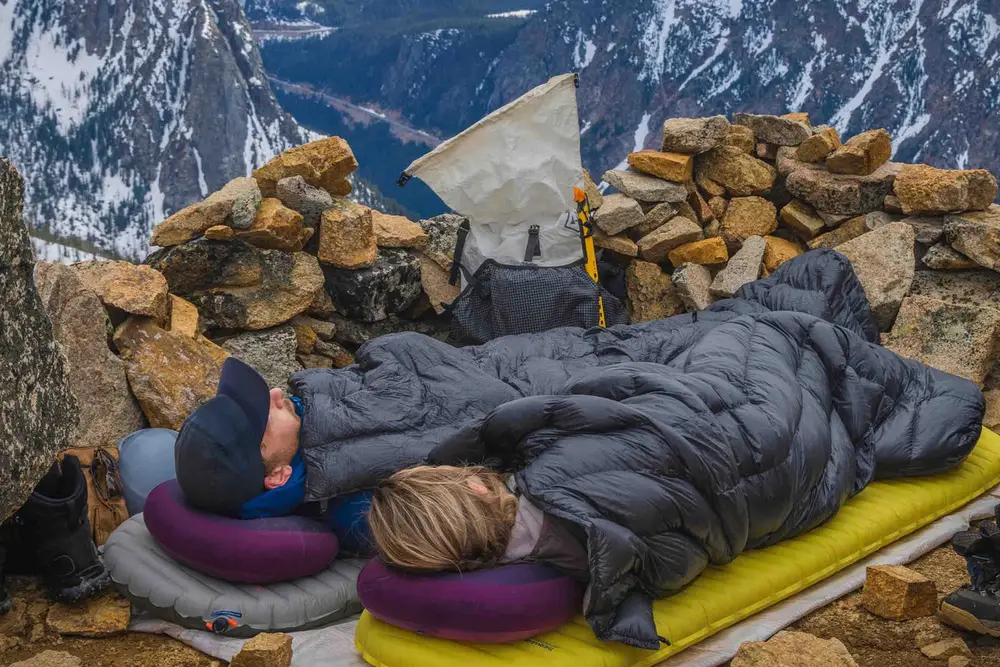
“How can a quilt be this light? How can something that is this light, be so warm? How can something basic like a sleeping bag be made so luxurious? I don't know. But the crew at HMG sure do! It feels massive while sleeping inside. There was a heavy dew on night and despite my bag being soaked wet in the morning...I was dry and cozy.”
The sum
Three complete kits, added up
Here is what those spec tables produce when you actually choose. Three combinations, from the lightest defensible setup to the one that will keep two people warm in the cold. Weights are the published figures added together. Prices are current list.
- Contour 35 frameless, 25 lb ceiling459 g
- UltaMid 1 tarp, one trekking pole235 g
- 40° Quilt, regular408 g
- Windrider 40 white, 40 lb ceiling840 g
- Mid 1 enclosed, floor and mesh454 g
- 40° Quilt, regular408 g
- Unbound 40 two removable stays774 g
- Unbound 2 two vestibules, 28 sq ft624 g
- 20° Quilt, regular570 g
Two things are worth noticing about those totals. The first is that the spread between the lightest and heaviest kit is 866 grams, under two pounds, and it buys you a frame, a floor, a second person and 20 degrees of warmth. Ultralight is not a cliff. It is a dial with about two pounds of travel on it.
The three kits, side by side
866 grams and $470 separate the two ends. Bars are base weight, to scale.
The second is that the totals are all under four and a half pounds, which is where the phrase at the top of this page comes from. That is a base weight that changes the shape of a day. It is also between $1,230 and $1,700 before you have bought a sleeping pad, a stove or a single sock.
The material
Where the grams went
All of the above is one material decision, made once, in the early days of the company. The founder went looking for a fabric that would let equipment stop getting in the way, and landed on Dyneema, which behaves less like a textile and more like a high-tech multi-layer laminate.
What a composite laminate is, in three layers
Simplified from the published material description on hyperlitemountaingear.com. Layer count and construction vary by fabric grade.
Three published claims sit behind the weights in the tables above. Dyneema fiber has a strength-to-weight ratio 15 times greater than steel. The composites are 100 percent waterproof on their own, with no coating to fail, which is why the seams are taped rather than the fabric being treated. And the new woven composite offers 10 times more abrasion resistance and 5 times better tear resistance than the fabrics it replaced.
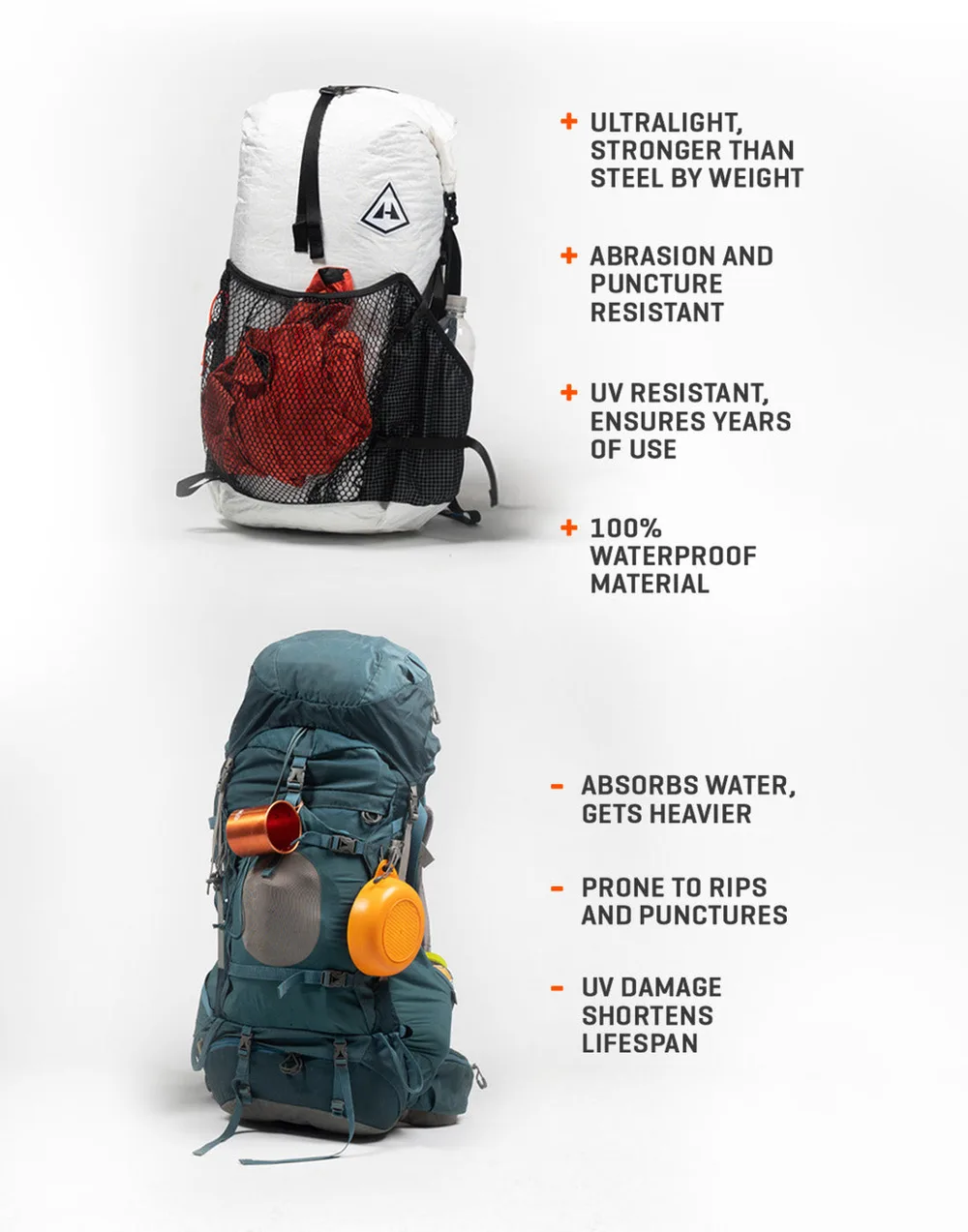
One practical note, because it comes up constantly in buyer questions. The fabric names changed. If you are reading an older review or a forum post from three years ago, this is the translation:
| Old name | Current name |
|---|---|
| DCH50 | Dyneema Composite Hybrid 3.8 |
| DCH150 | Dyneema Composite Hybrid 5.1 / 5.9 |
| 400D Fully Woven | Dyneema Woven Composite 5.0 |
| DCF6 | Dyneema Composite Fabric 0.55 |
| DCF8 | Dyneema Composite Fabric 0.75 |
| DCF10 | Dyneema Composite Fabric 0.96 |
| DCF11 | Dyneema Composite Fabric 1.3 |
Dyneema Woven Composite 3.9, the fabric in the current packs, has no old name. It did not exist before.
The rest of it
The pound nobody weighs
After the big three, the argument stops being about grams and starts being about whether the pieces work together. The published line is blunt about it: saving weight on one piece does not matter if everything else works against it.
In practice that means two categories of small thing, and both of them are absurdly light.
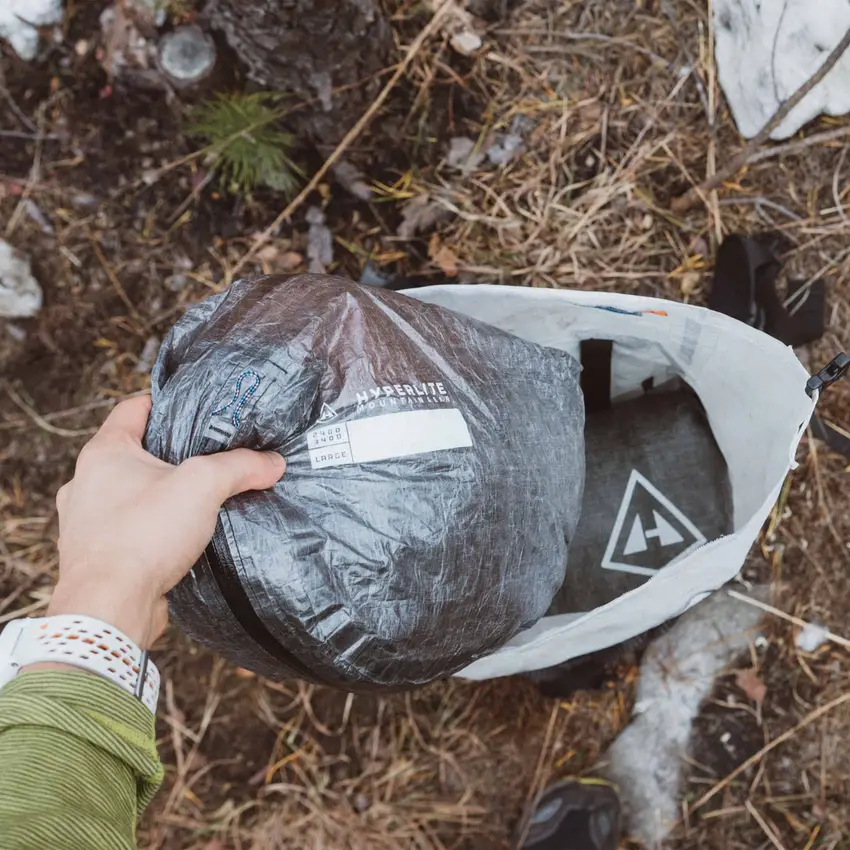
Pod, 9 L34 g · $60
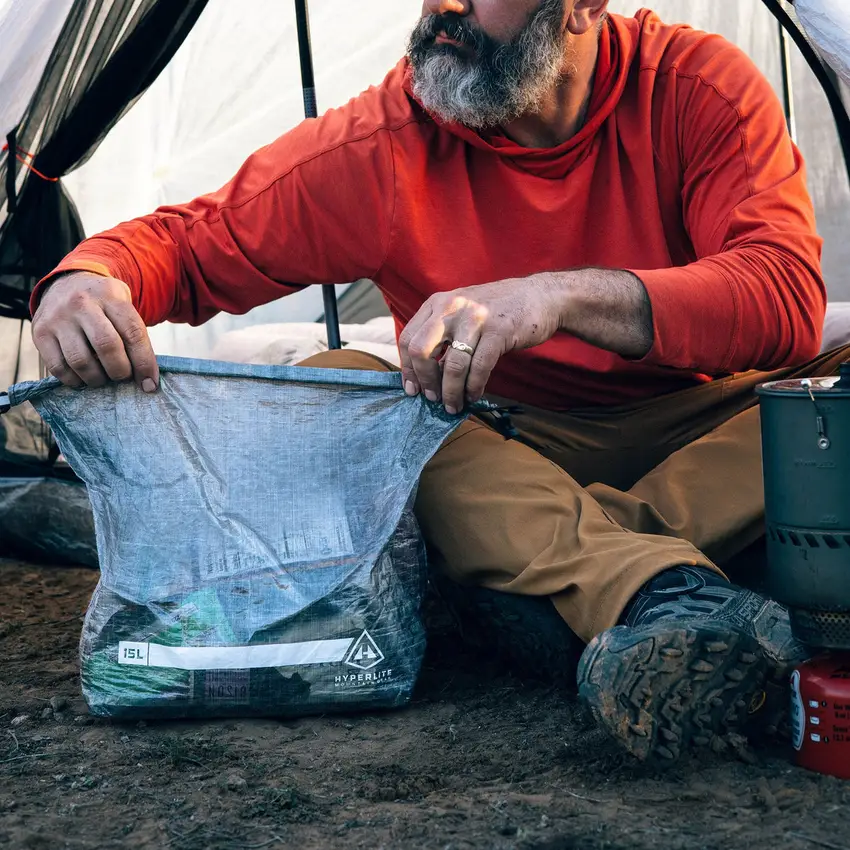
Roll-Top Food Bag, 10 L32 g · $58
Pods are stackable clamshell cases cut to the internal dimensions of the packs, so the pack fills without gaps. The 9 liter weighs 34 grams and the 13 liter weighs 37. The Roll-Top Food Bag is 32 grams for 10 liters, with a magnetic roll-top, taped seams and O-rings for a bear hang.
That last number is the one that does real work. Where a hard-sided canister is not required, the food-storage decision is between something measured in pounds and something measured at 32 grams.
“I just stepped off a six day section hike on the AT. I carried food in my new HMG Roll top food bag. The bag managed six days of food and my garbage bag. A couple nights I use the rock bag for a classic bear hang. When we camped at shelters with bear lockers, my companions were grumbling about carrying their 2+ pound bear canisters. The roll top bag is the answer to the ultra light backpacker's food storage needs.”
Two pods and a food bag come to 103 grams, 3.6 ounces, for $183. That is the entire inside of your pack organized and waterproofed for less weight than a paperback, which is why the organization category tends to be the first repeat purchase people make.
“I pack clothing layers in my 13L pod. Tons of room, so consider if you really need 13L. It stacks on top of my quilt's roll top pod and fits my pack in the most efficient way. No gaps.”
The buyers
Who actually ends up carrying this
Here is the part that turns a slogan into a measurable claim. Along with each review, buyers are asked to rate their own experience level in the backcountry, on a scale from beginner to expert, and to say what they used the product for. Those answers are published next to the reviews, so anyone can count them.
Across the review archive on the company's own site, 1,665 people have answered the experience question. The distribution leans hard in one direction.
“Rate your level of experience in the backcountry” · 1,665 answers
Counted from every published review on hyperlitemountaingear.com carrying this attribute, read August 27, 2026. Bars are relative to the largest group.
Seventy-three percent of them put themselves at 4 or 5. Six percent put themselves at 1 or 2. If you have ever wondered whether the screening language in this category is a pose, that is the answer: it is descriptive. The people buying this equipment are, by their own account, already deep in.
The activity breakdown from the 1,653 people who answered that question tells you what the gear is really for. Backpacking dominates, day hiking is the second use rather than the first, and almost a third of respondents list thru hiking.
“What activities did you use this product for?” · 1,653 answers, multiple allowed
Same source and date. Respondents could select more than one activity, so the percentages exceed 100.
One more figure worth having before you order. Buyers are also asked whether the pack fit, on a scale running from too small through just right to too big. Of 1,288 answers, 1,154 land exactly on just right, and the misses are almost all on the small side. Sizing here is by torso length, in four or five sizes per pack, and the published size chart is the part of the purchase most worth ten careful minutes.
The honest part
What you give up
A page that only adds up the good numbers is a brochure. Four things come off the other side of the ledger, and all four are visible in the company's own published reviews, which are not filtered.
1. There are no load lifters, and people notice
Ninety published reviews mention them. Load lifters are the straps that run from the top of the shoulder harness back to the pack body and pull the load toward your shoulders. These packs do not have them, because they are weight that does nothing under a light load. Under a heavy one, some people miss them a great deal.
“I've used this pack on several big packrafting trips, its brilliant in many ways, light, tough and waterproof, however it does not have any load lifter straps from the top of the shoulder straps to the pack to enable pulling the pack closer to the body, I'm 6'5 and have the tall version, the pack pulls away and you simply can't pull the pack closer to your shoulders and thats an issue when you're carry 35lbs + of packrafting and hiking gear.”
And the counter-argument, from another verified buyer on a different pack in the same range, which is worth reading because it is the actual design position stated by someone who paid for it:
“Fits Great. Rides Great. Load lifter are for people who cannot keep a good tight ruck packed properly. Just inexperience. There was no such thing as load lifters in the Army. Packed it right or suffered the consequences!!!”
Both of them are right, and which one you are is exactly the screen this gear applies. If you pack loose and heavy, you will feel the absence. If you pack tight and light, you will never think about it.
2. The lightest fabrics are light because they are thin
The current pack fabric is genuinely tougher than what it replaced. It is still a laminate measured in ounces per square yard, and it meets granite.
“Nice comfortable pack. Super light and holds gear well. Fragile in use. Couple of down climbs on a hike with light rock scraping can cause holes in the material. It would be nice to have a little heavier version with a reinforced bottom. Just as an option.”
The range answers this with the NorthRim, the most durable model in the line, built for terrain that is known for shredding gear. It weighs 989 grams in the 55 liter size, 149 more than a Windrider 40, and costs $480. That is the trade, stated openly, in a product rather than in a paragraph.
3. The lightest shelter is a tarp, and a tarp is a skill
A 235 gram shelter with no floor and no netting is a superb piece of equipment in the hands of someone who reads terrain and wind. It is a bad night for someone who does not.
“Incredibly light, packs small, and well made, but must really only be for thru hikers. I'm 6' and don't fit well without fabric nearly on my face and def on my feet- bivvy required. I also find the fabric at the door tough to get taught and low to the ground. Need to go bigger for sleeping and gear storage.”
4. The price is the price
The three kits above run $1,230, $1,500 and $1,700, and none of that includes a pad, a stove, a filter or clothing. There is free shipping in the United States over $300, which at these prices is every order. What there is not, is a cheap way in. The lightest complete big three in the range still costs more than $1,200, and the honest position is that if that number is the problem, the phrase at the top of this page was aimed at somebody else this season.
The decision
Which of the three is yours
Every fact on this page reduces to one question, and it is not about money. It is about which failure you would rather risk: carrying two pounds you did not need, or arriving somewhere with less shelter than the weather turned out to require.
- You are dialed in and going long. Frameless pack, tarp, 40 degree quilt. Under 25 pounds total or the plan does not work. 1,102 grams of base kit.
- You want the trade to be sensible. Framed 40 liter pack, fully enclosed one-person shelter, 40 degree quilt. This is what most of the 73 percent are carrying. 1,702 grams.
- You go in shoulder season, or with somebody. Thru-hiking pack, two-person shelter, 20 degree quilt. 1,968 grams, and still under four and a half pounds.
Start with the pack, because the load ceiling on the pack is the constraint that decides everything after it. Then match the shelter to how much you want to think at the end of a long day. The quilt is the easiest choice of the three, and the one people regret least.
See the packs and their published weightshyperlitemountaingear.com · Windrider, Southwest, Junction, Unbound, ContourShelters: ultralight tents and tarps · Sleep: quilts and bags · Inside the pack: organization systems
From the archive
Four more, unedited
“It's amazing it is 6lbs lighter than my other backpack. It's a total game changer. I never thought I could get all of my overnight things that I carried in my 100 liter pack, but I did with room to spare. It's a great product.”
“some 5 years ago I purchased my first Hyperlite Southwest 40 L and I absolutely love it to this day! For I needed a bigger pack I tried several different brands and packs but none of them fitted my physique - so I went for the Southwest 70 L pack. It fits just like the 40L pack and I like the little adjustments made from the older version. It was the perfect pack for my 12 day thru hike in the Borgefjell Nationalpark in Norway.”
“This shelter provides great weather protection and has the advantage of being free standing for only 813 grams! It has a small footprint but feels spacious inside. Overall, a great addition to my quiver.”
“The mid might be the perfect 1 person UL shelter. Just enough room for one person and a pack, but that is all you need A couple of comments would be they the single pole loop should be a grommet to better secure your trekking pole, especially for those that remove the baskets, on their poles.”
Across more than 10,000 published reviews on the company's own site, the average rating is 4.8 out of 5 and 97 percent of reviewers say they would recommend what they bought. That is a high number anywhere. It is a more interesting number here, because among the reviewers who rated their own experience, three quarters put themselves on the top two rungs of the scale, and people that far in are hard to please with a bag.

Weigh your current three. Write the number down. Then look at 1,702 grams and decide whether the difference is worth what it costs, in dollars and in the small amount of extra care this equipment asks for. That is the whole decision, and nobody else can make it from a spec table.
Start with the packPublished weight and load ceiling on every product page