Why a drugstore product came back
Nasal strips are everywhere again. What changed was never the nose.
The physiology was settled decades ago. What moved is which strips survive a sweaty mile, and which ones an official allows.
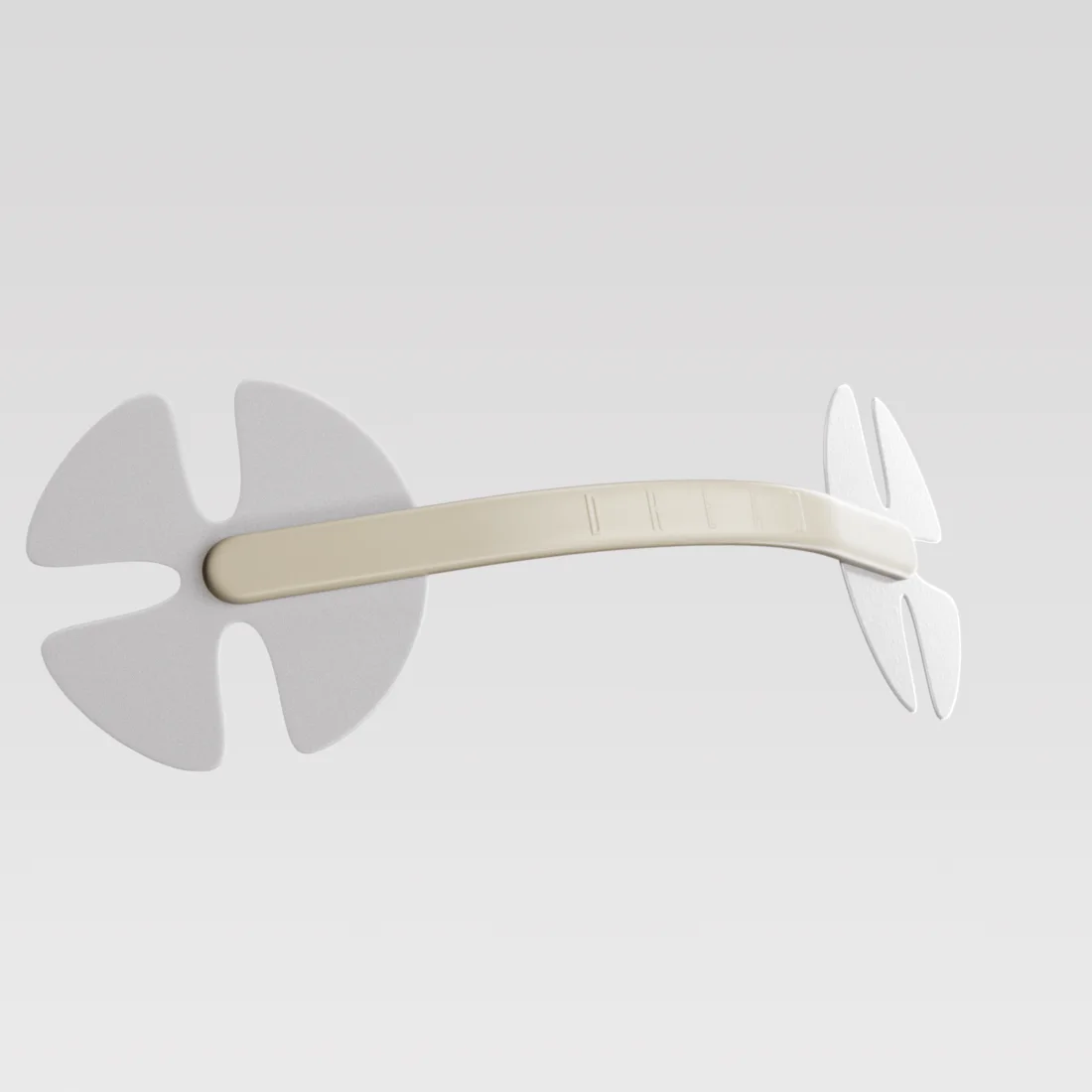
Stand near the start corral of any road race this year and count noses. A beige comma across the bridge, sometimes black, sometimes a strip of orange bright enough to read from three rows back. Ten years ago that was a snoring husband on a sitcom. Now it is the guy who beats you by four minutes.
The reflex explanation is that a trend came around again, the way running vests and short shorts came around again. That explanation is wrong, and it is wrong in a specific and interesting way.
Nothing was discovered about the nose. The research that people cite for nasal breathing is old, in some cases thirty years old. What changed is much less romantic and much more concrete: the strip itself finally became a piece of equipment that survives the conditions where its benefit is worth having. Two constraints did that, and neither of them is physiological.
Unchanged since the 1990s
- The physiology. The nitric oxide work these brands cite was published in 1996.
- The mechanism. A band across the bridge, a pad on each nostril wall. That is all a strip has ever been.
- The demand. Congestion, snoring and hard breathing did not appear this decade.
New in the last few years
- An adhesive that survives sweat for hours instead of quitting at minute twenty.
- Geometry that pulls sideways, at right angles to the band, rather than along it.
- Eligibility. A version with no metal in it, which an official will let you wear in play.
Here is what actually happened, what the number on the box means, and how to find out in a week whether any of it applies to you.
The phenomenonThe people wearing them are not the people who used to wear them
The old customer for a nasal strip was congested. A cold, a season of pollen, a partner making a noise. It was a drugstore purchase, made once, in an aisle near the cough syrup, and abandoned when the cold went away.
The current customer is doing something. Dream Recovery, which makes the Second Wind strip, lists where it has been worn and tested: workouts, marathons, ultra-marathons, HYROX competitions, Rim 2 Rim 2 Rim challenges, and the US Sauna Team Finnish Sauna Tour. That is not a congestion list. That is a list of places where you sweat until your shirt changes color.
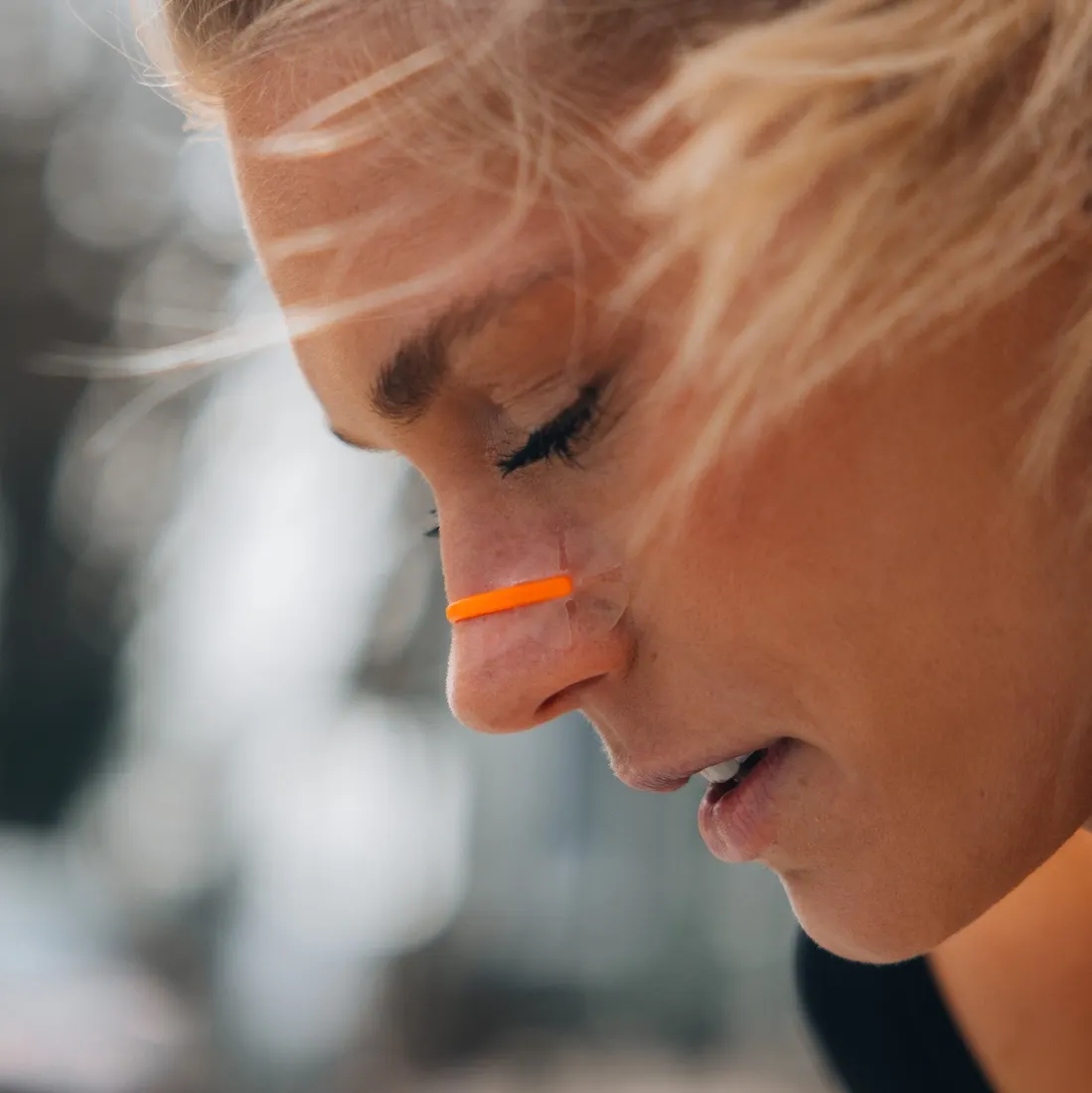
The volume follows the use case. The Second Wind product page carries a counter that read more than 12,100 bought in the last 30 days when this article was written, on a product that ships as a subscription and costs about a dollar a day. People are not buying one box for a cold. They are re-ordering.
The settled partThe nose was never the argument
Strip away the marketing on all sides and the physiology is not in dispute, and it is not new.
Air moving through the nose behaves differently from air moving through the mouth. It is warmed, humidified and filtered. It also picks up nitric oxide produced in the nose, a gas that widens blood vessels. Dream Recovery's own research page cites the primary literature on this, including work published in Acta Physiologica Scandinavica in 1996 and a review indexed at the National Library of Medicine, and it makes the mechanism explicit: the nose is not a passive hole, it is doing chemistry.
The same page collects the sleep side. Nasal obstruction and snoring track each other closely, with two studies cited by PubMed identifier. Slow nasal breathing at around six breaths a minute raises heart rate variability, again with citations. Nasal breathing recruits the parasympathetic branch, the one that lets a body settle.
What the brand puts its name to, and where it points
Nitric oxide and blood vessels
Nasal breathing picks up nitric oxide produced in the nose, which widens blood vessels.
Cited to Acta Physiologica Scandinavica, 1996, and a review indexed at PMC5382821.
Obstruction and snoring
Nasal blockage and snoring track each other; improving nasal breathing reduces snoring.
Cited to PubMed 9082790 and PubMed 10629486.
Heart rate variability
Slow nasal breathing, around six breaths a minute, raises HRV.
Cited to PubMed 23029969 and PubMed 29771730.
The settling response
Nasal breathing recruits the parasympathetic branch by way of the vagus nerve.
Cited to Breathe, European Respiratory Society, volume 13 issue 4.
All four are collected by Dream Recovery on its own research page at dreamrecovery.io, with the links above. They describe nasal breathing in general, not this strip in particular.
All of which is real, and none of which is the point. Here is the point:
A strip does not improve your breathing. It removes something that was in the way of it.
That distinction matters more than any of the science, because it tells you exactly who a strip helps and who it does not. If the narrow part of your airway is where the strip acts, you feel it in about two seconds. If it is not, you feel nothing at all, and no amount of nitric oxide literature will change that.
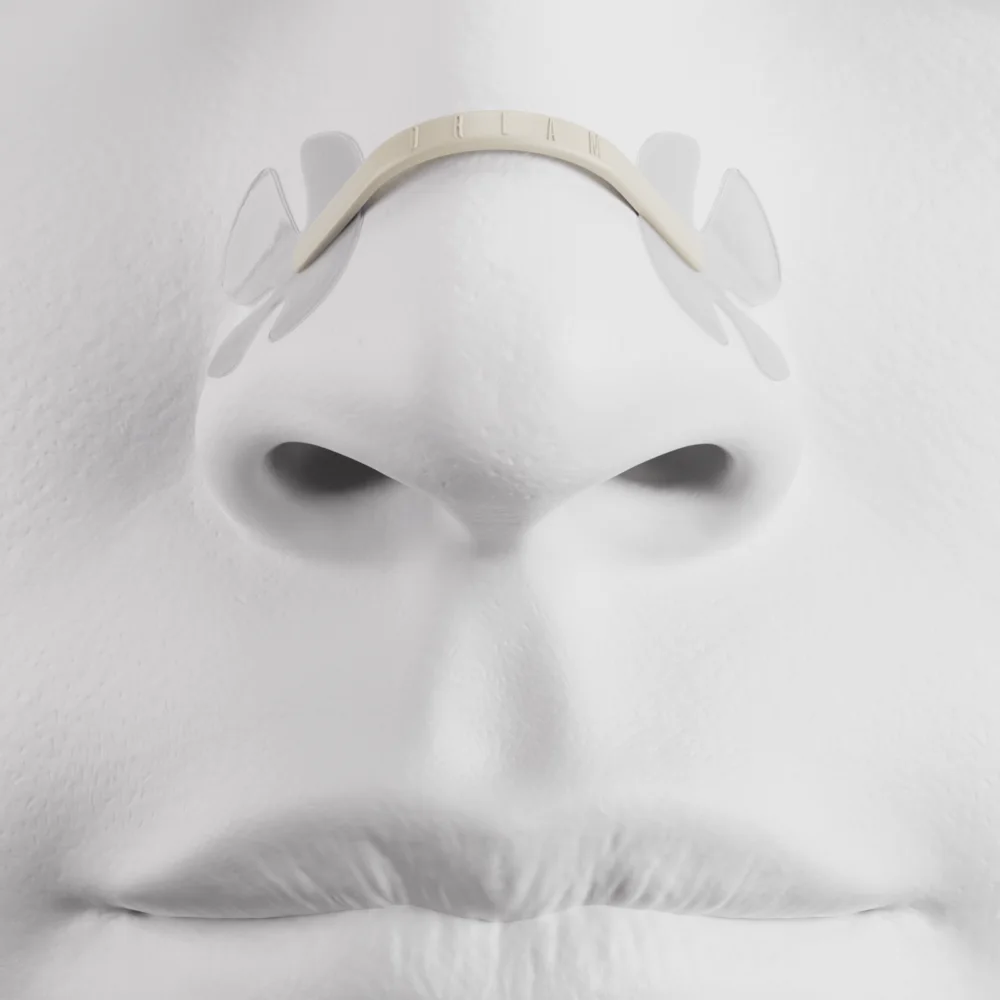
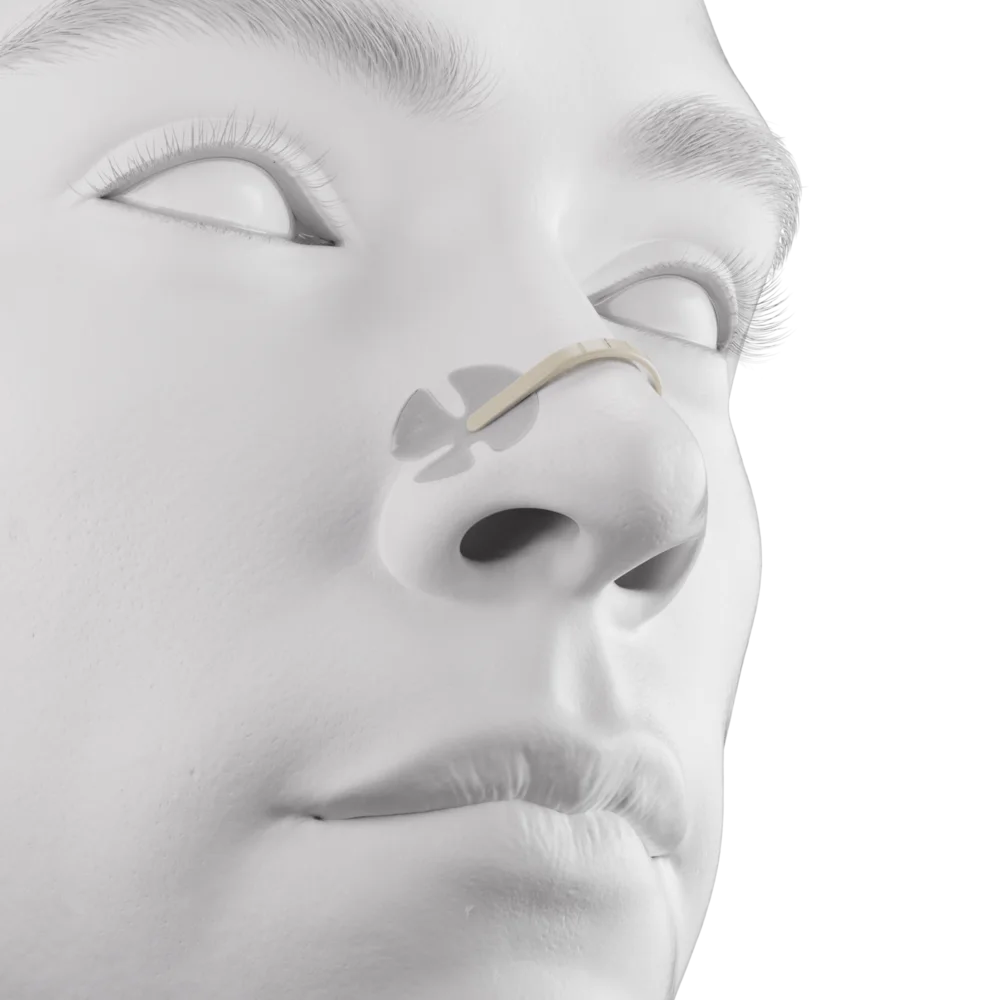
Look at a strip on a face and the mechanism stops being abstract. The band spans the bridge and stores tension. The two pads sit on the flexible wall of each nostril and spend that tension outward, at right angles to the band. Dream Recovery calls the geometry a dual dilation and holds a patent on it. What you can see for yourself is simpler: two anchors, one spring, pulling in the only direction that helps.
For twenty years the strip worked and the glue did not
If the mechanism is that simple, and the physiology is that old, the obvious question is why the category spent two decades as a punchline.
The answer is in the reviews, and it is unusually easy to check, because the brands publish them.
On the Second Wind product page there are 39 customer reviews on display under an overall score of 4.4 out of 5 from 104 reviews. Nine of the thirty-nine volunteer that they tried a different brand first. That is just under a quarter of the page spent on comparison shopping, unprompted, in a category where a strip costs a dollar.
And six of those nine name the same failure. Not that the other strip did not open the nose. That it did not stay on.
“Superior nasal strips. Tried other brands before finding Second Wind and none held up to the Texas heat and sweat during distance runs. Game changer.”
Timothy D. ★★★★★ Verified · August 6, 2026
“I wear my nasal strip every time I ride and I’ve noticed such a big difference when I’m riding and when I’m doing a hard interval workout, I can actually breathe! What I love about these nasal strips is they actually stay on my nose. I’ve tried a lot of brands and once I start sweating, they just come off.”
Jennifer S. ★★★★★ Verified · June 20, 2026
“It opens my nose more and doesn’t disappear off my face in the middle of the night like others. I tried a few other brands on, including the one from Costco, to test if it really did open up my nasal passages more. They do and it was noticeable how much.”
Owen C. ★★★★★ Verified · May 12, 2025
Read those three together and the twenty-year gap explains itself. A dilator that quits at minute twenty of a hard hour is not a piece of equipment, it is a novelty. Nobody builds a habit on something that leaves the moment the effort starts, and nobody re-orders it. So the category stayed in the cold and flu aisle, where the customer is horizontal, dry, and gone in a week.
Which turns the whole thing into an adhesive problem. Three things have to be true at once, and the third one is where most of them died.
Dream Recovery's answer is a medical grade adhesive it describes as sweat-proof, non-toxic and PFAS-free, and which it says most people wear comfortably for up to twelve hours, overnight or through a session. The reviews say it holds. They also say something more useful, which is that holding is not free.
“So i thought this was going to be a nasal strip you can workout in and wear for the day. After a hard workout of cycling or running the strips get very oily and start to peel off. You cant wear the strips for a workout and for the rest of the day, you have to use two separate ones. For everyday use though when youre not working out theyre very good and have a minimal look which I love. They are also very effective and definitely help my breathing.”
Charlie K. ★★★★☆ Verified · August 14, 2026
That is the most informative review on the page, and it is a four star. One strip covers one hard session or one night, not both. Which is roughly what a dollar a day buys you, and worth knowing before you order the year supply.
The other half of the trade-off is skin. A strong adhesive on a thin part of the face has an obvious failure mode, and two reviewers raise it directly to say it did not happen here.
“I have tried other nose strips and these are the only ones that don’t pull the skin off my nose! I am sleeping so much better, and will continue to use these strips.”
Jess S. ★★★★★ Verified · December 4, 2025
“The adhesive is good and doesn’t tear my skin off like some of the other brands, but it does stay on all night.”
John H. ★★★★☆ Verified · August 1, 2026
The company's own instruction is blunter than its marketing: peel slowly, and use a warm towel. A strip that comes off easily was never going to stay on.
The second constraintThe rule that shaped the product, and that nobody writes about
There is a second way to hold a nostril open, and for a while it looked like the future. Instead of a band across the outside, you use magnets: a small pair of them, sitting inside or against the nose, holding the passage open by attraction rather than by spring tension. No adhesive at all, so no adhesive to fail.
It solves the wrong problem, twice.
Dream Recovery publishes a side-by-side comparison of its own strip against what it calls other nasal strips, and two of the five rows are about exactly this. The magnetic approach, in its telling, disconnects easily and falls off during exercise or strenuous sport. And it contains magnets or metal fixtures.
| Requirement | Second Wind | Other nasal strips |
|---|---|---|
| Airflow | Increases air intake by up to 33% | Claims to dilate, but in reality do not |
| Holds during exercise | Stress tested to work no matter how hard you push | Disconnects from magnets easily. Falls off during exercise or strenuous sports. Adhesive not strong enough |
| Allowed in sanctioned play | NCAA, NFL, MLB, NHL and high school sports compliant | Contains magnets or metal fixtures |
| Adhesive | Medical grade, comfortable, PFAS-free | Cheap and ineffective |
| Disposal | 100% infinitely recyclable materials | Greenwashed products claiming recyclability |
Comparison as published by Dream Recovery on the Second Wind product page, August 25, 2026. It is the manufacturer's own framing of its category, reproduced rather than endorsed.
Take the marketing tone out and one row is still load-bearing, because it is not a claim about performance. It is a claim about eligibility.
If you compete under a rulebook, at any level from high school upward, the equipment you can wear on your face is not a matter of taste. Dream Recovery states that its strip is permissible in NCAA, NFL, MLB, NHL and high school play. A device built around metal fixtures is a conversation with an official, at best, on a day when you have other things to think about.
So the athletic market, which is the market that re-orders, cannot buy its way out of the adhesive problem. It has to be solved. That is the second constraint, and between them the two constraints explain the shape of every strip you now see at a start line: external, adhesive, disposable, and engineered around glue. Dream Recovery says it spent two years on this one.

What 33% is, and what it is not
Every strip in this category is sold on a percentage, and Dream Recovery's is 33. The phrasing on its own page is careful and worth reading exactly: improve nasal breathing up to 33%. Not oxygen in the blood. Not endurance. Airflow, through the nose, at the top end of the range.
This is where an honest read helps more than enthusiasm. If you breathe freely through both nostrils, lying still, at rest, a strip has very little to remove and you should expect very little. If one side is blocked, or both close under load, or pollen has been winning since March, the same strip changes the first breath you take with it on.
That is why the reviews split so cleanly by person rather than by product, and why the most emphatic ones come from the people with the most to remove.
“I’m 75 years old and at 4 years old I decided to drive my bicycle down a flight of stairs… I’ve been dealing with difficulty breathing through my nose since then. Several surgeries for deviated septum etc where no help. Meds and OTC products only provided limited short term relief or none at all. The Second Wind nasal strips are a game changer for me and have totally improved my quality of life.”
Peter H. ★★★★★ June 25, 2026
“I can breath completely through both nostrils at last!”
Michelle S. ★★★★★ Verified · August 8, 2026
Neither of those people is describing a performance gain. They are describing a nose that works, which is a different and much larger thing, and which no percentage on a box captures.
0%
Improvement in nasal breathing claimed, at the top of the range
$0
Entry price, 30 strips, one month
0 h
Hours of wear the maker says most people get
0/5
Published rating across 104 customer reviews
Three groups, and they want different things from it
Sorting the published reviews by what the person came for, rather than by star rating, produces three groups that barely overlap.
The obstructed
Deviated septum, chronic congestion, allergy season. This group is not chasing a margin, it is chasing a baseline, and it is the group that uses words like relief. One reviewer writes about his wife's deviated septum and says the first time she put one on, she would not stop talking about how well she could breathe.
The sleepers
Snorers, mouth breathers, people who wake up with a dry throat and no idea why. Here the test is overnight adhesion and nothing else, because a strip that fails at three in the morning fails invisibly. This is the group that mentions waking up with it still on.
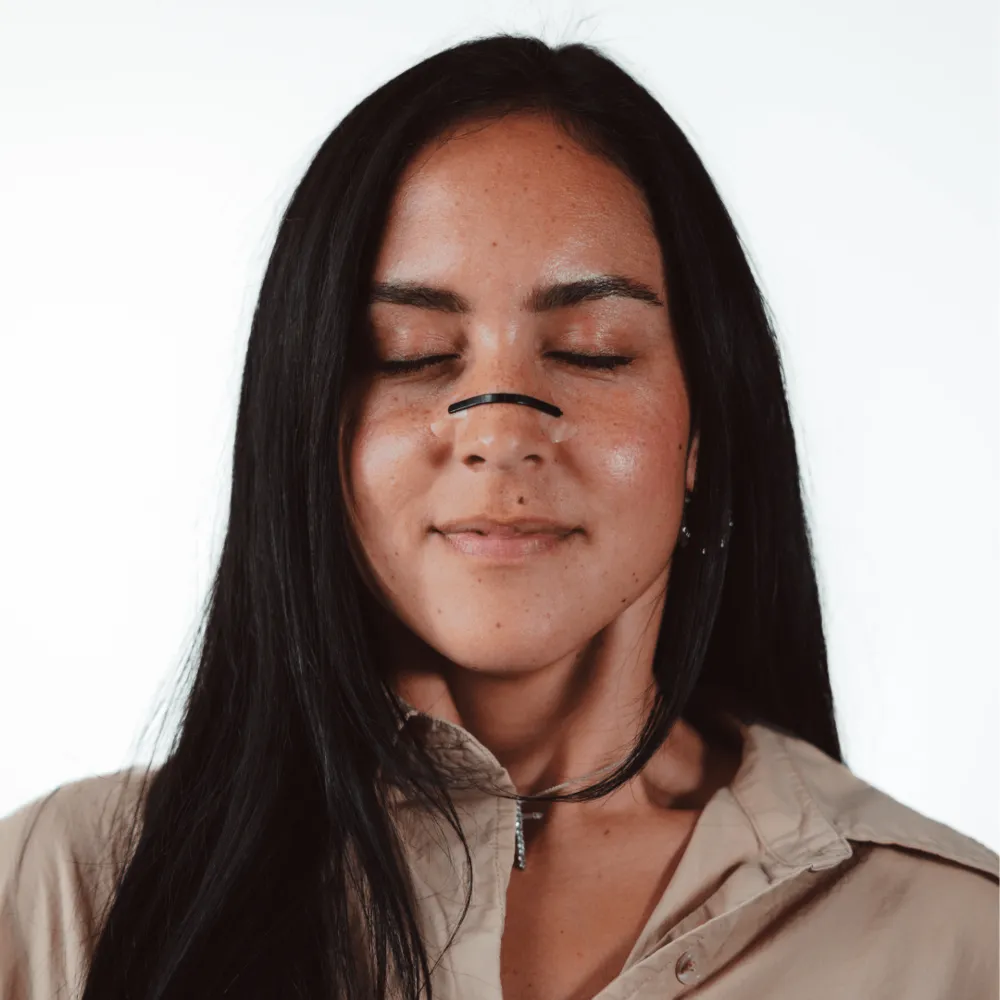

The trainers
Runners, cyclists, lifters, combat sports, sauna. This group is the reason the product exists in its current form and the reason it survives sweat, and it is also the group most likely to notice the honest limit Charlie K. described: one hard session per strip.
“These make such a difference in my sleep, but also in my athletic performance. I’m able to nasal breathe during runs and races and notice a big difference in my performance when I wear them.”
Jessica H. ★★★★★ Verified · May 18, 2026
If you do not recognize yourself in any of the three, that is a real answer, and a cheap one to have reached before spending anything.
How to test itA week is enough, and you do not need the year supply
The pricing ladder is built to move you toward a subscription, which is normal for a consumable, and easy to step around while you find out whether it does anything for you.
Prices as published on dreamrecovery.io, August 25, 2026, in sand, black or pink. Subscribing takes a few dollars off each tier. There is a 30 day guarantee, and shipping in the US is free over $85.
Start with the thirty. Then run the only two tests that matter, because everything else about this product is either settled science or marketing.
Test one, the first breath. Put one on while sitting still and breathe in through your nose. You will know inside two seconds whether you had a restriction to remove. If nothing changes, stop there. You are not the customer, and you have spent thirty dollars finding that out instead of three hundred.
Test two, the last ten minutes. If something did change, the question is no longer whether it works but whether it lasts. Wear one through your hardest session of the week and one through a full night. Do not check it at the start. Check it at the end. That is the test the entire category failed for twenty years, and the only one worth running yourself.
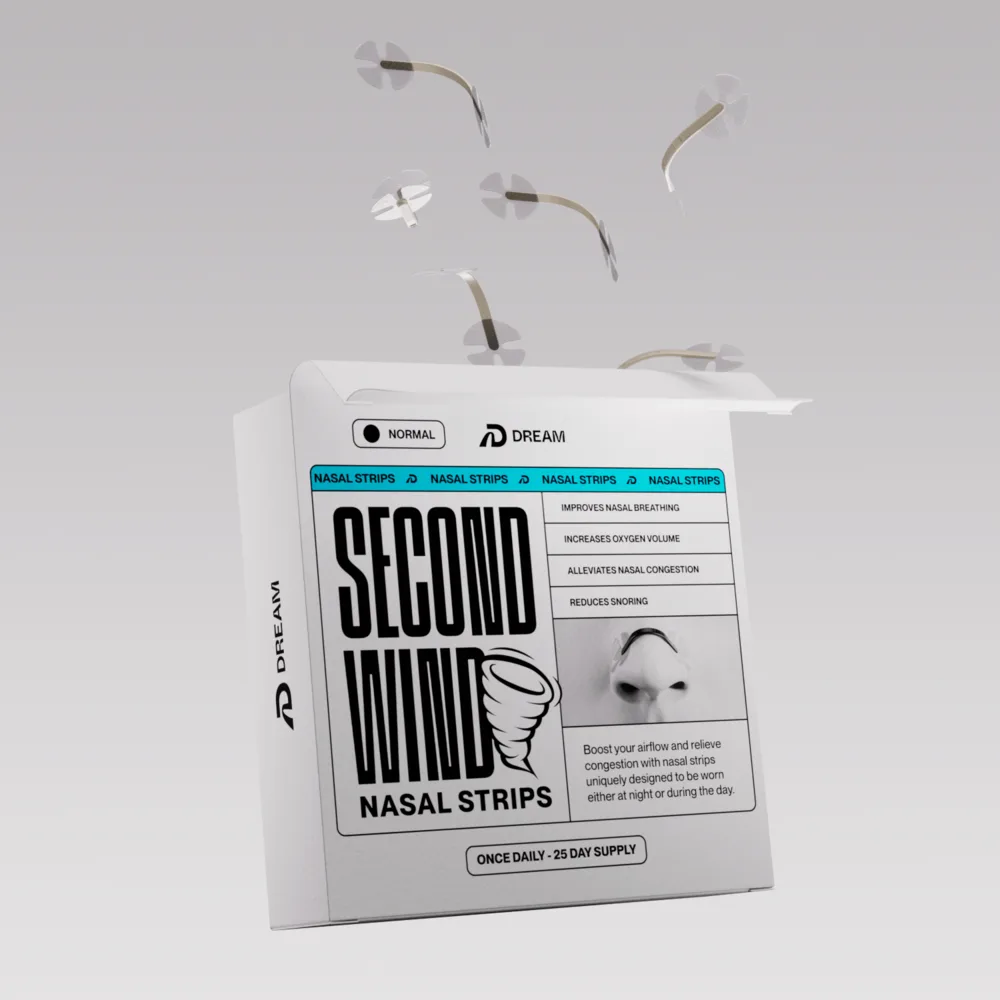
Second Wind Nasal Strips, from Dream Recovery. Sizes, colors and the full published comparison are on their own page.
See Second Wind Nasal StripsOpens dreamrecovery.io. 30 day guarantee, free US shipping over $85.
Nothing was invented. Something was finally engineered.
Nasal strips are everywhere for a boring reason. The physiology was always there. The market that wanted it was always there. What was missing was a strip that stayed on a wet face for the length of an effort, and that an official would let you wear while you made it.
Once both of those were true, a cold and flu product turned into equipment. That is the entire story, and it is the reason you can now count them from three rows back at a start line.